·S3 E33
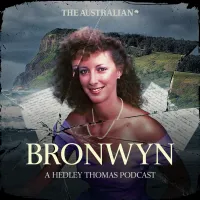
Episode 33: The Legal Veil
Episode Transcript
Listeners are advised that this podcast series Bromwin contains course language and adult themes.
This podcast series is brought to you by me Headley Thomas and The Australian and are you still there?
Yeah, I gotcha.
You'll recall that in episode thirty two we told listeners it was time for a break.
Andy and Michelle were about to leave on a long planned holiday to England, Ireland and Scotland.
Coincidentally, my wife and I were heading for Scotland for most of May.
We met Andy and Michelle for dinner one evening on the Isle of Sky.
They told us over a few locally brewed ales that they were very hopeful they were looking forward to a police briefing when they returned to Sydney.
They were planning to meet Detective Inspector Nigel Warren.
Speaker 2I'm hoping to be able to go and have a do briefing with them, find out where we're at.
Speaker 1I asked Andy about that when he was home in the Shire south of Sydney and I was back in Brisbane.
You got back to some news from Nigel Warren.
Speaker 3Yeah.
Speaker 2I was a little disappointed that I didn't want to have a face to face.
Speaker 1Because they were at a It's what seemed to be a sort of a delicate stage of their investigation.
I don't want to read too much into it.
What did you take from it?
Speaker 2Space, We've just got to hope that the Duke diligence has been followed and the right things have been.
Speaker 1Andy did not regard the tone of an email he received from the head of Unsolved Homicide as discouraging.
No, not at all.
He does not want to disclose it in the podcast, Andy looks for a silver lining.
Perhaps the postponement of the meeting was a good sign.
If detectives are close to moving on Illawong or a suspect or both, would they want to complicate an already very sensitive legal situation by meeting Bromwin's brother for a briefing.
Probably not.
In the meantime, I'm working on the podcast to take it to its conclusion.
In episode thirty two, just before the break, you heard that in the handful of remaining episodes there would be a focus on several things.
We are going to look at the new South Wales Office of the Director of Public Prosecutions.
Its consideration of a comprehensive brief of evidence occurred some twenty three years ago, after the then Deputy State Coroner Karl Milavanovitch ended the two thousand and two inquest with a recommendation that a known person, John Winfield, be prosecuted for Bromin's murder.
Bromin's close friend and neighbor, Deb Hall, recalled that moment in the Lismore courthouse.
Speaker 4And he made that ruling and he believed us he could see what we could all see, and he made that statement that he believed that Bromwin Winfield was in fact a deceased person and did die on the sixteenth of May nineteen ninety three, and that a known person was responsible for her death, and that he would make a strong recommendation to the DPP that that person be charged.
And he was looking straight at John when he was saying it, and we all went hallelujah.
So we thought, yes, great, we've got something.
And then of course it was months or weeks later nothing.
The DP as we know now wrote a certain standing and said, sorry, how sad, too bad.
Speaker 1Here's Bromman's other good friend, Denise Barnard.
Speaker 3You think, yeah, well, this is going to happen, and then when it doesn't, you think to yourself, well, he's got away with this.
We all believed John was responsible, so we all couldn't believe it.
Speaker 1The decision by the DPP that there was insufficient evidence to launch a prosecution was of course made independently and behind closed doors.
The detailed reasoning of the DPP is subject to what's called legal professional privilege.
It is impossible for outsiders to get access to the notes and process which led to the decision.
That means there is no external accountability.
Unlike every other department and agency of government, the Office of the DPP's considerations cannot be scrutinized for error by, say, the usual public guardians of government process, such as ordises.
This means that if a decision is made in error, if, for example, there has been a misunderstanding of some key evidence by one of the DPP's solicitors during a review of the police brief with all the statements, the error will be concealed along with the decision making process.
This actually happened in the case of Lynn Dawson now known as Lynn Simms, who was murdered by her husband Chris in Sydney in nineteen eighty two.
Human error by police and someone in the office of the DPP many years ago, resulted in a mistaken belief that there had been a positive sighting of Lynn at a fruit barn by one of her friends days after she had disappeared from her family home on Sydney's Northern Beaches.
That fundamental error contributed to a decision to discontinue a police homicide investigation in the early nineteen nineties.
The error did not reveal itself until the murder trial in twenty twenty two.
A murderer had evaded justice for a long time, largely because of that one error.
It was a depressing insight into the frailty of the criminal justice system.
Later in this episode, you are going to hear from a former longtime staff member in the Lismore office of the DPP, Jackie Crouch.
Jackie has followed Broman's case since it first came across her desk.
Jackie is the wife of a longtime police officer.
In her job at the DPP's offices in Lismore, Jackie read and organized the police briefs which would be given to the Crown solicitors to read.
Jackie is not a lawyer.
She told me she formed views about the skills of several of her colleagues in the busy Lismore office, solicitors tasked with examining the briefs of evvide to determine whether to prosecute.
Here's a brief snippet from our lengthy interview.
You must have seen what hundreds of hundreds?
How many stand out?
Are you like?
Promins?
Speaker 5She's number one?
Speaker 6You see something in your feel, in your spirit, gut heart that it's not right.
Speaker 1You remember, you remember because you're not a lawyer and the advising solicitor is a lawyer.
Do you have any leverage?
Now?
Speaker 6I did have leverage with the solicitors that I had respect for.
I had leverage with certain solicitors.
I certainly didn't with that one.
Speaker 1You'll hear more from Jackie later in this episode and later in the series the cold case review by the homicide detective George Radmore, who gathered more evidence to add to Detective Glenn Taylor's bundles.
You'll recall during our episodes reconstructing the two thousand and two inquests that there were several references to a woman called Lena, John's former partner with whom he lived in Sandstone Crescent shortly after Broman's disappearance.
Here's a reminder from episode twenty eight when the police officer, Sergeant Matt Fordham was talking to the witness Andy Reid during the inquest.
Speaker 7And have you ever spoken with Lena about what happened between her and John?
Speaker 2She confided in me that she did not want to be seen or even be in the same room as Jonathan Winfield ever again in her life.
Speaker 1She said to me.
Speaker 2She labeled him a Doctor Jekyll and mister Hyde.
Speaker 1Lena and her purported concerns about John's conduct during their relationship do feature in the George Radmore investigation.
And you are going to hear about this.
What is the latest news, mate?
Speaker 2We found out that there's a night on for the homicide support group.
Speaker 1On a recent winter morning, I spoke for the unteenth time this past eighteen months to bromwin Winfield's brother.
Speaker 2Which I've been part of for the last thirty two years, for information night on supports and services that can be offered the families for trials during trial stages of cases.
Speaker 1And we've booked.
Speaker 2Ourselves a couple of seats to that, but you're not at that stage I know that, I know that, but I just thought i'd like book my face in the picture to give them a little reminder that we're not going anywhere, and just keep pushing the point and keep advocating for Brin in her case.
Speaker 1And we just thought it would be a good thing to do.
And his commitment to honor his sister Bromwin and the soul of her disappearance is an inspiration to tens of thousands of listeners.
His wife, Michelle, backs him every step of the way.
They went together to the meeting of the Homicide Victims Support Group in Sydney.
It is run with compassion and professionalism by the loved ones of victims of murder.
Reporter Peter Overton profiled the group and its founders for a sixty minute story in twenty twenty two.
Speaker 8There are some murders so brutal, so inhuman, they scar the public conscience.
Few of us can forget the tragic deaths of Anita Cobby, Ebone Simpson or Janine Balding, who were tortured and abused before they were killed.
We can only imagine how devastating it must be for the victims' families.
Speaker 1The families of Anita Cobby and Ebony Simpson founded the Homicide Victim Support Group.
Now let's hear from Michelle Reid.
I spoke to her soon after the meeting of the Homicide Victims Support Group in Sydney.
How did that go?
Speaker 9There's all people there under the same circumstances as Andy and I are, but everybody there had lost someone to will a homicide.
Talking on the night was the new head of New South Wales Homicide.
Speaker 1Michelle is talking about Detective Superintendent Joe Dewey.
He has taken over from Danny Doherty, who retired from the New South Wales Police Force recently after a long career.
Here's Joe Dewey talking at a recent media conference in Sydney about a murder linked to an organized crime gang.
Those offenses are clearly targeted offenses.
They're callous, their brutal and their offenses against innocent people.
Speaker 9We met him who was lovely and very informative about the processes and very hopeful for all the families there about them trying to achieve some sort of answer.
And then we had Nigel Warren who spoke about what his unit does.
They endeavor to help as many as they can, but it's only with the information that they can gather that they can actually do anything for an unsolved homicide.
There are some people there who have gone through the system like we have and have had the coronial inquest and had a person nominated as the person of interest.
And there are others there who were at the other end of the spectrum.
Even though they might have been ten years since they lost their loved one, they haven't even managed to get to a coronial in quest.
Speaker 1In a room full of people whose lives have been touched by violence and homicide, is there a very heavy atmosphere.
Speaker 9Everything's so raw for a lot of people.
Some people are still quite affected.
Bromwin's been probably gone the longest out of anyone that I was aware of.
Speaker 1There.
Speaker 9We have lived with it first over thirty years, but it was still very emotional.
There were lots of why why hasn't this happened?
Why is this allowed?
There was a senior Crown prosecutor there explaining to people how the system works and how intricate it is very helpful.
Speaker 1I thought you and Andy have been understandably very critical over a number of years of police I in a sense that events like the one you went to with the homicide Victim Support group where you talk to senior police can help you see another side to things.
Has it given you a bit more patience?
Speaker 9They were very good at explaining the reasoning behind the length of time that it takes.
So yes, it has made us sort of go okay, well, we'll be patient.
They've got lots of information.
The podcast aided that unbelievably.
Actually, somebody even asked, how do you get your case onto a podcast?
And that was one of the questions from one of the other families that were there.
People are very aware that there are podcasts out there, and they obviously are thinking that they're doing some good because they're wanting to be involved in it themselves and hoping that somehow they can get the help they need.
And the police were very, very good.
There was nothing negative about asking that question or nothing negative in their answer either.
Speaker 1And he wants to push hard and get on the front forward and sometimes you're saying, well, no, let's just wait.
Speaker 9Definitely, having lived and breathed this with him for the last thirty two years and having nothing happened for so long, and then of course knock back, knock back, and then your podcast has come along, which has opened the door to so many people to listen to it, and I think it makes you want to rush.
You just think, oh my goodness, that's been thirty two years.
Maybe there's a finish line, but in the whole scheme of things, you've just got to bide your time, and whatever the police come up with, we want it to be tight, air tight.
We're saying, just hold back, let them finish whatever they're doing.
And you know, and we don't have any idea what they're doing.
We are not privy.
Speaker 1Is it fair to say that you are sometimes saying to Andy, no, just be a bit more patient.
Speaker 9Yes, because he wants the resolution, he wants to know what happened to his sister, whatever that may be.
But you do have to hold back.
You do have to wait.
You've got to let the police follow the protocols.
You've got to let everyone do what they have to do.
If you pushed too quickly, then I think any opportunities might get lost.
Speaker 1Your tone and Andy's tone now in being more prepared to have that patience and to accept that the police are going to take a bit more time, has changed over the last year and a half.
That we've been talking, You've I think both gone from being very impatient and very frustrated and unhappy with the police performance and wanting to just move forward whatever happens, whereas it's different now.
I can hear it in your voice and Andy's voice.
That might be because you now have more confidence than you've had before.
Speaker 9Over the years we've pushed the police in Ballina to look into a case.
Speaker 5Our hands were tied.
Speaker 9We had the inquest and then we thought maybe things would go along from there, and then our hands have been tied again when we finally got to talking to you and reliving it all totally again.
Oh, we just wanted things done, so I think yes, we were very gung ho and wanted things to happen.
Things are probably happening.
We just don't know.
We have to sort of wait it out.
Speaker 1We've covered so much ground and I feel that the podcast needs to get to the finish and then sit for a while.
Speaker 9Yes, now what that conclusion is, I'm not sure that we'll see.
Speaker 1Andy and I also talked about the next stage in this podcast series.
He understands that we are now nearing the finish line in the Bromwin podcast, investigation.
This is the final showdown, at least until or unless the restarted investigations by the New South Wales Police Unsolved Homicide Unit take matters further.
The unit's detective Inspector in charge is Nigel Warren, and he told Andy and Michelle in May twenty twenty four that his officers were unable to advance Broman's case.
There was no new evidence back then and they had effectively hit the wall.
But within weeks, new and remarkable disclosures in the podcast, including from Bromwin's near neighbor, Judy Singh, changed everything.
Judy's revelations about seeing what look like a body wrapped in sheets in John's Ford falcon on the night Bromin disappeared prompted detectives to fly to Cooling Gadder on the New South Wales Queensland border, take a statement from Judy and drive her to Lennox Head where she showed them where she was when that ereciting occurred.
Now that was twelve months ago.
We believe that detectives have been active on Broman's case since our discovery of new evidence of two concrete paws at a building site in Illawong where John Winfield was bricklaying and helping build a house for his boss, Glenn Webster, have led us to suspect that Bromwin's body could have been concealed beneath plastic and reinforcing steel known as RIO, just before those concrete paws.
It might explain John's hasty trip back to Sydney when he drove through the Sunday night of May sixteen, nineteen ninety three, and it might explain his plea to his former wife's mother in law to look after the two girls for several hours on Monday, May seventeen.
It is possible that unsolved homicide detectives, led by Inspector Warren, with the authorization of the State Coroner, will undertake a thorough penetrative search beneath the patio slab and the garage slab of the Illawong house which once belonged to the builder, Glenn Webster.
Must be a bit of a headspin for you, Glenn, knowing John as you did back from the day.
It is a bit I never had a problem with John Patrol John yet three my houses.
Speaker 9He played his card very close to his chest.
Speaker 1And obviously we're looking out whether as possible that Bromin's body was put under the rio of that slab.
We have been waiting for some news about that for the past seven months, ever since our friend Karina Berger, the lawyer with experience in helping run coronial investigations, came up with the idea of drafting a letter for Andy to send to the State Coroner, Theresa O'Sullivan, a letter with all the detailed and compelling reasons to justify searches beneath those concrete slabs.
Since early December twenty twenty four, when that letter was sent to the State Coroner's office, we have looked forward to a possible announcement of what we hope will be a properly resourced and expertly run search.
Everyone we talk to with knowledge of the case, from former homicide detectives to seasoned lawyers, say the Illewong site needs to be searched, if only to be ruled out.
The circumstances surrounding that site are deeply suspicious.
Our view is that this type of search beneath the foundations of a private dwelling in a well heeled suburban street should be done under the legal authority of the state coroner.
Or the Unsolved homicide Unit.
For now, at least, we do not want to try it ourselves.
First, would the owners of that attractive and valuable two story house even permit us to come onto their land and proceed to break up the concrete of their garage and patio?
Would you let strangers do something similar at your own home.
Second, if the owners did permit us to search in this way, independently of police or the state coroner, and if we found something under the concrete, there would inevitably be questioned about the integrity of that evidence.
We might find ourselves accused of potentially contaminating a crime scene despite the failure of the authorities to go there before us.
Andy Michelle, Maddie Walsh, Karina Berger and others giving us good advice believe we need to.
Speaker 10Having done a lot of litigation and having been a lawyer for a long time, I'm sort of always thinking about risks and pros and cons.
Speaker 1We believe that there is a possibility the new South Wales Director of Public Prosecutions will conclude that there is already enough evidence to greenlight a murder charge against John Winfield, who has always denied wrongdoing.
But of course it is possible that there will never be a formal search at Ilowan, and that a prosecution of John is merely wishful thinking on Andy's part.
Andy just doesn't know, nor do I, but I can sense that he's recently become more trusting of the process.
There are indications of some patients that did not exist before.
Now let's return to disclosures by Jackie Crouch, a woman from whom you heard briefly earlier in this episode.
Jackie first emailed me on August thirty one, twenty two.
That was the day after Justice Ian Harrison in the New South Wales Supreme Court delivered a verdict in the murder trial of Chris Dawson Christopher Michael Dawson.
Speaker 2On the charts that on are about eight January nineteen eighty two at Bayview or elsewhere in the state of New South Wales.
Speaker 1You did murder Lynett Dawson.
I find you guilty.
Mass it down.
Jackie has agreed to read from her email the day after Justice Harrison spoke those words.
Speaker 5Such a wonderful result yesterday with Justice Harrison guilty in the Dawson trial.
I'm now retired, but I worked for thirty years for the New South Wales Office of the Director of Public Prosecutions in Lismore.
There is a matter that has stayed with me that came into the office as an advising where police refer matters to the ODPP for question of charging.
I've never really felt comfortable.
Speaker 6About this matter, and on the face of things, it did fall of bit short of charging anyone.
It's a similar matter to the Dawson matter, missing mother of children husband was controlling.
Speaker 5Her name was.
Speaker 6Bromwin Winfield and she lived and disappeared from lenox Head.
Speaker 5You may be interested in having a look at it.
Speaker 6I feel there is a place for investigating journalists and podcasts in our justice system.
Speaker 1Jackie didn't know back then that a podcast investigation into Bromman's case was planned.
It would take another eighteen months for it to start.
I met and interviewed Jackie for the first time at a house in Kingscliff, about halfway between Brisbane and lenox Head, in early February twenty twenty four, and afterwards I drove to Sandstone Crescent to interview Deb Hall and Murray Nolan for the first time.
The point is that when Jackie spoke to me about Bromwin.
She had not heard any of the podcast because it didn't exist then it was months away from being produced.
Hi Jackie, good to see Jackie.
Sister Mary, Hi Mary, how are you coming in?
Speaker 5I'm just dropping her.
Speaker 1You're very welcome.
Speaker 3No, it's fine.
Speaker 1My friends live in Brisbane, but this is their holiday place.
When we sat down inside, Jackie spoke about her career in the criminal justice system and as an employee in the Office of the Director of Public Prosecutions in Lismore.
In that office, police briefs of evidence from regional towns, including Balliner, would be considered by solicitors for the DPP.
Speaker 6It wasn't legal.
I worked in all three levels of the court system at varying times.
Was there thirty years.
So I worked in district and then Supreme Court.
I worked as associate to his his Honor, Judge Ducker, and then I went back to the DPP and worked in the local court section.
My job was to coordinate a group of solicitors.
Liz More office went from Maxville in the south to Tweetheads and west to Armadale in veril.
Speaker 1That office in Lisbon covers a big area, I guess, very big area.
Speaker 6Used to go to Maurey and narrow bribe, but they cut that off.
It was a big circuit and we serviced all local courts in that area, all district courts and all Supreme courts.
So every morning it'd be making up files, requesting briefs.
When the briefs come in, checking that everything's there, putting them in order, briefing the solicitor in turn, you've got a fairly big pool to brief and these are Crowns series employed by the DPP.
Speaker 1Yes, you wrote.
Speaker 11To me out of the blue and raised Godwin Windfield's case.
Speaker 6Yep, it's stuck in my crawl because it was bleeding more obvious what had happened.
And then it was recreated by Chris Dawson and baden Clay exactly the same scenarios.
Speaker 1Jared baden Clay claimed that his wife Allison, went for a walk in April twenty twenty twelve and just disappeared.
But Jared had murdered the mother of their three daughters and then dumped her body in swampy bush beside a creek.
He wanted to continue his affair with another woman and collect on Allison's life insurance.
My wife and I were friends with Allison and Jared in our semi rural community.
Our children and theirs went to school and played together.
Jered was found guilty of Allison's murder in July twenty fourteen.
The murder trial heard evidence of years of coercive control he practiced towards Alison and their daughters.
He will be eligible for parole in a couple of years.
Jackie told me of her respect for the judge for whom she worked in Lismore, William Ducker.
Those who knew him well called him Tom.
He was a mentor to Jackie and they remained friends until he died.
Judge Dukker was old school.
He would not have approved of Jackie raising her concerns with a journalist.
Speaker 6I always go back to what would Tom think.
Tom would hate investigative journalists.
He would see it as interfering in his court, and we would fight bitterly over that if he was alive today.
A stickler for the process, and say to me, Croucy, justice must not just be done, It must be seen to be done at all times, and people mustn't interfere.
Speaker 1Many judges align the same way, because in Jackie's view, they're.
Speaker 6Very entrenched in their thinking.
Speaker 1People in senior roles in the criminal justice system are rarely, if ever in favor of journalists looking too closely at how the sausage gets made, how they do their jobs, at least that's my experience, but some do appreciate that the system is improved with transparency and that outsiders and non lawyers looking in might make a positive difference by identifying and highlighting errors which can be corrected.
Jackie explained that in the Lismore office of the DPP, police detectives like Glenn Taylor from Balliner would routinely come in with cases that they had been working on.
They would seek professional advice on whether there's enough to take the matter further with a criminal charge.
The same routine would unfold in offices across the state.
Speaker 6It's the police file signed off by their hierarchy.
It goes through a certain process to the police department saying basically, in not so many words, I don't know what to do with this.
I've got a certain feeling about it, but I can't get it over the line.
Speaker 1They're looking for the office of the DPP to give them the green lights.
Say look, you've got enough or.
Speaker 6Not yep, or the who might look at it and go, yeah, it's really good.
It is a bit short.
I'd like you to go back and interview this person again.
So they call requisitions, so it comes in.
Speaker 1What do you do?
Speaker 6I register it, dual the administrative creating files, that sort of stuff.
Speaker 12But you're reading so much in that.
Speaker 1Job because you read all the witness statements, you read the police brief in a reatirem.
Speaker 6Yeah.
Speaker 13Yeah.
Speaker 6Advisings in those days were done by the lawyer manager.
Speaker 1For you to form the view that you formed about this case.
Speaker 6I would have read the report once it came back from the solicitor and it was being returned, like he would have come out and said, I'll finish the wind Field matter.
Speaker 12That's got to go back.
Speaker 1And that solicitor is a solicitor employed by the Office of the DPP to provide the formal advice to the police whether they charge or let it go or do more work.
Yep, did you form a view?
Yeah?
Speaker 6To me, it was bleed and the lobbyous.
There's two small children.
There's an argument.
He says, she left no wife.
I think we'll go for a holiday to Granny's in Sydney, packed the kids up, put them in the car with the luggage and we drive to Sydney and stay for I think from memory two weeks.
From memory, there was no sign of struggle, there was no sign of blood, there was no sign of any harm them from.
Speaker 1The let's go back to there's more.
Do you've got the file or the letter of the advice back from the solicitor?
Yep?
Do you read that?
Yes?
Speaker 6Yes, But after it's come back, I would have had a good read.
Speaker 1Why did you reach this decision?
Speaker 6Oh you're sending this back?
Why what was missing in this?
Speaker 1Really?
Speaker 5And there'd be a discussion.
Speaker 6We would have talked ten to fifteen minutes about it.
I don't think in that brief that we've got there was enough, but there could have been requisitions.
There's not enough house for more.
Speaker 12If you think it's light light on us for more.
Speaker 1And are you confident from your memory that he didn't do that?
Oh, he didn't do it.
Speaker 6It went straight back.
Speaker 1The Prosecution Policy states that while the Office of the DPP has no investigative function of its own and no power to direct police in their investigations, the office, and i'd quote here advises investigators in relation to the sufficiency of evidence to support nominated charges and the appropriateness of charges, but not in relation to operational issues, the conduct of investigations, or the exercise of police or agency powers.
It's way on your mind.
Speaker 6Oh it has, it has, Yeah, because I knew it was wrong.
Speaker 1It might not be too late.
No, no, it might not.
Jackie said that she spoke recently to a former police officer from Ballina.
I'm not going to disclose his name here, but that former officer was not Glenn Taylor or Graham Diskin or Wayne Temby.
Speaker 6I just said to him, did you ever have one of those matters where it just stuck and you weren't happy with how it panned out?
Speaker 1Yep?
Who was it for you?
Bloke?
Call win Field?
Speaker 5Where's the Badie now?
Is he around still?
Speaker 1Lennox alleged Badie Jackie?
Speaker 12Yeah, of course.
Speaker 1One of the.
Speaker 11Reasons I was really interested in your email was because I had been collecting material for the previous four years on Robin's case.
Speaker 1Oh right, okay, others are contacting me.
He wanted to raise it.
They've been concerned about in the almost eighteen months since that conversation with Jackie Crouch.
She has listened to all of the Bromwin episodes up to now.
We have exchanged text messages and emails.
Jackie believes that the police brief of evidence, which she read in the Lizmore office of the DPP, came in prior to the inquest.
The lengthy police statement by Detective Glenn Taylor was signed by him and dated October five, nineteen ninety nine.
It would make sense for him to have included his statement in the brief that was reviewed in the Lismore office of the DPP.
It is probable that the brief went to that office for review by the lawyer manager there sometime after October nineteen ninety nine and before the inquest, which started in May two thousand and two.
I interviewed Jackie a second time shortly before the release of this episode the thirty three.
Speaker 14Initially, he said to me, I'm getting rid of it.
It's going back words to that effect, and when I pushed him, he said, I'm pissing it off.
Speaker 1You just do your job.
You're remembering a conversation that has occurred, possibly twenty five years ago.
What's your level of confidence about that conversation?
And as you've described it.
Speaker 15I'm very confidently in my thirty years of working for the DPP, it's probably early between three and five matters that have stayed with me, and this one was one that particularly stayed with me.
Didn't feel comfortable the whole way it was handled.
Speaker 5It was smelly.
Speaker 1We do not know how the original police brief of evidence which went to the Lismore office might have changed by the time the inquest got underway.
Was it essentially the same brief of evidence that the Lismore lawyer manager for the dp had reviewed and rejected.
We do know, however, that the Deputy State Coroner recommended at the end of his inquest that a known person be prosecuted over Bromman's murder.
This finding meant that the Lismore office of the DPP would have received the Winfield brief again, but this time bearing a recommendation from the Deputy State Coroner, and it almost certainly would have included the transcripts of the five days of public hearings from the inquest at the local courthouse in Lismore.
In the Office of the Director of Public Prosecutions, there are documented guidelines in relation to running a prosecution.
Speaker 12A decision to proceed in a matter or to take no further proceedings, will be reversed when it is in the interests of justice to do so.
It may be in the interests of justice to reverse a decision if significant new facts warranted, or the decision was the result of fraud or in proper conduct, or the decision was made on an erroneous basis.
Speaker 1Significant new facts have come to light in Roman's case.
Whether those new facts warrant a reversal of the previous decision is a matter for the DPP.
In twenty twenty five, a quarter century after the Lismore office first considered the case, the brief of evidence presumably would have been returned again to the Lismore office of the DPP.
Speaker 6Is that right, Yes, it would have come back in as a referal from a coronial inquest.
Speaker 1There's a second opportunity.
Then, what do you think has happened in relation to that file after it has been recommended for prosecution by the coroner.
Speaker 16It's come back into the office.
Speaker 1Jackie said that it would have then gone to the same lawyer manager who had previously rejected it.
He has not worked for the DPP for some years.
I contacted him seeking a background briefing or an interview on the record, but I heard nothing back.
Speaker 16The procedure would be he would do a report, It would then go to the Crown Prosecutor to their chambers and it then goes from there to the Director's chambers in Sydney.
Speaker 1Why then, with those extra steps was the file not advanced for prosecution?
Is it because there just wasn't enough there in their view?
Speaker 14Well, that's what they're saying, there wasn't at that time, there wasn't enough there.
Speaker 1With the help of a librarian from the National Library of Australia, we got the prosecution guidelines that were in place in two thousand and two and for much of two thousand and three where the charge was one of murder or manslaughter, the guidelines required that the lawyer's recommendation be referred to the Director's chamber for final consideration.
It means that the new South Wales Director at the time, Nicholas Cowdery, QC, was ultimately responsible for the decision.
Right back at the start of the Brodwin podcast series, you heard that mister Cowdery wrote to Andy Reid in two thousand and three some months after the inquest.
Speaker 13The disappearance of your sister Bronwin Winfield in May nineteen ninety three has no doubt caused much grief to you and your family, and I offer my sympathies.
My advice to police in the coroner, after very careful consideration of all the evidence presently available, is that there is not sufficient evidence to charge Jonathan Winfield or any other person.
Bronwan's disappearance was not reported to the police for two weeks and was initially treated as a missing person inquiry.
By the time it was dealt with as a possible homicide, years had passed and any potential scientific evidence was long gone.
There is nobody and no known cause of death.
While Jonathan Winfield is the last known person to have seen her alive, there is no evidence that he killed her or had any role in her disappearance.
Suspicion cannot be substitution for evidence.
Speaker 1Significantly, Mister Cowdery gave this undertaking.
He said in the letter that if at some time in the future fresh evidence becomes available, then the matter will be reconsidered.
In a situation like that where they've already rejected at once, perhaps a couple of years earlier.
Are those files sometimes just harder to get up even after they've been through a coronial process, or are they, in your experience, judged always on their merits at the time they are received in that office.
Speaker 6I would like to think they're judged again, that it's not just a rubber stamp.
Speaker 1Because you're not a lawyer.
I can imagine that lawyers who have worked in this area would be possibly irritated at you remaining your concerns about this matter.
Speaker 6It's definitely I had a lot of respect from a lot of very good lawyers, but a lot of lawyers like to remind me of my role and that I should stay in it.
I was entitled to my own opinion and thoughts, and I've been there a long time and seeing a lot of stuff.
There were shortcuts being taken, and then we're things not being done one hundred percent correctly.
Speaker 1We first spoke about three months before the very first episode of the Bromwin series was published, and you've heard the series since then, yes, And have you heard anything that makes you think, well, maybe the right call was made for not prosecuting this, or are you more strongly of the view that it should have been put before.
Speaker 6A jury more strongly of the view, I haven't heard any redeeming.
Speaker 1Factors from everything that Jackie has told me.
It's plain that she and the former lawyer manager of the office in Lismore did not have a great working relationship.
Speaker 5And I did see stuff that happened.
Speaker 1I asked whether she had an ax to grind.
Jackie said it wasn't personal.
She just didn't rate the former lawyer manager.
But he didn't fire you or anything like that.
Speaker 5No, no, I replied, he left long before I left.
Speaker 1You can't ever get behind the reasoning process in the consideration of whether or not a matter should be prosecuted.
Yeah, you're right, thislicitor says no, it's not enough evidence for not prosecuting it, or Crown says that, And people will not ever know if someone has unwittingly innocently misunderstood a piece of evidence that was crucial.
And I saw this happen in Lynn Dawson's case.
We didn't learn and to twenty twenty two, in the murder trial, the reason that case was dropped to the police.
Investigations early on were terminated was because of a wrong belief that Linn had been seen at a fruit Barn.
Now we do not have access to the DPP's reasoning and advice in Bromman's matter, which means we cannot confirm what it was, nor whether police were asked to get any additional evidence through requisitions after the two thousand and two coronial inquest.
Remember, Jackie saw the brief of evidence which came into the Lismore office before the inquest.
She does not have direct knowledge in relation to consideration of the brief of evidence which must have come into that office after the inquest.
Speaker 6I did see matters that were discontinued that perhaps shouldn't have been hard to on both of that, we all make errors and very often on admitted.
Speaker 1At the start of this podcast series, a statement from New South Wales Police disclosed that since the DPP's rejection of the case in two thousand and after a second rejection by the DPP in two thousand and three following the inquest, detectives had sought further advice from the DPP in two thousand and eight, and then more submissions by police went to the DPP's office in twenty twelve.
That would have been after the then Detective Inspector George Radmore's cold case reinvestigation of Broman's disappearance.
However, the office of the DPP told detectives in twenty thirteen and again in twenty fourteen that there would be no proceedings in Bromman's case without consideration of what the DPP called significant new material.
Speaker 5I worked with absolutely brilliant people.
The lawyer manager that was.
Speaker 17There at the time that I left, who's now a Crown prosecutor.
I'll swear, absolutely brilliant lawyer and very diligent, very conscientious.
That my god, I saw some lazybuggers not put their heart into a prosecution because it was too hard.
Speaker 18Lynette Daily's loved ones have been fighting hard for justice for six long years.
The young mother bled to death at ten Mile Beach on Australia Day twenty eleven after a violent sex act involving her boyfriend Adrian Atwater and his former mate Paul Maras.
The pair was charged at the time, and those charges were later dropped, and a DPP again refused to charge the pair in twenty fourteen despite recommendations by the State coroner.
Speaker 1The case of Lynette Daily is a powerful reminder of the fallibility of a Prosecution Service.
Coincidentally, the Lismore office of the DPP was involved in considering whether there should be a prosecution of two men over the US Indigenous woman's death on a remote beach in twenty eleven.
Her vagina had been horrifically mutilated by two men in a sustained sexual assault.
Prosecutors repeatedly told her family and friends that those men would not be prosecuted.
The then New South Wales State Coroner, Michael Barnes ran an inquest and he recommended criminal charges, but that recommendation made no difference.
Journalists from the Daily Telegraph newspaper in Sydney and at the ABC campaigned there were remarkable revelations in their stories about the strength of the evidence.
Members of the public and the legal community were rightly outraged by the circumstances.
Eventually, the then Director of Public Prosecutions, Lloyd Babb, agreed to get an external legal opinion from a leading criminal lawyer, and that opinion recommended a prosecution trial was therefore unavoidable.
Speaker 6There were jubilant scenes outside court today after two men were jailed over the manslaughter and sexual assault.
Speaker 1Of mother Lynnette Daily.
Speaker 8The center thing comes more than six years after her Australian Day death during a camping trip on the New South Wales North Coast.
Speaker 18Family and friends of the mother of seven hugged and cried after hearing that the two men responsible for Lynette's death and now behind bars at water was sentenced to at least fourteen years and three months, while Maris was locked up for a minimum of six years and nine months.
Speaker 2I'm very relieved March Plumbing for what we got Pagan that long.
Speaker 1At least we got it done there.
Speaker 18The pair tried to cover up their crime, and the court heard Lynette's life could have been saved if the men had called an ambulance hours earlier.
Speaker 1In September twenty seventeen, after listening to weeks of evidence in the Supreme Court sitting in Coff's Harbor, the jurors in that trial took just thirty two minutes to return with guilty verdicts for Lynnette's two attackers.
Mister Bab had persistently refused a prosecution until public concern led to him getting an external opinion.
He issued this statement soon afterwards.
These are his words, it's not his voice.
Speaker 7The question of whether there are reasonable prospects of conviction is a predictive exercise and one about which reasonable minds can differ.
The case is now proceeded through the criminal justice system.
Today I publicly apologized to miss Daily, family and the community for the delay.
Speaker 1Busy and under resourced prosecution services do an extraordinary job in the overwhelming majority of cases, and we no doubt never hear about most of those.
Prosecutors are owed a debt of grid attitude by the general public for the stressful work they do.
But in just the two cases in which you have heard about here of Lynn Simms formerly Lynn Dawson, and of Lynette Daily, top prosecutors were strongly opposed to taking those matters to trial until public concern and public interest journalism contributed to a thorough reconsideration of the cases and then criminal trials.
We know the results guilty.
All of this begs the unavoidable question, what about all the cases in which there are victims of murders or serious violent and sexual assaults where there are no prosecutions and then no investigations by journalists and no campaigning by loved ones fanning public concern.
Those victims and their cases are the forgotten ones?
With no external oversight of the Office of the DPP's decision making.
It's time now to say thank you and a bit more than that to two very talented women who have been a great help in the Bromwin Podcast investigation.
Mattie, you've got some news for us.
Speaker 19Yeah, I am essentially working my way into becoming a sworn officer with the new South Wales Police Force.
In the near future, I will be doing general duties with the police and then I will go on to doing crimes in investigation.
Speaker 1Congratulations, We're really proud of you.
Listeners will recall that Maddie Walsh is a university graduate in fore with a special interest in crime scene investigation.
We met for the first time at her Auntie Megan's house on Sydney's Northern Beaches in late twenty twenty three.
As we sat at a dining table strewn with hundreds of documents from Bromwin's case, Maddie was organizing files of evidence and reading dozens of witness statements.
She was resourceful and keen to help in the Bromwin Podcast long before the first episode.
We have all benefited from Maddie's connection to the case and to this series since that meeting, but unfortunately it's going to change soon.
In the not too distant future, you will be known as Probationary Constable Maddie Walsh right crazy.
You probably won't be able to talk to us in the podcast because the new South Wales Police Force don't allow police officers to speak freely to the media, and that's understandable.
How do you feel about that?
Speaker 19I understand and that completely, So of course I'm going to follow the rules.
I will be a police officer and I will do what is expected of me.
But I am still Bromwin's second cousin, so I will still follow very closely along.
Speaker 1We'll keep you in the loop.
Has your time working with me on the podcast helped you get this role or hindered it?
Speaker 5Oh?
Speaker 1Helped.
Speaker 19I've learned so much just in this past year, and I think I definitely grew and matured a lot.
I love forensics, that's my true passion.
I interviewed for it and I got it, and I'm so grateful and happy that I had the podcast because it really helped me.
I'm also so grateful to you have been a part of Bromwyn's story and helping it be heard all over the world.
I've loved every second.
Well, maybe not every well, there have been a few minutes that I've You've.
Speaker 1Had terrific questions as well as helped me navigate some of the difficulties in the wider family.
One of the great things about true crime podcasting involving investigations into long unsolved cold cases is that you can see the potential for them to be solved, and for you going into the police force with the experience and seeing how we've uncovered old, new evidence that wasn't known before.
I hope that it gives you confidence when you start investigating some of these cases as a police officer and as a scientist, that they're not doomed to fail.
They can be solved.
Speaker 19I've realized through this podcast how important the initial investigation is and how many things you can collect, and how that can really impact what happens with every single case I'm involved in.
I really take the time to notice in document and be aware and observe what is going on and the important things not to miss, and to make sure that there are less cases left for thirty two years unsolved.
Speaker 1Karina Burger's voice will be familiar to listeners to Karina, Welcome to our team.
Speaker 10Thanks Hedley.
It's great to be here.
Speaker 1You started emailing me this time last year, so about twelve months ago, reaching out offering to help, and when we met, we realized that there were some things that you would be able to help with on a voluntary basis, and you did such a great job with that.
And listener's got to know you through several episodes of the podcast.
And now you're formerly working for us and you're involved in a new investigation that we'll have more to talk about, and you're still working on Bromwin.
How quickly that's happened.
Speaker 10It's great to be here and helping you and helping more families and hopefully making a really big difference in some of these cold cases after the volunteer work.
It's really a dream come true for me sitting in this chair and an official capacity.
Speaker 1I'm really looking forward to picking your brain and finding new evidence in cases from Bromwin's two future episodes of other podcasts that we do.
Just before joining us.
Recently, in her new role at the Australian, Karina was working in the Australian Capital Territories Coroner's Court as the executive director, dealing with historical and recent deaths in the nation's capital, Canberra and across the ACT.
Speaker 10I was working with a very dedicated team of people, their lawyers and non lawyers, to help progress those matters through the coronial process.
Speaker 1You're not a journalist, but you're a highly trained lawyer who's dealt with coronial investigations.
Why do you think you've become so attracted to podcast investigations into cold cases?
Speaker 10Well, I think they really challenged me intellectually.
I love listening to the evidence, mulling it over, thinking about angles and options and what might have not been picked up so far.
And then obviously there's the human element too.
I really feel for families like ron Wins who don't have answers after all this time, and being able to potentially make a difference and help bring new witnesses forward find new evidence.
It's really motivating for me.
Speaker 1A lot of the time, you and I are on exactly the same page with these cases, but when we have a different perspective, it sometimes feels like it's because I'm using my experience as a journalist and you're relying on yours as a lawyer, and we have different disciplines and different ideas about storytelling, and there's a healthy tension there.
Speaker 3Yeah.
Speaker 10I think it's an interesting position to be in because we do often, like you said, a line in our views, but occasionally we come at it from different angles and I perhaps I am a little more risk averse than you.
I think that's really quite a healthy thing.
We can have these really frank debates about strategic issues or what to include in an episode and what not to include, and I think that that's important to be able to share the background that we both have and come up with the best story going forwards for our listeners, and also make decisions that are really good for the case in question.
Speaker 1I agree, and I'm so glad that you've joined us, even though we're sad that we're losing our favorite diva.
Many Welshy thank you for joining us.
Please see more at bronwynpodcast dot com.
Bronwyn is written and investigated by me Headley Thomas as a podcast production for The Australian.
If anyone has information which may help solve this cold case, please contact me confiding by emailing Bronwyn at the Australian dot com dot au.
You can read more about this case and see a range of photographs and other artwork at the website Bromwyn Podcast dot com.
Our subscribers and registered users here episodes first.
The production and editorial team for bromwin includes Claire Harvey, Kristin Amiet, Joshua Burton, Bridget, Ryan Bianca, far Marcus, Katie Burns, Liam Mendez, Sean Callen and Matthew Condon, Karina Verger and David Murray, with assistance from Isaac Iron's.
Audio production for this podcast series is by Wasabi Audio and original theme music by Slade Gibson.
We have been assisted by Madison Walsh, a relation of Bromwyn Winfield.
We can only do this kind of journalism with the support of our subscribers and our major sponsors like Harvey Norman.
For all of our exclusive stories, videos, maps, timelines and documents about this podcast and other podcasts including The Teacher's Pet, The Teachers Trial, The Teacher's Accuser, Shandy's Story, Shandy's Legacy and The Night Driver, go to the Australian dot com dot au and subscribe