A Journey Into Wolf Park with Ryan Talbot [Episode 270]
Episode Transcript
Welcome to the Animal Training Academy podcast show.
I'm your host, Ryan Carledge, and I'm passionate about helping you master your animal training skills using the most positive and least intrusive approaches.
Here at ATA, we understand that navigating the vast challenges you encounter in training requires a comprehensive base of knowledge and experience.
It's common to face obstacles and rough patches on your journey that can leave you feeling overwhelmed and stressed.
Therefore, since 2015, we have been on a mission to empower animal training geeks worldwide.
We've aided thousands in developing their skills, expanding their knowledge, boosting their confidence, and maximizing their positive impact on all the animal and human learners they work with.
We are excited to do the same for you.
Simply visit www.atamember.com, join our vibrant community, and geek out with us.
And of course, in the meantime, enjoy this free podcast episode as we explore new ways to help you supercharge your training skills, grow your knowledge, and build your confidence so that you can craft a life that positively impacts every learner you encounter.
We will start today's episode where I'll be talking to one Ryan Talbott, a computer engineer by trade.
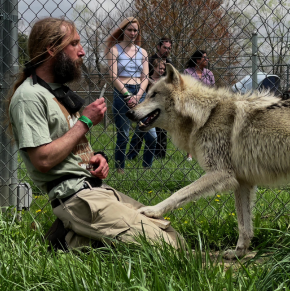
Ryan got bit by the behavior bug after a fateful trip to Wolf Park in Battleground, Indiana, way back in 2006.
Those formative experiences opened his eyes to what relationships can look like with others when we consider what their view of the world, their unwelt, might be.
Since then, he's been on a path to learn and apply the science of behavior change to help improve the lives of those around him, especially in the realm of cooperative care, marrying in his engineering background, and love for tinkering when he can.
Ryan is currently the Behavioral Enrichment and Training Manager at Wolf Park.
He holds a BS in Computer Engineering from Virginia Tech and is a CPAT through IATCB, which we'll unpack as I'm thinking, Ryan, a few of our listeners might not know too much about that specific credential, but it's a really valuable one and a fantastic one.
So let's talk about that a little bit later.
But without further ado at this stage, it's my very great pleasure to welcome Ryan, which feels weird to say, to the show today, especially waiting by.
Ryan, thank you so much for taking the time to come and hang out with us at Animal Training Academy.
Thank you so much for having me here, Ryan.
It's my pleasure.
You listening can't see this, and I can see your changes today, Ryan, but when we connected for a Zoom chat last week, your Zoom name was the other Ryan.
That's right.
But for this episode, you're the Ryan and I'm the other Ryan.
This is about you.
It's all matter of perspective, right?
Like every Ryan is another Ryan to somebody else.
All right.
Before I get too confused, let's proceed.
And Ryan, you've got such an interesting background and you're working in such an interesting concept with a bunch of interesting species.
And so I'm really curious to kind of learn a little bit more about that bite you mentioned from that behavior bug.
Can you take us back to that time and share with us where your journey with positive reinforcement, applied behavior analysis, animal training started?
Yeah, absolutely.
So it is kind of a weird journey.
It's been a long one and we're still on it.
So I guess really to kind of bring it back to where like I kind of got introduced more into the realm of animal behavior.
I originally when I was still at university, I'd grown up with dogs.
I really miss not having a dog with me.
So I started looking around and see like, oh, you know, maybe maybe I can have a dog for like my last year or two in school.
See if I can maybe work that out.
And I was trying to figure out what kind of dog I would like.
And I grew up with Australian Shepherds, wonderful dogs.
They're all wonderful.
Taught me a lot.
But I had this this idea of they were kind of like maybe, quote unquote, too easy or kind of like maybe maybe pushovers is a label I might use.
Or maybe too bitable would be another label that people might understand or maybe agree with or maybe not agree with, depending on their history with Australian Shepherds.
But in my mind, I was looking for something that would maybe give me a relationship that was more like peer to peer and less sort of like us.
You know, it's this wonderful dog just does everything you ask it to all the time and, you know, just kind of follows you around.
So it's kind of on the lookout for that.
And I was heavily involved with the martial arts school at the time.
And the head instructor had had wolf dog hybrids previous to me having been introduced to them.
So they weren't there anymore.
And I didn't quite have a great outcome.
But that made me aware of that that was a thing.
And I thought at the time, like, wow, that's got to be like a really, like very robust.
Like, you know, it's probably not going to have all these cancer and structural issues and all these other things that we see with our domestic dog breeds today because they're so line bred and inbred and everything else.
And, of course, you know, I'm like, you know, I need to I need to find out more about this.
I started doing my homework, you know, on the Internet as it was back then and kind of researching what wolf dogs were and all this and decided, well, that is definitely not something I'm going to bite off.
That's looks like a lot of work.
And but but it did sort of plant that seed that there was maybe this need out there for certainly folks who maybe didn't make the same decision that I did and maybe had acquired an animal like that to live with, found out that maybe doesn't work out so well for them either.
And, you know, they end up in a sanctuary or something like that.
So I thought, OK, cool.
Maybe my life plan will be at some point into my when I've got the financial stability, I might start a sanctuary or something.
Seems like there's a need for that for these types of animals.
And but I thought before I do that, though, I probably need to learn how to wolf good.
So I was looking for opportunities to learn about wolf behavior and wolf dog behavior and things like that.
And in that initial research, I came across Wolf Park's website, among other websites, and I really jived well with kind of their their ethos and their their attitude towards how they interact with their wolves, how they raise their wolves, how they view kind of their relationships with their wolves and just also their their writing style very much appealed to me.
It was full of puns and was still very intelligent.
And so I was like, OK, these guys at some point when I again am in a place where I can do this, I want to I want to sponsor one of those animals and I want to take their they offered a whole bunch of behavior seminars at the time.
So I was like, I'm going to consume all that I can.
I ended up getting a husky for my first dog.
So it was it was still probably in that same vein.
She was a wonderful, wonderful dog, taught me, taught me a ton.
But but I mean, I hate to admit, I think like most people, though, when I got her, I tried to do my homework again to see, you know, how how I didn't love how I was raised.
Raising dogs, not that anybody in my family was cruel or anything, just that the time that I came up, you know, you were very punitive with with dealing with dog behavior issues.
And I was like, there's probably something else out there.
And I didn't quite make the leap over just yet.
I think a friend of mine was like, I need to read this Monks of New Skeet book.
I was like, yeah, all right.
That seems, you know, that's somebody I look up to who gave me that advice.
So I started kind of thumbing through there and I was like, OK, it seems like you kind of have to it's it's kinder if you if you sort of like dominate the dog in a sort of, you know, more species typical fashion.
I think it was just a bunch of really bad advice, honestly.
And it wasn't until I actually went to Wolf Park that first time in 2006 was probably two years after I had gotten my husky and had acquired an Australian shepherd mix, ironically, that I rescued.
So thereafter and saw the power of my first introduction to like really positive reinforcement and see it happening in real time in front of me and with wolves, no less.
And I kind of stepped back and went, oh, oops.
Sorry, dogs.
I have made a mistake and we are going to remedy this as fast as we can.
And one of the other really big takeaways from that that first trip up there.
And ironically, the wolves, it was a seminar with Ray Coppinger.
So it's kind of an ethology heavy seminar, which is really fascinating.
But it did involve, you know, plenty of time in free contact with the wolves and not necessarily like the interactions are totally up to the wolves, like whether they approached you or not and want to interact with you or not.
And you weren't doing any of the training.
It was it was the staff.
But watching the staff work, watching the relationships that the staff had and hearing their stories and seeing what they were capable of doing based on those relationships.
And, you know, now I think of a relationship as a learning reinforcement history.
But like they were they were able to do things with the wolves, like trim their nails in a way that we maybe don't do it right now.
But it was still one of those things was like, wow, this person is walking up there to a wolf and scratching them and trimming their nails like it's no big deal.
And I and already at that point, I knew folks that struggled really hard to do that with their dogs.
So it really, really opened my eyes and I fell in love with the humans actually.
They're pretty much right away.
It very much felt like home.
It's very welcoming environment.
And and then, of course, again, ironically, that first trip, I didn't get that much interaction with the wolves.
They kind of gave me the time of day.
And there's a story maybe going to later about a wolf that became very close to our first interaction.
You wouldn't have predicted it based on how that went.
But yeah, I signed up for another seminar three weeks later and decided, OK, I'll come back here as soon as I can.
I love this.
And that time I got to know folks a little better.
I got to know some of the wolves a little better.
And I was I was totally hooked at that point.
And I think the the was April 2007.
We had a tragedy at Virginia Tech.
We had a mass shooting occur and I just need to get out of Dodge.
I was like, I just don't want to be here this week.
So I saw that the park had a seminar that weekend.
I said, hey, do you have any spots left?
I just kind of want to get out of town for a little bit.
They're like, yeah, come on up.
We got a we got plenty of spots left.
And it was with Suzanne Clothier.
And I said, OK, great.
Didn't know who Suzanne was or anything just showed up.
And it just so happened that we were Tom O'Dowd, who was a long term volunteer there, had graciously offered to put us both up at his house.
So and he offered to let me bring my dogs up, which made it easier for me to travel.
And I remember being there at Tom's house and he had a dog, Laddie, there at the time.
And my Husky had a tendency to sort of if a dog was moving a bit quickly throughout the space, she might go out in front of them and kind of stand very tall, get her hackles up, maybe grow a little bit.
Sort of might think of her as maybe trying to control that space or where that dog was moving to the space.
And so she's very kind to me.
She goes, you know, your dog may be a little rude.
I said, you know, I never really thought of it that way.
I thought it was, you know, Huskies being Huskies.
But like, yeah, no, I think you're right.
She's like, you want to maybe try and fix it?
And I said, I would love to.
So she introduced me to the training game kind of on the spot.
And that was that was like where I really started to maybe get my eyes open and get some hands on, actually trying to learn and apply positive reinforcement in a way that I really hadn't had a chance to be exposed to at that level before.
And it kind of just it really went from there.
And one of the things that she said during that seminar that sticks with me to this day, she's got these elemental questions that she sort of has for all of us to ask our learners.
And the big one that I try to always keep at the forefront is, you know, how is this for you?
So like with any interaction that we're doing with our learners, making sure we're always trying to figure out with whatever tools we have available, like, hey, take a step back and say, how is this how is this working for you in the moment or, you know, in general?
And that kind of set me on the path to kind of dig more into the science of behavior change and things like that.
So credit to her for really making that more of something I started to feel very passionate about, especially when I saw, you know, applying it with my dogs that like I was getting these wonderful results.
Our relationships were getting closer and closer.
And I was no longer even reaching for those aversive tools that I would have used before.
And from there, I consumed pretty much everything the park had to offer with all the guest speakers.
We had folks like Kim McCourt was coming through fairly often and bringing fun guests with him.
And through Clive Wynn, who's still on our board of directors as a research director, and his grad students that were coming through, I started to get exposed to applied behavior analysis.
They would mention it here and there.
I could hear, you know, some of the terminology and jargon when they were kind of observing our animals.
But I didn't really get more into it until I think it was 20, was it 2015?
Maybe at this point, I'd already moved up to Wolf Park.
We can get into maybe how that happened a bit later.
But I guess maybe I should back it up a little bit.
So at that point, I did start volunteering at Wolf Park as much as I could.
However, the problem was I still lived in Virginia.
So I was driving eight and a half hours one way to go spend a long weekend to, again, just absorb as much as I could, get hands-on, develop relationships with the animals.
And, of course, I enjoyed the company of the humans very much.
But then every weekend, practically, that I wasn't there, I had driven down to a wolf dog sanctuary that was closer to where I lived at the time.
So only about three and a half hours away.
And I'd spend weekends there helping them out.
So it was kind of nice because I would go to Wolf Park, sort of absorb as much as I could from them.
I would go to the wolf dog sanctuary where I could kind of apply things and sort of learn, you know, kind of on the fly with the animals that they had there.
And it was very reinforcing for me to see results with these animals that we might label as shy or fearful or aggressive and have them start to come around and approach and work and not show some of those behaviors we would maybe apply those labels to.
And so that was really keeping me fired up.
But at some point, I got tired of the drive back and forth to Wolf Park.
And I was already for my regular job as a software engineer going into the office, sitting down at my desk and logging into a machine down the hallway to do my work for the most part, which is something I could pretty much do from anywhere.
And my boss and I sat down and talked about it.
And he was very generous because this was in 2014 before it was cool.
And he said, yeah, we can try it if you want to try and go remote.
Yeah, we'll see how it works out.
No guarantees.
But this is something you're passionate about and something that is clearly important to you.
And, you know, I can't say enough nice things about the Virginia Tech Transportation Institute where I work.
They're very supportive of folks.
And so they let me do it.
So I moved up and then, yeah, in 2015, so I could volunteer at the park more often, be more readily available and work there part time for a little bit to help with programs and things like that.
But in 2015, some friends of mine, Lindsay Murkam, Nathan Hall, who were grad students of Clive's that had since graduated, were well on their way to their own careers.
Lindsay's a board certified behavior analyst.
They were going to the Association for Behavior Analysis Conference, which happened to be in Chicago that year, which is only two hours from here.
And Lindsay was like, hey, I think you would really get a lot of this conference.
It's not that far away.
Should, you know, coming up, you can crash with us.
And I was like, yeah, you know what?
That sounds great.
I'll come do that.
And I happened to look.
And on the docket, there was a workshop available with Susan Friedman and Steve Martin.
And I was like, I'm going to sign up for that as well.
And so I just dove right in way over my head, completely drowning in applied behavior analysis.
But Susan, of course, and Steve were fantastic at making it very approachable.
In fact, the talk, I think, was I can't remember the title exactly, but if I remember correctly, it had to do with bringing ABA to like zoological institutions to facilities and like how to how to disseminate the science in a way that like managers and personnel and everything will kind of buy into it.
And and start trying to use the science to improve their programs and interventions.
And I was, again, absolutely hooked.
I was I, you know, wasn't equipped.
I didn't have the background, I think, to take away as much as I as was available.
But it certainly got what I think needed to happen where it got me very excited about applied behavior analysis in that context.
And and then Susan Friedman actually was able to come to the park with Ken McCourt in 2017, I believe, along with Chirag Patel and a bunch of other folks.
Jean Lassard and others.
And we, you know, it was just a great time watching and having all these people there and being able to really kind of nerd out about behavior.
And, yeah, so that really kind of shifted my focus towards behavior analysis is probably, you know, the right science and the right lens to apply to what we're doing and the right way to try.
And or maybe the most precise way, maybe not the right kind of subjective, but the most precise way to describe and talk about what we're doing.
And it really made sense to me to think about behavior as more of like a physical science, you know, where the laws that govern behavior, the same laws that sort of govern things like gravity and things like that, where we're.
You know, if we had perfect instrumentation into the system, we'd be able to predict with 100 percent certainty what's going to happen or how to make things happen.
But, of course, we're limited in our ability to do those things based on our instrumentation or our communication tools.
But as an engineer where I write computer code all day and I have to debug sort of complicated software behavior, there's a lot of sort of parallels there.
So I think it started firing all those connections in my brain like, oh, no, this makes sense.
Yeah, these are these are sort of converging towards the same sort of concepts and ideas.
So I became very passionate about that.
And then sort of continuing on that journey, we'd already started implementing some got very serious about cooperative care and actually sort of instead of relying on our our relationships.
And when I say that, I guess I mean like we weren't banking on the fact that we hope the wolves, quote unquote, like us.
And we were maybe distracting them with our affection while we were doing some of the care, which, you know, worked great when it worked.
You know, we'll be very happy to come up and get scratched and get an injection or, you know, they're hanging out and maybe a little sleepy and you're you're you're trimming their toes and things like that.
But we really want to make a concerted effort to make more of those skills transferable because, you know, it's tough when you're just relying on that one handler wolf dyad to get a job done because they have that that relationship together.
And, you know, there's certain scenarios where that's less feasible or there's less opportunities for that.
So we thought, you know, we really can do more to train these behaviors in a cooperative way.
So and I think I want to say it was maybe Shrag had said this or at least this is where I heard it from, where he said like husbandry is like his agility, like he treats he treats husbandry and the same way that a lot of folks are pretty diehard about their their dog sports.
And I was like, oh, yeah, no, I love that.
I think that's that's maybe also kind of the direction we want to head.
So myself and my partner in wolf training crimes, Kaz Brooks, who's now at the Brookfield Zoo, you know, we really started making concerted efforts to, like, start to train these cooperative care behaviors.
And, you know, we were using language like, oh, you know, we want it to be voluntary and we want them to buy into everything.
And, you know, the ways we were we were kind of trying to achieve those things were by, like, having the wolves offer us their body parts.
So it's like, OK, cool.
We're not going to walk up and grab them.
We're not going to invade their space.
They're coming to us.
Right.
And we were having really good success.
A lot of the wolves were seemed very happy to participate in their care, would do it several times over, would even do it and then just like not even take the food that we were offering, but they still do the behavior.
So we're like, oh, yeah, OK, cool.
I think we're on the right track.
But we didn't have you know, we were just kind of doing this somewhat independently.
We had we had folks, you know, that would watch us train out again and give us feedback, Susan Freeman in particular.
I was very good about that.
And then in I think it was 2021 or 22, I'd gone to the ABA conference again that year.
I can't remember what city it was in.
But there's this wonderful symposium that was put on by Barbara Heidenreich and Amy Phelps and Lisa Clifton Bumpus and Kyle Hetzel.
And I was watching them work with some of their animals, the giraffes and their aquatic mammals in particular.
Some of the I think there was a horse and goats also involved in that.
And I'm just watching these these animals do these incredibly potentially aversive procedures.
And they're they're doing most of the work like there was like I think one of the videos that Kyle showed was an injection with a horse where it got up on a platform.
But it wasn't just, oh, you're on the platform.
We're going to do something to you.
He held out a syringe and that horse looked at it and slink its hip into the syringe for the injection.
I was like, OK, that was that was pretty awesome.
And they went on to explain further that the horse could have gone on to another platform and gotten paid that same reinforcement.
And, you know, they started giving us this language of well, they made me aware of the language of using constructional approaches to training and using or providing animals with degrees of freedom.
So giving them more choices to earn a critical consequence or a critical reinforcer that don't always involve the aversive procedure, the potentially aversive procedure.
And I was blown away.
I caught them afterwards and just told them how impressed I was with the talk.
And I said, you know, I think we because we were kind of doing something similar at the park, but we didn't have the language to describe what we were doing.
We didn't have this language of and I think I can't remember if they're using the language of assent at that point in time, but it certainly kind of evolved to that point now.
But I said, you know, that's I think this is there there are pieces of the puzzle that I think we were kind of missing.
And like they were really kind of filling in those pieces and there were so many good takeaways from there.
And that really fired me up just to see other people doing it because it's very validating to see that these other folks were kind of thinking of because because Kaz and I have been thinking of like wanting to empower our learners with life skills.
We want to give them the skills to participate in their care.
And they're they're kind of like these building blocks, right, like that they can that they can have and take with them.
And that sort of, I think, dovetailed nicely with some of those concepts in what we label as the constructional approach.
So and that's what they were sort of demonstrating at the symposium.
So I was really, really fired up from there.
And that's that's kind of that more or less.
Well, I guess maybe a little bit further.
And then in 2023, there was a paper, Kyle's one of the co-authors on, but it was there were a couple of series of papers, actually, from Anna Linehan and Awab Abdel-Jalil, focusing around compassion and ascent.
And so then they started to based on work from Israel Gold Diamond and Joe Lang and others to sort of help us, I think, give us these really useful definitions of ascent in working with humans, not humans, really any earthlings.
So like, what does it look like to have an organism participate in a procedure, but making sure that we're or at least putting some checks on how coercive or not we might be we might be when we're when we're having them participate in those procedures.
And I think that's that's kind of where we're we're at right now, at least like with my journey and cooperative care and what I'm doing at the park is looking for ways to sort of increase the amount of ascent that we're that we're getting from our learners and ways to make them more successful in their in their care.
But still trying to be very kind and compassionate about it.
And those are labels we can maybe try and define.
But yeah, that's that's kind of the journey.
And then along the way, there's been sort of tying in my engineering background as well, whether that's been just very basic, simple construction for like tools that will help us communicate with the wolves.
Nothing, nothing too crazy yet.
Mostly just like wooden blocks, target blocks that help help facilitate some of the behaviors we're looking for.
But then also, although you have a touchscreen that I built for the wolves in the basement that needs to get weatherproof.
We've had one wolf interact with it successfully.
But before I like turn it loose, it needs to kind of be somewhat armored up, not so much from the wolves necessarily is from like humidity and the weather and other things that will wreck electronics.
And then some other, you know, devices and things as I as I have time to kind of slip them in there to help us be better informed and or more efficient when I can.
But yeah, that's more or less brings us up to today, I think, in a very compressed and for anyone along the journey that I've that I've left out or maybe glossed over too much.
I apologize in advance.
But yeah, there's been so many people as like with all of us.
Right.
We're all standing on the shoulders of multiple giants.
Yeah.
And quite a logical and linear even journey for you to get from.
Well, what did you call it?
Where is it?
Hang on.
I wrote it down.
Months of new skates.
It was like a months.
Yeah.
Yeah.
I think they were like German shepherd breeders, monks that breedage that bred German shepherds.
I guess they didn't do beer, but they did dogs.
And they just kind of made up.
Who knows what it was based on.
Yeah, honestly.
I mean, like we keep circling back.
I feel like is as a speed or as a culture to like this idea that we have to like physically dominate animals all the time.
But hopefully we're moving away from that.
Yeah, of course.
Yeah.
And before I say anything, I just want to take a second to recognize and acknowledge the victims of the Virginia shooting.
I mean, that's that's horrible.
And I'm sorry that you were there for that.
Yeah.
Yeah, it wasn't a good time.
I was on my way to work when that happened.
And so we were off camp.
We're part of campus, but we weren't like on campus.
But we were locked down in our building and and getting up.
We knew somebody who was on the SWAT team.
So we were kind of getting a play by play.
And yeah, it was not a good time for the community or or any of us.
And certainly not for the victims of their families.
Thank you for that.
Must have been terrifying.
I imagine we.
Yeah, yeah.
I mean, it wasn't comfortable.
I think like we were far enough away from campus that I think and at the time we knew it was probably just the one person that we we I don't think we felt like we were in immediate danger, but we were certainly terrified for everyone on campus.
Yeah, yeah, yeah.
I can't even imagine.
I've never been in a situation like that.
Hopefully I never am.
But yeah, yeah.
So so we don't even have wolves over here.
Other run.
Yeah.
Other part of the world.
Yeah.
At any point in time, we have thylacines.
That's not quite the same, though.
Apparently, hopefully.
So I don't know that we have dingoes like in Australasia.
Right.
Right.
So people definitely whether it's within the confines of what is the local legislation about that?
I'm not sure.
I can't comment on that, but whether whether or not people have them.
People have hybrids, but tell the listeners, because I don't know anything about wolf hybrids like that's that's a thing like that's something that you're allowed to have and people actively seek out.
Yeah, so it's probably a lot similar to dingoes and that it's it depends on your locality.
It's they're not legal everywhere.
And because canines are so plastic, like genetically, it's very it gets it gets muddy pretty quickly when you start interbreeding bulls and wolf dogs.
And I feel like and it's a that's a whole it's a whole thing in and of itself.
But yeah, it's a thing.
It's in the States and Europe as well.
There's there's wolf dogs in Europe.
And I can tell you where it's legal and where it's not.
And I'm sure it's probably similar to the states where certain localities maybe have different rules and regulations.
But yeah, so it varies depending on where you live.
And it is something that some folks seek out for various reasons.
And I could see the appeals under different situations.
But you can imagine that it's a commitment that most people maybe aren't really ready for.
Although, as I've journeyed through life and working with animals.
I also often feel like dogs are maybe not a commitment that most people are ready for, especially when we start to take a look at what their needs maybe really are and what they're trying to communicate to us and how much we're willing to listen.
I think that was one of the biggest lessons I've learned kind of throughout my journey so far.
And I tell folks often at lectures at the park that wolves just kind of, and we can lump wolf dogs maybe in there as well, just kind of demand the respect that dogs deserve.
I just sort of wish everybody treated all of their dogs as if they were wolves.
Because wolves and sometimes wolf dogs will get a pass.
If they show us some agonistic behavior or some aggression in a certain context, we might be willing to say, oh, that's fair, they're a wild animal.
So yeah, maybe change the environment.
But if a dog does that, oftentimes we will label that as a bad dog.
And in many cases throughout history, we just limit those dogs from the gene pool, either on the spot or not breeding them anymore.
So it's interesting to me, watching how folks maybe treat dogs or wolf dogs differently than they would like their normal domestic dogs, especially in cases where I've seen where folks maybe have a collection of something that runs the gamut.
They've got their doggy dogs and their more wolfy dogs, and they have different ways that they view those animals.
And I'm thinking, from that animal's point of view, from that dog's point of view, wolf dog's point of view, that wolf doesn't know it's a wolf.
That wolf dog doesn't know it's a wolf dog.
They're just going about their existence with their needs and desires, and they're communicating them just as the dog is.
But we view those communications sometimes differently when we've got this sort of construct that we're applying to them that, oh, well, that's a wild animal, which is very much a human construct.
So therefore, it can do those behaviors, and I will listen.
But if my domestic animal does those behaviors, I will not listen.
And I will override or dominate or however you want to gloss it to get my needs met, to get what I want out of the situation.
But yeah, I think I've gotten a bit on a tangent there.
So people get them for various reasons, and good, bad, or whatever.
And sometimes it's fine.
I've been to folks that everybody's needs seem to be getting met.
Everybody's pretty happy.
But oftentimes, and the ones that make headlines probably end up with a sample bias because I've volunteered with rescues and sanctuaries.
It doesn't work out.
And there is sort of this safety net for wolves and wolf dogs in that context, in that there are sanctuary options where I feel like you don't have like, throw whatever dog breed you want under the bus.
You don't have like a dog breed X sanctuary necessarily that these like, you know, aggressive or dogs that we maybe label as aggressive animals will end up and they just get behaviorally euthanized.
Right.
So there's, it's sort of a complex, complex situation, I think.
Yeah, well, thanks for sharing, because again, I don't know anything about that.
And when you're talking about this, there's these questions that I want to ask you, but I don't know how to articulate.
And the reason I want to ask them to you is because we're going to, in part two of our conversation in a separate episode, talk about wolves.
So, you know, I'm really biting my tongue to like, just not ask all of the questions about wolves in Wolf Park and the training you do there, because I know that we've intentionally created space to do that.
But one thing that I love doing in these episodes where we hear about people's journeys is trying to figure out how they work and, you know, how their journey has shaped them.
And to give the listeners a little bit of context, it's fantastic that you happenstanced across a Susan Friedman workshop.
I was similar.
The reason Ryan Talbot, not me, is on the show is because of Susan.
I said to Ryan, I was chatting to Susan a few weeks ago and she name dropped you, Ryan, to, she said you must talk to him and what he's doing there at the Wolf Park.
Oh my goodness, my imposter syndrome just went through the roof.
And I think the listeners of the show and including myself can relate to that.
Just imposter syndrome part, it's something that so many of us talk about, but I don't like to admit it, Ryan, but I have biases.
I have biases.
So, like, it's, you know, I jumped out of my normal, I don't know what the correct way to describe it is, flow, reach out to a guest, because I guess if you just look at the industry statistically, it's female and they're putting in dogs and doing this and that.
And I was like, I looked at Ryan, I was like, I was a big bearded guy that works with wolves.
I just don't have a huge amount, because I mean, I don't go to animal training conferences and see big bearded guys around, I just don't.
Not too many.
I'd say shout out to Kyle.
He's much bigger than I am.
I was like, I went up to do a presentation last year at ADAI and I was like, he wasn't there that year and that was too bad because I was going to get up and be like, hi, I'm budget Kyle Hadsall.
And then in an engineering background, and then so there's this, and it doesn't matter.
And that's why I'm kind of embarrassed.
I'm just aware of my own thoughts.
So there's that.
And then the engineering part, funnily enough, I find we've got a few engineers.
I mentioned one to you the other day, our recent podcast guest, Mari Volgba and Jenny Effender, which I found out who's a member of ours in Sweden, who's an engineer by day.
She's been a member of our academy for years.
So I was just finding that really interesting.
And then the other part of the interest for me is trying to get value from you for the listeners.
This is why I'm asking these questions is just your mindset about your motivation behind all of this, because this isn't your day job.
And you can tell us, because I don't know the answer to it.
You don't have, from my understanding, desire to create a paid career out of this stuff.
Yeah, certainly not out of like, the training aspect or like a consulting aspect or anything, most of the anything I would label is that has been like consulting adjacent, it's been pro bono, I'm more of a I feel so privileged and honored to have been exposed to, and certainly I've paid for some of the exposure to some of it.
But like, just how freely folks are with giving with their knowledge, because like it, it helps the non human learners that we're all really passionate about at the end of the day.
And I'm a very big open source, even like within my own job, like, a lot of the software that we use is open source, it's built on a community, everybody improves it and gives back to the community.
With, I mean, the goals are different and varied.
And there are corporate influences here and there.
But like, at the core, at its spirit, it's, let's all work together and build something really cool.
And it's going to help society, it's going to help all of us, it's going to help, you know, all ships arise, essentially.
So that's, I'm, I'm privileged to have that mindset, because I do, I'm not financially tied to the training aspects of my life.
So I tend to be a bit free with it.
And yeah, and I think at the at the end of the day, what it really is, too, and I guess it's, it's, it's maybe a couple things.
It's certainly, even though the non humans in my life will probably never be aware of it, it is to honor them.
To an extent, like I said, you know, to the dogs, after those, after really getting exposed to positive reinforcement and everything, and being a bit more compassionate, like, oh, my gosh, I'm so sorry about the first two years of your life.
I wasn't, I wasn't especially cruel or anything.
But it was just like, wow, that was like, we I could have, I really messed up.
I'm so sorry, guys.
So trying to make up for that a little bit, maybe a bit of guilt there.
But then also, as even even just working with some of the wolves that passed on and have given me so much in their relationships and everything else, it's, it struck me at one point that, like, you know, I feel like I'm doing a pretty okay job of enhancing this particular individual's life, I'm giving them lots of smiles, or what I think are wolf smiles, essentially.
And that's wonderful.
But then when they're gone, you know, that's, that's wonderful for them.
And for my memories, but like that impact, like, I don't feel like I was doing enough to honor their legacy or leverage the gifts that they were giving me, if I just, you know, kept them to myself and wasn't really trying to help spread kind of what I've learned from my interactions with them or from from their lives.
So I think that's kind of the motivation for me to really to continue on this journey is to make sure that like, their legacies are honored the that they're borrowed, maybe one of your terms to make sure that that ripple spreads and continues to make more ripples out there, because I think that is, you know, ultimately, one of the fun things and beautiful things about being, you know, social creatures with communities is that we can all enhance each other's lives.
And it's even more beautiful and magical when it crosses species, I think.
So that's, that's kind of the driving force behind it.
If that answers your question.
Yeah, I mean, I can't answer that, because I don't even know what my question was, if you remember.
It is motivation, but it's also, um, we were talking about why do people get wolf hybrids?
Yeah.
And my brain went to like, it's a little bit of and you and I were talking about this before the podcast that potentially it's a little bit like status, like I want.
Oh, yeah.
I don't know.
What do you think?
Like, I want the coolest, meanest looking.
Yeah, most badass dog.
Yeah, I think there's, I think it depends.
Yeah, I think there's definitely some of that for some folks, right?
Like they want that status symbol.
They want, they want the big truck, they want the big house, they want the wild animal, you know, the tiger, the lion, the bear, the wolf, or whatever, that they can show off their friends.
There's certainly folks out there who are who are like that, right.
But like, there's, I think, also folks who maybe have a romanticized idea of what a wolf, or wolf dog is.
And I think, and I think this is what dogs as well, right?
Like, or maybe even just beyond that, with with a lot of things, people have an idea of what a thing is, and they love that idea.
And then the reality is, maybe that's something that they love so much, they kind of have this romanticized idealized version, or maybe they just like, they'd like the little pieces of it.
That make them feel good, but they don't want to deal with the rest of the contract in this situation.
So I think there's folks like that, who, who think or, you know, there's probably folks to do it, because they feel they have some spiritual connection to, you know, well, for a wolf dog, or, you know, if I actually, at this point in my life, right now, I have zero dogs, I don't have time to give them the time they deserve.
But like, I wouldn't rule out for myself in the future rescuing a wolf dog at some point, if the right one came along, that was a good match, not because I would like to show off a wolf dog, it's just like, yeah, well, I have this, you know, I could probably take a decent care of you and give you a space to live.
And, you know, I would, I would enjoy the relationship part of it.
And so it really probably runs the gamut, I think, people's motivations for acquiring an animal like that to live with, and with various outcomes.
Like I said, some seem totally fine, where I've gone to visit folks and been like, Oh, yeah, animals having a great time, you seem like you're having a great time, you're, you've got your situations manager training them, their needs are met.
I have no complaints.
But that's, you know, probably not the may not be the majority of folks.
Again, we probably have a sample bias.
And as you're talking, and as I'm listening, and simultaneously thinking, so probably not listening, as good as I can do both of those things, but at the same time, but it's coming clearer into focus, like what I'm, what I'm trying to extract for the listeners of the show.
And I think it's because the status thing was raised, because I think about wanting to hoard your ideas or your creations.
And what social media does to us in terms of making us compare ourselves to each other.
And, you know, wanting to have a new, the ideas in the animal training world or be the source of it.
And thank you, thank you for crediting Animal Training Academy with Ripples.
But in all truth, if I'm correct, and it's been so many years I've been learning that too, I think I first heard that from Suraj Patel.
So, I mean, it all comes back to Suraj and Susan somehow.
So, you know, that's not even something necessarily that's arisen from our, there's a couple of things I get credit for that I'm like, no, that's not me.
Like, I didn't say that.
Like, I just use it more often.
And you've heard me talk more often, but I'm, you know, blah, blah, blah.
So hold that thought.
Yep.
And also before we were recording, we talked about, you and I were talking about status and how like, you kind of at various times in your life were in a context where that was something that you sensed and you kind of wanted to get out of that and move away from that.
And so there's this idea of status.
And I'm bringing it up because I think that the listeners of this show, like myself, it's a powerful reinforcement.
But for you, I'm sensing, this is why I'm asking this question.
You don't have that as much of a powerful reinforcer in your life.
And I'm curious to talk about it because I'm curious if it's like, freed you up and empowered you to like, become an even better trainer than you might have been if you had those things.
Oh, man, that's a, yeah, I don't know if I can speak to the latter part of that.
I think it definitely, it does give me different motivations, for sure.
I think I, again, I've maybe had the, everybody cares about their non-human learners, right?
And making sure that they got a good quality of life.
But I think I've had the, I've never had the conflict of interest of, but also I have to make money based on what I'm doing.
So like, I've been maybe a bit more free, I wouldn't say better, but maybe a bit more free to explore things and take risks and maybe have different priorities in training or learning that other folks who maybe have their finances more tightly tied to it have not been able to do or aren't able to do as often, maybe, I guess, if that makes sense.
I mean, I think all of us, you know, to be honest, find status or something like a recognition, certainly very reinforced.
I'm, you know, certainly not immune to that recognition, very reinforcing or acknowledgement, very reinforcing.
I mean, it feels good, A.
And then B, I think the, maybe credibility.
I think especially for me kind of being, you know, still somewhat of an outsider to the whole industry has, and trying to make changes, right?
Or trying to influence the behavior of others where, you know, we think, and this is where it's nice to have been exposed to all these wonderful folks who are doing all these amazing things and being able to appeal to authority a little bit in those cases, right?
And being like, oh, the thing that we're trying to do, look, all these other wonderful people who are like steeped in it are also doing this and are, you know, doing the science that suggests that this is maybe, you know, a good avenue to pursue.
I think that is maybe where the value of like status or credibility would be important to me, but just so that I can use it to help the conversation move forward and not, but like, yeah, not necessarily for like financial gain or anything like that.
Because again, my finances aren't tied to it.
So would you, would you ever want to make a living out of animal training?
And if you did, do you think, would you be worried that you would lose that?
I do think I'd be worried that I'd lose my command of the English language.
I do think I would be worried that I would lose that a little bit.
And we've, you know, I've thought about this at various times.
Just even, even in my role at the park, the park has to make money to survive as well.
It's a nonprofit in the United States, which means, you know, they're not beholden to a board to make money.
That's not the mission.
The mission is to do something useful for society.
But we, there's still folks that, you know, this is their living and we need to make sure they get paid because they are doing a wonderful job taking care of all of our, all of our animals.
So, and all of our guests and doing the work, disseminating information and such.
So, you know, I, but again, I've got like this, this ability to kind of step back a little bit and just make sure my priorities in line with what I would like for the learners.
And that fits my role really well because it's, it's pretty much just animal focused.
But I think it though, if I were to, I probably wouldn't pivot to where my living was solely based on animal training per se, but maybe I was really thinking that a cool direction to go at some point might be.
And this was kind of where I was headed before the opportunity, the park came up to, to become the behavior training manager there.
But was to take this concept of like, you know, open source, open hardware that we use in the engineering community and bring that over to more of the animal training, animal welfare, welfare side of things.
And a model that is often used in the software and hardware communities, open source communities, is that there'll be a foundation essentially that folks can donate to that helps fund these efforts.
But then the, the outcomes, the results of those efforts are given away for free.
So like you would be developing maybe enrichment devices and, you know, remote feeders and data tracking, you know, whatever we want to do that would help enhance our understanding and our abilities to provide opportunities for our learners to be enriched or be well taken care of.
And make all of those things available or for free, but have the effort, everybody's time and effort sort of funded by, you know, some other nonprofit wing.
I thought that might be, I still think that might be something that could be done.
And there's some open source, open hardware collaborations out there for like various, the last more than like wildlife ecology, I think, then strictly animal training or like animals and human care.
But yeah, I think that's a direction that I can maybe see myself going at some point.
And I've been slowly sort of like talking to other engineers that I've met that have been like, you know, I are also interested or already in an animal industry, animal training industry, not even animal training industry.
And I'm like, Oh, cool, maybe I can just start amassing a small army of folks and maybe we can make something happen eventually.
But that's a, it's a bit ways off if it, if it ever happens, but that's something I could see.
If not myself doing, I certainly hope somebody does it.
That's a, that's a refreshing idea.
And thank you as well for helping one of our members out with a sensor motion sensor remote feeder idea.
So Nicky Kennedy, if you're listening, let us know how you and Ryan get on.
Yep.
I haven't seen, I haven't seen the email yet, but yeah, looking forward to helping her out.
Do you view yourself as an outsider to our industry?
Until fairly, I'd say less so now, maybe a little bit, but certainly maybe as, as late as two years ago.
Yeah, I think I did view myself as, as more of an outsider.
Now with an official role at the park and in probably more in the industry now officially but yeah, and part of that I think was just the path I took to get here.
You know, it was very, didn't go, didn't go to school for any of this kind of learned on the fly on my own time, but yeah.
I was, I think often we, we acquired our dog Phoebe prior to bringing too many earthling learners into this world.
And I don't know if anyone could have explained or, or logically reasoned what the experience of trying to meet the needs of all of these little earthlings was going to be like.
But then I find myself thinking, Ryan, when Phoebe goes, do I want another dog?
And, and I can only think of on the spot, one other person who's said what you said today, which is I don't want a dog because I can't meet those needs.
It's the, it's the, was it the curse of knowledge, the burden?
Like I, you know, knowing all the things I would want to do and be able to provide at this point for a canine companion, it's like, I know I don't have the time to provide those things.
And I, I can't unsee what I can't, I know what I know.
So, and I would hate to do at this point, like a sort of mediocre job at it for their, for their welfare and, and to put, you know, when, when you're, when you're stretched for resources, like, you know, time or, or whatever.
And, you know, that brings about some stress and, and you become not your best self.
And like, there's no reason to like, take that on.
And then, you know, basically as much as I would love having a dog again, and I, you know, I really miss it.
I think, again, I have to think about the parts where I'm like romanticizing parts of having a dog where like, yeah, I miss all the like really good stuff about having a dog.
And like, but if I'm going to get a dog, I got to make sure I'm in for the whole contract.
Like I, you know, and I know at this point I can't add the extra, um, the extra load.
I don't have the bandwidth to, to, uh, to take on that kind of responsibility right now, despite everything I do with, you know, the wolves and everything else.
Just, uh, the time doesn't exist.
Not enough hours in the day.
Do you think if you've got a dog now, like it would be like, you'd be able to do a good enough job at taking care of a dog.
And like, and then like, do you think, I think, you know what I'm asking?
Yeah.
Yeah.
Yeah.
No, I do know what you're asking.
Yeah.
Probably.
Sure.
Yeah.
For somebody who's definition of good enough, but like, I, yeah.
Yeah.
It wouldn't sit right.
It wouldn't sit right.
I think anymore.
Uh, I think I would, I think I'd be carrying a lot of guilt and stress around.
Uh, I already ended the beat for full disclosure.
I've got two goats.
Um, and like I, every day I'm just like, guys, I'm so sorry.
Yeah.
Right.
I haven't, I haven't, I haven't been out interacting with them as much as I'd like to.
And, and, um, you know, and that'll get better, uh, you know, probably over the next year or so as, as, uh, more people are trained at the park.
But, um, yeah, currently I'm just looking at that.
I'm like, I'm sorry, guys, you're getting your basic needs met.
We train every once in a while, but, uh, you're kind of on your own for a little bit.
How does that, um, it surprises me a bit.
Cause you mentioned guilt a few times in this episode.
And I think everyone, everyone has this episode totally gets it.
Um, and, and I feel it as well.
And I, um, can, can sleep well at night and kind of knowing I'm doing a good enough job.
Yeah.
Um, and, and, and that's kind of an expectation that, uh, you know, as I'm saying this, I'm like, did you just create that?
Ryan, I'm talking to myself now, everyone, not everyone.
Did you just create it to like, make yourself feel better?
Cause you do have all of this knowledge and you do know what you hear quotes.
And I don't like this.
It should be doing.
Like is, is guilt is guilt.
Like a big part of your journey.
Like, is it, is it motivating for you?
Does it play on your mind much?
I don't, not as much.
No, I think it, I think it slips in now and again, or it's certainly.
And maybe not even as much in the beginning as I maybe made it sound like earlier.
It was, it was more, I think like that realization that like, you know, it's not like I feel like the pain of guilt.
It was just more, I think maybe acknowledging that, like that, uh, how I started wasn't ideal.
And, and, and of course where we're at currently is never ideal for like our future selves usually either.
Right.
So we're always, we're always sort of learning and growing, but, um, uh.
You know, just, just making sure that like the lessons stick, I guess.
Right.
Like, um, cause I think it's very easy.
Uh, sometimes, especially as we get stressed or tired and run out of bandwidth, we start to like fall back on like bad habits or old things we used to do.
And I'm not saying that particular, that doesn't necessarily apply in this particular situation.
I don't think I've been doing the positive reinforcement thing long enough now that, um, I'm not too worried about that, but, uh, it's a part, it was a part of it.
But I think more now it's, it's just the, it's maybe, maybe it's the guilt of, or, or just the, or, um, having had these experiences or having these outcomes and having seen, like, I wish I, and I've shared this with a couple of folks who work with the wolves.
Like, I wish I could just share the gaze, like that I get from some of the wolves sometimes with just like everybody on the planet.
I'm like, oh man, I want everybody to experience this.
Like when I'm working with them and they're like, they're coming up and they're looking at me and they're looking for information.
Like, what are we doing next?
I'm like, oh man, like that oxytocin hit is, is, is heavy.
And I want, I want to share that with everyone.
I want everybody to experience that or, um, you know, just some of the magic of, uh, one of the barring from Suzanne Clothier here.
Uh, you know, it's the joy of the dance.
Like a lot of the training and our interactions with animals very much.
I feel like, uh, can have some of the same, um, sort of qualities of a, of a dance of dancing with a partner rather than like, you know, bootcamp.
Right.
So, um, you know, I want to, I want everybody to be, you know, sort of dancing and enjoying the dance and having fun.
And so maybe it's the, maybe it's the guilt of like having these experiences and not being able to sort of plug them into everybody else effectively.
Um, and wanting to share that.
I think it's a beautiful place that, uh, Pete was looking at a clock.
I think that's a beautiful place to wrap up.
Thanks for sharing, um, everything you had before you wrap up there.
Can you just, um, we're going to get Ryan back on with us in part two of our conversation to talk more about Wolf Park Wolves and the training that's happening, um, at the fabulous organization.
But, but for now, for people who just reaching in, but one, can you tell them where they can go online to locate Wolf Park and learn a little bit more about you guys and what you do?
Yeah, absolutely.
So you can go to, uh, wolfpark.org, um, and find us on the web.
We are also, uh, Wolf Park.
Oh boy.
Are we wolfpark.org on all the socials?
If you search for Wolf Park on all the socials, we will come up.
I should probably have that to hand, but, uh, I don't.
I think that's all you need to say these days.
Yeah.
Yeah.
You'll, you'll find us.
Fantastic.
Well, regardless, we will find it as well.
And we will link to it and everything else in the show notes to this episode.
So other Ryan, uh, this has been so much fun.
So from myself and behalf of everyone listening, we really appreciate you taking the time to come on and talk to us today and looking forward to the next part of our combo.
Yeah.
Thanks so much for having me.
And thank you so much for listening as well.
This is your host Ryan Cartlidge signing off from this episode of the Animal Training Academy podcast show.
We hope today's conversation inspired you and equipped you with new tools for your trainers toolbox.
Remember every challenge in training is an opportunity to learn and sharpen your animal training geekery.
Embrace the rough patches, learn from them and keep improving.
And don't forget the path to growing your skills and expanding your knowledge continues beyond this episode.
Visit www.atamember.com to join our supportive membership where you will find a community of trainers just like you.
Together, we're making a huge positive difference in the lives of animal and human learners worldwide.
Until next time, keep honing your skills, stay awesome.
And remember, every interaction with an animal or human learner is your opportunity to create ripples.
We're here cheering you on every step of the way.
See you at the next episode.