Decoding the Multi-Billion Dollar Humanoid Market
Episode Transcript
Humanoid robots have leapt from the pages of science fiction to the center stage of global investment.
At this year's CEES twenty twenty six conference, the technology dominated the narrative with eye opening demos from the likes of Boston Dynamics and Unitree.
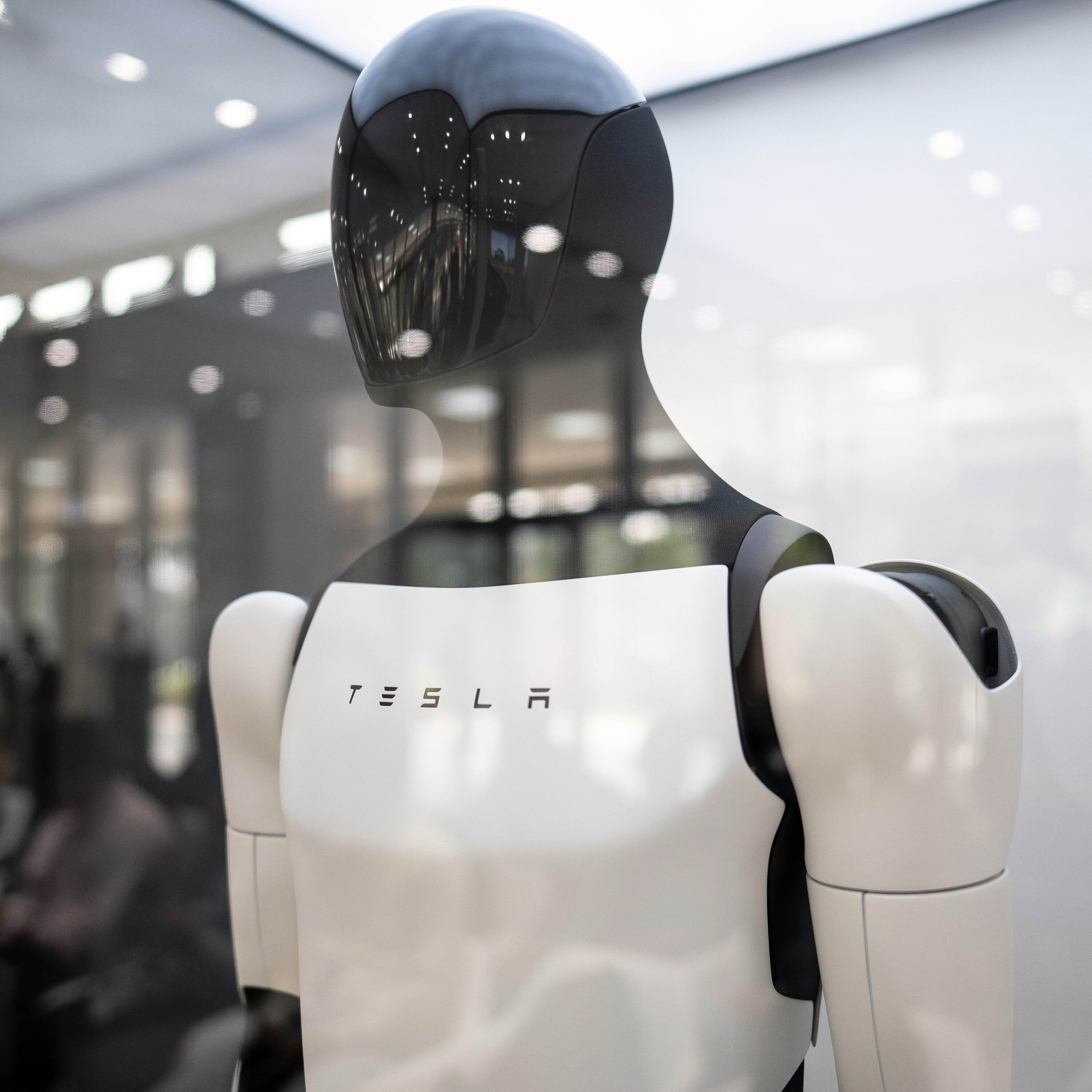
While Tesla is racing towards initial production of its Optimus Spot later this year.
Investors have already jumped on this trend.
A basket of Asia linked humanoid stocks has served more than seventy percent in the last twolve months alone.
Some analysts are now expecting the industry to generate hundreds of billions of dollars of sales over the next decade.
But how realistic are these forecasts?
What are the near term commercial use cases beyond the hype, and which companies and countries will emerge as the ultimate winners in this race.
You're listening to Asia Centric from Bloomberg Intelligence.
I'm John Lee in Hong Kong.
Today we have Takeshi Katara, senior in dust True's analysts from Bloomberg Intelligence based in Tokyo.
He recently wrote a deep dive report on this topic.
Takeshi, Welcome to the show.
Speaker 2Thank you, John Tokeshi let's get.
Speaker 1Down to basics.
What exactly is a humanoid robot and how does this differ from say, a normal robot.
Speaker 2Yeah, I think people look at humanoid differently depending on who it is, but basically it is closer to a human form.
And one of the reasons for that is that human society is built for humans, so it needs to be the right size to fit into all the hallways or factories to be used in machines, so it doesn't need to be human like.
That's why it's called the humanoid robot.
But I think there's a little bit of a divergence between humanoids with legs, so what we call bipedals, and humanoids which are on wheels but have an upper torso close to a human.
These are all considered humanoids in a broader context, away from conventional robots, which are usually single armed with six or seven axis.
Speaker 1And to Kesey earlier this month, we have the Influential CEES twenty twenty six conference in Las Vegas, and this conference showcases the biggest consumer trends for the year ahead, and one of the biggest themes, or one of the biggest buzzwords, was this, you know, physical AI can you explain how AI has impacted the humanoid robotics industry.
Speaker 2Yes, so physical AI, I would say, is a little bit of a broader concept compared to humanoid, so it does utilize AI.
And why it's called physical AI is now AI through the concept can actually move things around in real life, so it doesn't necessarily have to be humanoid, but it can also be an industrial robot being moved by and AI, which is also a physical AI, and that has been one of the areas that was closely getting a lot of interest with companies at Yasca Electric and also SoftBank who announced Acchoir abb Robotics last year.
Speaker 1So humanoid robots, there's a lot of hype around the industry, But can you give us some of your forecasts, like what are the current use cases for humanoid robots and how big can this industry grow.
Speaker 2So in our deep dive report, we have an outlook for automotive assembly use of humanoids.
We took a relatively deeper dive into how these can be actually used in real life with the current sort of specs that we are seeing on the market.
We do see the total addressable market for the automotive assembly use could reach five billion US dollars by twenty thirty five.
And this also includes peripheral parts and also the integration costs as well.
It doesn't seem a large deal, but there are a couple of hurdles that through the report we have identified.
One is battery life.
Another is the dexterity of the humanoids doing tasks.
Because human lying workers are very efficient on the floor line.
Compared to that, the humanoids needs to be just as efficient to replace labor, for example, the tasks and to.
Speaker 1Keshi, I read that report and you talk about how this is going to be used mostly in the last mile for auto production.
Can you explain because I think most people when they look at auto production, it's already highly automated, So how can humanoids improve the efficiency?
Speaker 2Yes, one way to give you some view into that is that currently I think average factory of three hundred thousand units annual production could employ about five thousand people per se and roughly about thirty some percent of that would be the final assembly line, maybe about fifteen to seventeen percent could be in material handling.
So there are a lot of tasks that human still needs to do within the auto assembly plant and these are areas that potentially humanoids which are similar to human sort of size and type of tasks that they can do eventually even with the current hurdles.
So these are some of the tasks.
And within the report we identified material handling as the key area that could be the initial phase of replacement, moving the kits and parts from the shelf to the floor line side, and these are still being done by humans taking things out.
Speaker 1Asia Centric is produced by Bloomberg Intelligence.
We're more than five hundred experienced analysts and strategists work around the clock to bring you timely, world class research.
Our coverage spans two hundred market indices, currencies, commodities, and industries, as well as over two thousand equities and credits.
To learn more about Bloomberg Intelligence, visit b I go on the Bloomberg terminal.
If you like what you hear, don't forget to subscribe and share all those the main use cases for humanoid robots today.
Is there any other interries that are using humanoid robots?
Speaker 2So, I think humanoids are being gradually tested outside the R and D room, but currently it's still in R and D phase.
The reason I think auto assembly and auto plants are the initial area that these are being tested are partly because Tesla and Chundai, for example with Boston Dynamics auto companies are at the forefront of having the capability to develop them as we speak as well and try to test them within their factories.
So I think autos is one area.
Others will be different.
Hurdles is one area that companies like Amazon is testing humanoids as well, as there are a lot of further areas.
A lot of its material handling or sort of inspection kind of tasks in countries like China, we are hearing more about.
Speaker 1Okay, in case, a lot of our listeners have probably searched through YouTube and seen some videos of humanoid robots at ces.
You saw them like fold clothes, put clothes into the laundry machine.
You haven't mentioned the use case for humanoid robots in homes, the domestic use cases.
How far are we away from seeing robots in the house.
Speaker 2I don't have a direct answer, but one thing that we do need to be careful about is that currently, for example, the conventional robots have developed through the automotive industry through sort of a lot of discussion around safety, so initially they needed fences.
Then came the collaborative robots which didn't need the fences, and now we are talking about humanoids which are potentially going to walk around together with the workers, so it will be a test case for safety as well.
Bringing them home will be at the discretion of everyone who wants to use them.
Laundry, cooking, and cleaning are some of the key areas which might make up seventy percent or more of the sort of daily tasks, and a lot of these tasks can be initially not the degree of humans, but automated through humanoids.
But if they fall down, who's going to get hurt or not?
What are the safety aspects of humanoids?
These are questions that are still yet to be answered, and it'll be different country by country depending on the regulation and case.
Speaker 1We've talked about.
Some of the forecasts that have come out from analysts across the street in this space really vary widely.
Like you're at five billion dollars of sales for the auto industry by twenty and thirty five.
Now I saw another analyst, I think at Barclays estimating like up to two hundred billion dollars of sales in that timeframe, and then you've got analysts in between.
Why is it so difficult to forecast?
And where do you think investors are in terms of their expectations.
Speaker 2So it is an area of wide divergence in terms of the estimate.
And we also took a little bit of a cautious side looking at what are the actual tasks that can be replaced and also the price point of humanoid robots as well.
I would think these tasks will gradually be replaced one day every task related to material handling will be humanoid.
At the same time, you also need to train and build the supply chain of these humanoid robots, including chips supply, so I think various hurdles, bottlenecks and the supply and actual the use cases including investment costs, including the high end chips that might be used for these applications.
So I think there's a lot of areas that we do need to clear out as we head for the estimates, and we continue to observe how these progress individually going forward as well.
Speaker 1And you mentioned the falling costs for selling and building these humanoid robots.
How much does it cost right now and how much has it come down over the last few years.
Speaker 2It's an interesting product considering that a lot of the motors and gears and sort of the reduction gears used in these have been around because we've been using a lot of these components in conventional robots.
So the price point is difficult to say.
It could be a couple of times the cost of a card for a Chinese sort of robots from unitry be a lot less than a car, but it depends on the task you also want to ask it to do.
If you want to utilize these humanoids in automotive factory, then you also need to think about the durability of the components as well.
So that's also another aspect that we need to actually monitor because after a year, if they don't function as efficiently, we will need to replace them, and it might cost initially a low level compared to a line worker, but if you need one every year, it might actually not make sense to utilize them on the floor line.
So I think the costs vary, but depending on the sort of tasks that is going to replace, there will be a red just fit variety of robots to be used, so it may not be as cheap as some of the Chinese robots we're seeing now, it might not be as expensive as the high end one we are seeing item.
Speaker 1And which are the companies that are likely to dominate this space.
You've already mentioned some of the auto companies, some Chinese companies.
Who do you think are the ones that we should watch out for?
Speaker 2So I think if you think about the humanoids, I won't say a single company because it's broadly being developed as we speak, so any upcoming company can overtake another similar to other industries, but the key areas of development have been US and China.
I would think Japan lags but are in a phase of gradual catchup as we've seen companies like Yaskawa do a buyout of humanoid robot business in Japan, and similarly we've seen soft Bank have exposure to that technology and their portfolio.
So I would think US and China continue to lead currently, but other contenders will come out in the future.
In terms of if you take a step broader to physical AI, which is also a new concept, but it doesn't really need to be humanoids to use AI and manipulator something.
So in that phase, some of the companies like Yaskawa, Finak or SoftBank who has announced the purchase of ABB Robotics.
These are key conventional robot makers which are testing AI into their products as well, so they will also have a share of tasks that will be automated through the use of extensive AI as well.
Speaker 1Okay, so you have one stream of humanoid robot makers, and when I think of these companies, I think of Tesla with its Optimus robot, which is likely to be slated to be launched later this year.
We've mentioned Boston Dynamics, which is owned by Hyndemoda un Tree, which is a Chinese company.
Then you also have traditional robot makers based in Japan, correct.
Speaker 2Yes, and also ub Tech in China is another company that has already received orders here and there from variety of US So yeah, it continues to be a developing area for humanoid companies.
But robot makers have conventionally been at the forefront of automation as well, so utilizing AI is the concept of physical AI.
So it will come from both front humanoids and sort of industrial robot angle as well.
Speaker 1And we always hear of this discussion of which country is going to win this race, and it's invariably a discussion of US versus China.
I know we've also discussed Japan as well, But who's leading the race?
Do you think between US and China?
Speaker 2It's difficult to say.
From where I stand, I think whoever is leading the AI race is a little bit ahead terms of the supply chain of the components.
China might have a lead because they've been a big manufacturer of the component side, So I think overall, if you think about the hardware, a lot of it relies on Chinese components as well AI, which is a lot of the value add for the technology.
I think it's a closer race.
Speaker 1And I wanted to discuss what's the cost effectiveness of having a humanoid versus a human on an auto factory.
Speaker 2So the cost effectiveness is difficult to say, considering that all the humanoids that are being utilized in test mode in various tasks.
Tasks are much slower than actual human workers on the auto assembly line.
So unless it's something that of a job role you can't fill or it can be done.
Apart from the sort of speed of the line the automotive factory working on, it'll be difficult to replace currently without adding a couple of humanoids to replace the single human worker, so I think efficiency wise, it needs to catch up.
Also, the battery uses only a couple of hours compared to an eight hour shift for an average worker without overtime in an auto factory.
So if you need to exchange battery or that will add to the perferle cost, but also to the time you need to be off the line as well.
So it's a difficult area.
And if the robot itself costs one hundred and fifty thousand US, then it probably takes something like nine years to recover.
If the efficiency of the task is maybe half of a human worker, but as it becomes one to one and the battery life lasts for a full shift, the recovery period of investing in the humanoid maybe comes down to a year or so.
Speaker 1Okay, I saw a video of the Boston Dynamics Atlas robots showcased at CEES twenty twenty six, and I was quite surprised.
They looked pretty cool, and I compared that to a video I saw five years ago.
There's been huge giant leaps.
What's next?
Do you think?
What are the big breakthroughs can we see for humanoid robots of the next say two to three years.
Speaker 2I think the big difference and the big need is more subtle in that sense being able to listen and do a task immediately.
I think the LLLM style sort of speech and doing the task itself has a little bit of a time lag still, so moving closer to how human can work is the biggest area of improvement that will be needed as these humanoids are got next to a human to do a sort of automotive assembly task or do the laundry things like that.
So I think further development of the AI and the computational power is continuing to be one of the forefront of the development itself.
Speaker 1Okay, And for the listener to give you some background, Hyundai Motor owns Boston Dynamics, and the share price has risen by over sixty percent of the last six weeks, largely on the back of the excitement of the Atlas robot.
We've also heard of Elon Musk mentioning a few times that eighty percent of the value of Tesla should come from the Optimus robot.
So there's a lot of investor expectations starting to build into this theme.
Do you think the industry will be able to deliver on all the hype.
Speaker 2Overall, I think the humanoid sort of development will happen and the scale will come true at some point, but I think it depends on the timing, So depends on each investors whether they're affecting it in the next one or two years or over the decade.
And at web pace, I think we do need to be careful as we spoke on sort of the supply chain being able to catch up and also the technology being able to successfully replace as many tasks need to be replaced.
I think there's a lot of areas that need to be clarified for the massive uprise in the technology, so solely depends on the pace of development.
And in the automotive field, we think five billion US dollars is a realistic outcome for the technology over the next ten years.
Speaker 1Okay to Kesey, Look, it's been a fascinating discussion on this burgeoning industry.
Thanks for coming on the show.
Thank you you've been listening to Ageacentric from Bloomberg Intelligence.
I'm John Lee in Hong Kong.
You can listen to all our episodes on Apple Podcasts, Spotify or review Listen.
And this podcast was also produced in edited by Clara Chen, thanks for listening.