All Eyes on Japan and China Tensions After Taiwan Remark
Episode Transcript
Bloomberg Audio Studios, podcasts, radio news.
Speaker 2Tensions between Japan and China are escalating sharply over Taiwan Biden risk.
This diplomatic spat shows no signs afe cancy of easing and this back and forth.
Speaker 3Relations between China and Japan have never been easy, but right now they're in the dumps.
Speaker 2China had canceled this trilateral meeting between the culture ministers, and in the meantime, Japan's Defense minister is saying that Japan will plan to deploy some missiles from Yunaguni, which is an island just one hundred kilometers to the east of Taiwan, a very strategic location.
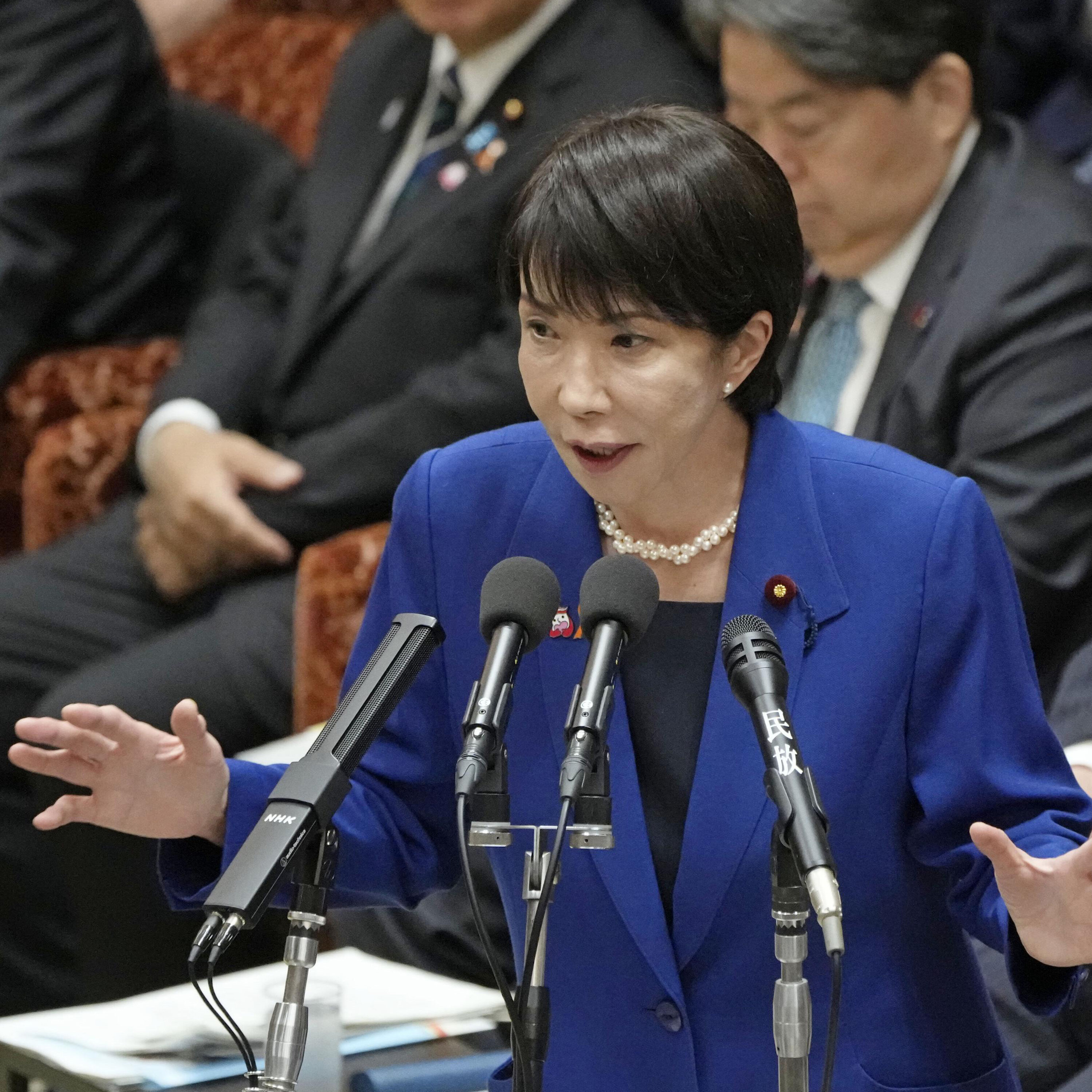
Speaker 3The cause of all this tension are remarked by Japan's new Prime Minister Sanai Takichi.
In response to a question in the parliament earlier this month, Takiichi linked Japan's security with the territorial integrity of Taiwan.
Speaker 2Takaichi is probably the first prim start to actually explicitly say that an attack on Taiwan could be an existential crisis for Japan, which gives in the legal justification to lean in militarily.
Speaker 3Japan and China have a long and tense history, often marked by disputes over wartime grievances and territorial claims.
But James Mager, Bloomberg Senior reporter based in Beijing, and Isabelle Reynolds, our Tokyo buer chief, say this dispute is different.
Speaker 4Taiwan is the red line.
There's a series of different issues between Japan and China.
Those are all important, but when it revolves around Taiwan, there is no leeway in the system for just accepting that maybe someone said something and it wasn't a threat.
Speaker 1That's right.
I think what's happened is she said the quiet part that aloud, the things that people would normally only talk about and plan for behind the scenes.
She's publicly acknowledged that we have to think about that.
Speaker 3Welcome to the Big Take Asia from Bloomberg News.
I'm Wanha.
Every week we take you inside some of the world's biggest and most powerful economies in the markets, tycoons and businesses that drive this ever shifting region.
Today on the show, China and Japan clash again, but this time the point of contention is Taiwan.
We find out why Japan's new Prime Minister has put Taiwan on the table and what it could mean for both sides.
Following Takeiichi's comments on Taiwan, Beijing has stepped up its protest and retaliation.
The Chinese government has warned its citizens against traveling to Japan and instructed its airlines to reduce the number of flights to the country.
Beijing's also suspended imports of Japanese seafood and halted approvals for movies too.
China's Foreign ministry has repeatedly demanded Takichi retract her comments on Taiwan.
Isabel says Takiichi has refused used to do so, saying there was no change to Tokyo's stance on how it would respond to a major security crisis in the region.
Speaker 1So what happened was on November seventh, in parliament, Takeichi said that a conflict in which Beijing was trying to take over Taiwan and was using armed force and was using warships could potentially amount to an existential crisis for Japan.
And now that is significant because under Japan's pacifist constitution and the laws it passed subsequently in twenty fifteen, an existential crisis would allow Japan potentially to send in its own military to the defense of a friendly nation.
Speaker 3And is that a big shift in Japanese politics for her to say that.
Speaker 1There was a huge amount of discussion leading up to the twenty to fifteen legislation.
Everyone's been very careful not to point out exactly what sort of situation where which countries might be involved, were where Japan might send an ex military.
So to come out and say this very boldly, very frankly, and not really mincing her words in any way is a big step away from how Japan has approached this issue in the past.
Speaker 3So certainly other Japanese leaders have been known to stay away from the issue of Taiwan.
Speaker 1Yeah, that's absolutely true.
They expressed friendliness towards it, but they've had this formal set of words that they want any conflict between the two sides to be resolved peacefully.
Speaker 4And I think on that it is important to note that people outside the government, or people who used to be ministers or MPs like Takh before she became the Prime Minister, has said similar things.
What's really different here is that the Prime Minister, in her official capacity in parliament made these comments, and I think part of The reaction from China was they were expecting her to do something like this.
They did know that she had these views because she has expressed them in the past, and I think for them it was their expectations or their fears about what she would do as prime minister were confirmed and then they reacted to that.
So it really is what you can say as a private citizen, what you can say as a very minor MP, and what you can say as the Prime minister tend to be different.
Speaker 3And of course we know that Takyishi made history last month when she was sworn in as a country's first woman prime minister.
She's barely unpacked her bags right in the PM's office.
To your point, why pick this fight now?
Speaker 1I think there are some doubts about whether she said this on purpose.
She is very new to the job and she's talked about how she only gets two to four hours of sleep at night, so I mean, you know, maybe she was sleep deprived and felt corded into it.
And I don't forget this was not something she came in and read out as a prepared statement.
This was part of a long session of being grilled by an opposition MP about what exactly would constitute an existential crisis, and at the end of it, she came up with this.
Speaker 3How did her comments land in Japan.
Speaker 1It's been a very mixed reaction.
I mean, we've seen a lot of public commentators sort of on both sides saying, of course she should not have said that, you should have withdrawn it, and the opposition urged her to withdraw those comments.
But Herst's public support rate is still enormously high.
It's probably the highest for any prime minister in more than two decades.
And if you look at the opinion polls, they're also a bit mixed, as you would probably expect.
Speaker 4And I think that's also an interesting point that what she's saying isn't unexpected for people in Japan.
There has been this debate now since twenty fifteen or a decade on what would happen if China did try to invade Taiwan.
Japan is right next door.
Obviously Japan is going to be affected by that.
If nothing else.
There are thousands of Japanese citizens in Taiwan who would need to be helped in some way, assisted out of Taiwan, evacuated, and so there's a public recognition that this is a very important question and the government will have to do something or decide to do something if there is a war in the Strait.
You know, it's not like this came out of nowhere, and Japanese people have never thought about this.
Speaker 3Now we know the two leaders, President she Jinmping and the Prime ministers in Aataki Uchi just shook hands about a month ago at the APEX summit in South Korea.
Are there any warning signs that anyone saw.
Speaker 4Then that meaning went pretty well?
I was there at the venue, not having the meeting itself, but everyone I spoke to you afterwards, the Japanese side, they seem to think the meeting had gone pretty well and there any real hiccup or wrinklin That was Takachi sound tweeted that she had met the Taiwanese representative to APEX, and the Chinese reacted to that quite badly, so they said she was flaunting it and hyping it up on Twitter, which kind of speaks to how I what I said earlier that they were primed for her to do something that they see is being provocative, and when she did that, I think they were like, we knew it.
She's exactly what we thought she was going to be, and now we have to react.
Speaker 3And what's interesting, though, is the reaction.
Even if they were expecting that at some point she would say these things, the reaction from Beijing hasn't been your standard diplomatic speak at all.
Right, it's gotten actually quite hostile and personal, including a rather shocking post from China's consule general there in Osaka, Isabelle.
I wonder if you can tell us about that and what the reaction to that was.
Speaker 1Yeah, So the concert general in Osaka, Shuri Jian.
Forgive my Chinese, I don't speak at all.
So the very day after this debate in parliament, he started posting messages on x on Twitter saying things about the dirty neck that sticks in where it's not wanted, will we sliced off with no hesitation.
He's known for that kind of rhetoric, so it wasn't all that surprising from him, and he did delete it, but by that time it had already been reported by the Japanese media, and of course there was a complete Twitter storm about it, and it seemed as though it was only after that the mainline government in Beijing started to really weigh in and follow his lead as to how they should deal with this issue.
Speaker 3And what do you think that indicates?
Does China then take this threat quite seriously?
Speaker 4Taiwan is the red line when it revolves around Taiwan.
There is no leeway in the system for just accepting that maybe someone said something and it wasn't a threat.
They have to react the way they think about Taiwan that it is and they will get it back, and everyone is trying to keep them from getting it.
Means that they have to react and stamp down on these things immediately, Otherwise if they don't, then six months later someone else's They think someone else is going to get bright ideas about saying something else about Taiwan.
And there may also be a calculation that Tokayi sign Is knew she's weak.
She doesn't have a majority in either house of parliament.
The last couple of prime ministers haven't lasted that long.
There may be an expectation that she's not going to last, and it may will be that kind of thinking as driving the Chinese reaction to Tokhan as well, that if we push, then she'll be gone and we'll have someone less hawkish.
Speaker 1To deal with that sounds very likely to me as well.
I mean, whether she actually is weak or not, that remains to be seen.
Obviously, her position at the moment isn't all that strong, but some people say she could call an election pretty soon.
She's got massive public support, and she could even manage to grab back a majority for her LDP on its own without any coalition partners if her support rate stays how it is.
And honestly, the things that China's saying, it's hard to say right now because the economic effects have not filtered through yet, but just that kind of rhetoric I think is much more likely to add to support for Takeitu than the other way around.
Speaker 3After the break the historical beefs between China and Japan, and how the legacy of World War two underpins the current tensions between Beijing and Tokyo, I wonder if we can step back a little and James, you kind of preface this a little before us, but I wonder if we can talk a little bit about the historical beefs between the two countries, because that obviously underpins perhaps a lot of the reactions on both sides.
What are the old scabs, the old wounds in this relationship that might be now being bloodied right now.
Speaker 4Obviously, the biggest issue between Johanna and China is left over from World War Two.
And by World War two, I mean not ninety thirty nine to ninety forty five.
The Chinese definition of World War two, or they're fight against the Japanese now is nineteen thirty one to ninety forty five.
Because Japan was a colonial power.
Japan held Korea, Japan held Taiwan, Japan took over a large chunk of northern China, and then they gradually took more and more, and then they've invaded Shanghai and Nanjing and southern China in ninety thirty seven.
And so that history of being invaded by Japan over decades and millions and millions of Chinese people being killed by the Japanese or dying because of the effects of those wars at that conflict.
So there's this resentment and hatred because of the events of that period to ninety forty five.
And then there is this belief that Japan is now trying to not take back Taiwan as a colony, but it's trying to separate Taiwan from its rightful place on the mainland, and also this idea that the Japanese government, the Japanese people haven't really repented sincerely on their actions during those various conflicts, and so all that is bound together.
It can be incredibly angry, resentful attitude towards Japan.
The historical question at this story of a match live and it's made much worse with the Chinese because of this.
Status of Taiwan is still very much contested.
Speaker 3Yeah, and Isabelle I wonder how does Japan see this?
Speaker 1Even within Japan, this is a hugely divisive issue.
I think going back to when ties were restored in nineteen seventy two, from there on, Japan contributed huge amounts of aid and there was lots of technological transfer, and I think the feeling behind that for a lot of people was we want to try and make up for the things that we did wrong in the past.
But there's also a part of the population who feels like there was nothing wrong.
We waged a war.
All countries wage wars.
We shouldn't be single alert for criticism just because we lost.
But I think nowadays, to be honest, people are not looking so much at history in Japan.
They're just thinking we have this giant economic and military might right next door to us, How are we going to manage to sort of get along with them getting the economic benefits?
However we can without fooling under their sort of influence too far.
Speaker 3Now it is about this back comes at a time when Japan's economy is WOBBLI.
We've seen GDP shrink, the yen is weak, there's persistent inflation.
China issued a travel advisory warning its citizens not to travel to Japan.
Is there a risk there to the Japanese economy?
Speaker 1To a certain extent, there certainly is.
Chinese people make up a quarter of visitors to Japan at least so far this year, and that's just really started to recover in the last year or two from the pandemic period, So yes, that could be quite damaging.
On the other hand, there have been a lot of complaints in Tapan about over tourism and about poor manners on the part of Chinese tourists in particular, so that might not damage take support rates in particular.
Speaker 4And also tourism is an important source of foreign currency revenue for the country, but a slight reduction in tourist revenue isn't going to be as damaging as the risk or the possibility of Japanese companies in China being targeted or seeing boycotts.
Japanese car companies still have billions of dollars of investments here.
Other Japanese companies have billions and billions of dollars of investment here, seven to eleven, Uniclo Family, Panasonic, Canon Fujitsu.
You know, these are huge companies that do a lot of revenue here.
And if you start to see real consumer boycotts, if you start to see businesses pulling back from doing business with Japanese companies, then the hit to Japan Inc.
Could be substantial.
While tourism is very vivid in your face, the bigger thread is going to be if this goes on for a long time and Toyota sales in China crater even more than they've already been falling.
They're already falling because of competition from Chinese companies.
If those crater, then the effect of that is going to be quite big for Japan's economy and for those companies.
Speaker 3James, what's been the public mood in China over this?
Speaker 4Obviously the press and the government reactions is one thing.
But I think the thing that sticks out for me so far at least, is there hasn't really been a public reaction.
Japanese restaurants are still full, and unlike previous times.
I was speaking to someone who's lived here for more than twenty years, and they were saying, in two thousand and five or in twenty ten, you saw Japanese restaurants putting up signs in that windows saying where are in by Chinese people?
This is a Chinese restaurant.
We just sell Japanese food, and I haven't seen any sign of that yet.
Speaker 3President Donald Trump has now entered the conversation as well, speaking directly with both she and Takeichi.
This week, Trump and she held the first talk since agreeing to a tariff truce, and Trump's readout of the phone call, they discussed trade and Russia's war in Ukraine, but he made no mention of Taiwan.
Meanwhile, China's Foreign Ministry says she told Trump on the call that Taiwan's return to China is essential a cornerstone of the post World War two international order.
Hours after that conversation wrapped, spoke with Takeichi.
She said the US president reached out to reaffirm ties with Tokyo and said she could call him any time.
The back to back calls show the US is tricky balancing act managing tensions between a key US ally and its biggest rival for most Japanese people, Though Isabelle says they'd rather move past this issue altogether, I.
Speaker 1Think from the japan side, they will just continue making these very sort of low key and modest but steady efforts to try and smooth things over.
Speaker 4I do think it matters how well Takaichi San does in any election that she calls.
There's talk that election might happen in January next year, and if that happens, as she does win a majority, especially if she wins a majority with her own party, that puts her in a really good position to be the prime minister for three years or more.
And so if she can show that she has domestic political stability or there is domestic stability, she has domestic political strength, and couple that with not saying things like this again or being vague when you need to be vague, and that continued low key kind of work by diplomats.
Maybe over time there can be an improvement in this, but I think if I don't see any prospects of real improvement or change this year.
Speaker 3This is The Big Take Asia from Bloomberg News.
I'm wanha.
To get more from The Big Take and unlimited access to all of Bloomberg dot Com, subscribe today at Bloomberg dot com slash podcast Offer.
If you liked the episode, make sure to subscribe and review The Big Take Asia wherever you listen to podcasts.
It really helps people find the show.
Thanks for listening and see you next time.