Inside Disney and OpenAI’s Billion Dollar Deal
Episode Transcript
Bloomberg Audio Studios, podcasts, radio news.
Speaker 2As AI generated images ping pong around the Internet.
The Walt Disney Company has mostly been playing defense.
In June, the entertainment company sued the AI image generator mid Journey over copyright infringement after realizing the app could whip up visuals of Yoda and frozens elsa that looked eerily similar to Disney's own animations.
Speaker 3Lawsuit against mid Journey by a major Hollywood studio following Disney and Universal's joint lawsuit.
Speaker 2And on the evening of December tenth, Disney sent a cease and assist letter to Google, alleging the company was using the studio's IP to train its AI models.
But just the next morning, Disney made a very different kind of announcement.
Speaker 4Disney has decided, if you can't beat them, join them mad.
Speaker 2Disney came to a landmark agree with open Ai to license more than two hundred Disney, Marvel, Pixar, and Star Wars characters for use in the AI company's video generation app Sora.
As part of the three year licensing deal, Disney agreed to take a one billion dollar stake in open Ai, with the option to buy more shares in the company.
According to Bloomberg reporting, the deal to use Disney's IP was done entirely in stock rather than a cash licensing fee.
Speaker 1It was a big milestone for open Ai because the company has been trying to strike deals in Hollywood with major media companies for over a year and a half.
Speaker 2That's Sharene Gafari, who covers Ai for Bloomberg.
Speaker 3They've had some successes with publishers and not so much with others.
But what we have not seen yet though, is them have a deal to actually use really valuable studio IP, especially that of a company as iconic as Disney with all of the characters that they own.
Speaker 2Reactions to the Disney OpenAI partnership have been mixed.
Speaker 5Everyone will be able to create Enatavii slop videos with Disney characters using sora Ai.
Disney finally figured out that the thing people want to do most with their IP is participate with it.
Speaker 2Bloomberg Entertainment reporter Thomas Buckley says some of the labor unions representing artists and creators who work with Disney were troubled.
Speaker 5The right skilled came out very strongly against the deal, likening it to theft.
Speaker 2Meanwhile, Disney's stock price has risen nearly five percent since the news.
Speaker 5From a Disney perspective, it's really an evolution of the mantra that Bobigo adpted a long time ago, which is that you know, if you can't speed tech, then new joint tech can you seek to profit from tech.
Speaker 2Here's Eiger, Disney's CEO, during an earnings call in November before this deal was announced.
Speaker 4We've been in some interesting conversations with some of the AI companies, and I would characterize some of them as quite productive conversations as well, seeking to not only protect the value of our IP and of our of engines, but also to seek opportunities for us to use their technology to create more engagement with consumers.
Speaker 2Sharene says besides being a big deal for the companies involved, it could also be paradigm shifting across the entertainment industry.
Speaker 1Disney is viewed as sort of this gold standard in terms of the mass appeal of its IP, of its characters, in terms of protecting the brand right and making sure that it's kid friendly.
Disney is so international, so I think it does sort of set this template of look if Disney made a deal, then should other companies not be so precious about their IP do something similar.
Speaker 2I'm Sarah Holder, and this is the big take from Bloomberg News today.
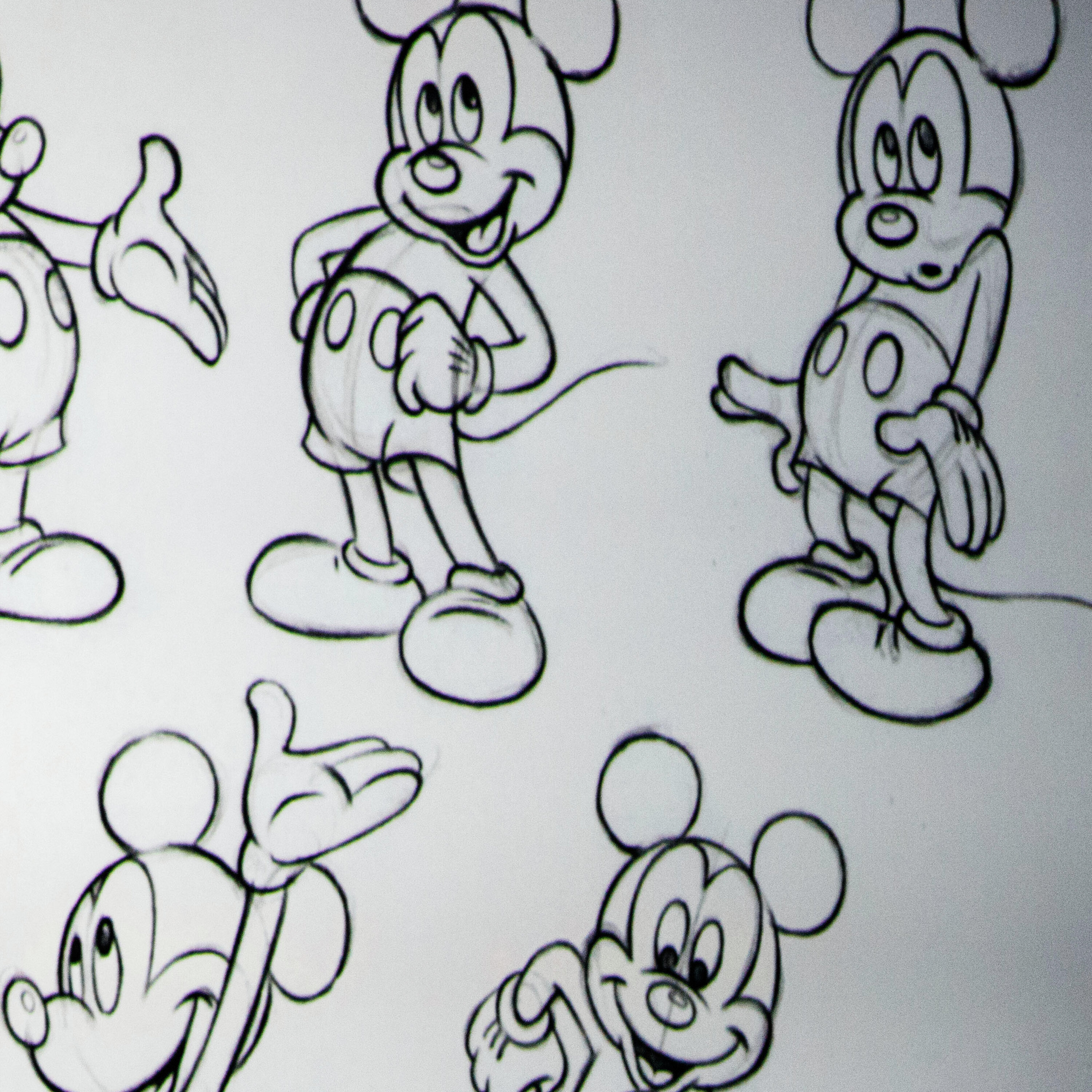
On the show Inside Disney and open AIS billion dollar deal, will Mickey Mouse, Simba and Princess Ariel Flounder or sore as the characters and company become part of the world of user generated artificial intelligence.
Bloomberg Sharine Gafari says Disney and open AI's path to partnership was a long and winding one.
Speaker 1As Thomas and I have reported about a year ago, a little bit less than that, open AI and Disney were not, you know, as far as we reported making significant progress in their deal making talks, wasn't clear at all they were going to be able to come to any kind of agreement.
There was widespread skepticism in the media entertainment industry about if these kinds of deals would really benefit media companies or would put their own IP and their own talent at a steep disadvantage.
Speaker 2Bloomberg's Thomas Buckley says Disney was wary of how AI could warp its material.
Speaker 5Mickey Mouse spraying bullets from an AK forty seven and even worse.
I think that that's especially what Disney took grave concern with iconic Disney characters in situations that you simply would never want to see a disas the character.
Speaker 2In those grave concerns, we're part of what led Disney, alongside Comcast, the owner of Universal Pictures, to sue the AI company mid journey earlier this year.
Speaker 5This is simply not how it wanted its ib to be represented on screens, right, and specifically not in terms of children either.
Speaker 2And Scharene says, just because Disney has struck a deal with Open Ai, it doesn't mean the company is done fighting.
Speaker 1Disney is still taking a litigious approach in some sense because they have sent a season to sister to Google, which offers similar video and image generation products, right, and so, on the one hand, while they're forging this deal with Opening Eye, they are still wielding a more sort of stick approach.
If it's a carrot and stick strategy here with others who they have not made deals with yet.
You know, it's sort of like, if you don't do a deal, then there's a good chance that you're going to get sued.
Speaker 2Right, well, Sharene, you have been tracking how open AI has ramped up their efforts to woo movie studios this year.
Can you walk me through that strategy and why that's been such a priority for the company.
Speaker 1Opening I really started kind of its courtship with the media industry by talking to newsrooms, right.
So you have one of the first major deals they did on this front to sort of be allowed to use IP being with Axel Springer, the German media conglomerate.
Then they start to court Hollywood, right, and we have executives like Sam Altman and Opening IICEO Brad Lightcap who's really been the key deputy on these Hollywood and media deals.
He has been trying to sort of make inroads with media leaders who are you know, I think rightfully skeptical about tech and feel that they have been burned in the past by going back to the advent of the Internet and seeing sort of the value of IP everything from news articles to movies that can be pirated sort of diminishing with technologies and not seeing enough of a return on it without a fierce legal battle.
And I think it took a lot of convincing trips to LA and to New York to talk to the new rooms to talk to the media leaders like at Disney to get them on board with this, And it's still, I think, really unclear if this is really an industry consensus that AI is actually going to help the media industry, or if it will actually end up sort of niecapping it in an even more severe way than the streaming wars or than the early kind of Google search era did.
Speaker 2What is open AI's argument here, What are they saying about how using this classic IP will actually help the media companies and how is that landing with these media companies, I.
Speaker 1Know, specifically with newsrooms for example, there is this idea that it's sort of a win win because newspapers want distribution for their articles and open aye wants accurate information and its chatbot with entertainment something like Disney.
It's a little different, right, It's not necessarily maybe so much about truth or accuracy, but about Hey, if people are going to be making a bunch of videos, are going to be engaging in a new form of entertainment in an app that take over sort of social media in the future, don't you want your characters on there in sort of a controlled way and get some real business upside out of it.
I think that's the pitch.
Speaker 5What's interesting in terms of timing, you know, open AI's overtures coalesced with the dual strike of actors and writers back in twenty twenty three.
I think that there was a huge amount of concern as to how the likes of likeness and scripts were going to be used to train AI models without artists being compensated fairly.
I think that in the earlier stages of open AI's outreach to Hollywood, there was no financial consideration beyond maybe open Ai paying the licensees a fee that they didn't feel was commensurate with the valuation of their IP.
And so what that means is that now there's a bit more of an impetus, I suppose from a financial perspective for the media giants to play in that space, and we started to see more deals struck in the space.
And think of example, about Mattel's partnership with open Ai.
Mattel not only a toy makeup but also a producer of the film Barbie.
So I do think that, you know, it signaled a turning point.
For the beginning, it was very much minimal financial upside, maximum reputational downside, and I think that that's shifted a bit in recent months and weeks.
Speaker 1I think, you know, the media industry and entertainment industry, like any industry, was watching to see, you know, how the AI boom evolves.
And when apps like chatchbt first came out, it wasn't at all clear if this would even stick right or if they would be able to generate images or video at the incredible rate of progress that they have.
On a second level, you know, I think really the news partnerships that open Ai did kind of laid a little bit of a templative least for this idea around licensing IP and as well as you know, product collaboration.
So this idea that okay, not only is open ai going to be using Disney's assets, which is its IP, but Disney will be using open AI's assets, which is its technologies to further its own operation.
Speaker 2In addition to the potential gains for both companies if things go well, there could also be a lot to lose.
That's after the break.
The Walt Disney Company is over one hundred years old and worth nearly two hundred billion dollars.
Open Ai is only about a decade old.
And was valued at five hundred billion dollars in October, so a much younger company, not yet profitable, but worth a lot more, and Disney now gets a billion dollar piece of it.
Speaker 1Disney's ip is obviously really valuable.
So I was curious about what was sort of in it for Disney and was there actual cash exchanged.
Speaker 2That's Sharene Gifari who covers Ai for Bloomberg.
Speaker 1And what I found was that actually we confirmed was no cash exchange is part of this deal, that it was all stock, and that came in two main forms.
One is one billion dollars worth of equity that Disney's investing now into open Ai.
And then also Disney will have the right in the future to have stock warrants in open Ai.
Right, so the ability to buy open Ai stock at a future date for a set price.
And the idea here is that if open Ai grows in value, Disney will benefit as well.
So it's really Disney taking a bet on the growth of open Ai and particularly its video efforts.
Speaker 2Yeah, I mean, I know there has been some concerns about overvaluation in the AI space.
Is Disney's willingness to sign this deeal sort of an affirmation that the company thinks open AI stock still has a lot of growth ahead of it.
Speaker 1I mean, you don't invest in a company if you don't think that it's going to have upside, right, So the facto, yes, now we're in the middle of what a lot of people are worried is a major bubble, right, a financial valuation bubble and even potentially technological bubble if this technology doesn't keep improving at the rate it has.
So you know, this kind of ties Disney to this larger economic kind of conversation about are we in an AI bubble?
Will these valuations go down?
Is AI overhyped?
Until now, Disney didn't have a real stake in that battle necessarily except for maybe companies ripping off of its IP.
But now it has skin in the game to win or lose from AI more directly, I.
Speaker 5Think also what you have to assume forgetting the financial implications is that the technology is only going to get better and better.
Speaker 2That's Thomas Buckley, who covers entertainment for Bloomberg.
Speaker 5And so I think that video generation is here to stay.
User generation is certainly here to stay, and as a result of that, I think that Disney is seeking a way to play meaningfully in that space, in a way that's safe, in a way that's ring fenced, and in a way that might evolve its IP for the appeal of younger generations.
Speaker 2I'm wondering how much control will they really get or how their IP is used, Like what kinds of guardrails are built into this agreement, if any.
Speaker 5I would assume that Disney's eventual control and promotion of the output has to be paramount on the basis that Barbaika has said that he would be seeking to actually include some of the videos produced onto the Disney Plus streaming platform, and so those would obviously have to be very carefully vetted.
They would have to be in keeping with the characteristics that all of Disney's characters stand for, with the belief system that Disney has sought to cultivate with its content.
So I would think that it's absolutely paramount for Disney to retain some control over how its characters are used and.
Speaker 2Displayed and sing the upside for open AI, as we've talked about, seems pretty clear.
You know, Soraa gets to play with all these Disney characters.
They get this huge vote of confidence from a major household brand name.
But is there anything else that you can add about what kind of monetary value might this add to Sora.
Speaker 1Yeah, I say that video generation is extremely expensive.
It's considered probably more expensive than text just because of how rich images are to process and create.
So if Sora is going to actually make financial sense for open ai as a product line, it needs to have users.
It needs to generate revenue in the long term.
And while Sora had this splashy launch it quickly rose to the top of some of the app charts, it's sort of come down in recent weeks and months, and I think that it needs to have this kind of sustained user growth if it is going to succeed, and Disney can help that growth, right.
Obviously, Disney's Kingdom comes with a lot of fans who could be eager to riff on their characters and AI in a way that maybe before they wouldn't really care as much about using the Sora app.
Speaker 2I'm curious about what all this means for the artists and the writers who originally created these characters for Disney Thomas.
I know the Writer's Guild of America was really upset by this deal.
I'm wondering if you could talk more about how labor unions who work with Disney have been responding.
Speaker 5Absolutely so, a number of labor unions in Hollywood, and really those that work most closely with Disney, including the Animated Guild, the Writer's Guild of America, and SAG, the union representing actors, all expressed the hard work of the artists that they represent they would argue as being pilfered through user generation.
It's interesting to note, however, that on the SAG side of things, the Screen Actors Guild likeness and voice is not included as part of this deal.
So I think that it's more of a wait and see approach there.
Speaker 2Right, because, of course, the Writer's Guild or the cartoonists are not party to the stock being exchanged here, right, Like, how are they able to be compensated for the work that they did?
Is that their underlying concern here?
Speaker 5I think that at certainly, at some point it will become that.
I think that fundamentally, it's very difficult to trace the exact lineage of a user generated video to an original storyline.
I mean, for example, you're in inter twining the likes of Cinderella with sleeping beauty as they work in concerts takedown darth data.
Does that mean that absolutely every writer on the animation side of things and on the style wars side of things gets compentpated?
I simply don't know how you would structure such a deal.
Speaker 2I'm also wondering about how investors in Disney have reacted to this deal, Saran.
What happens if Disney's investment in open Ai doesn't pan out?
If open Ai stocks tank?
If concerned about a bubble, you know, turn out to be real, are Disney investors concerned about that?
Speaker 1Well, it certainly wouldn't be good for Disney if let's say the Ai bubble berth and Open Aeye's valuation drastically drops.
I defer to Tomas on the exact specifics, but I know that Disney's cash flow is a lot higher than companies like open Ai, which are making money but losing a lot of money essentially because of their high cost.
Disney is a highly profitable business.
Speaker 5A billion dollars is a fraction of Disney's marketcap.
It's even more of a fraction of Open Aey's valuation, so they might see it as a large bolt on cost but certainly nothing that might be transformational from a financial perspective.
Although could have transformational results, it concerns the IP and I'm sure that Disney is hoping that it will have transformational implications financially.
However, if open A's valiation continues to saw.
Speaker 2You know, we started this conversation talking about the two approaches entertainment companies have been taking with AI companies.
Try to beat them, try to hold on to your IP, try to sue them for copyright infringement, or join them strike a deal like Disney and open AI did.
Does this Disney open Ai deal set any new precedent for how these relationships could work moving forward.
Speaker 5I think what's really interesting is that you have the arguably the most iconic company in all of Hollywood, you know, uniting with arguably the most widely recognized company in the space of AI currently.
So I think that the deal between the two of them certainly signals that there might be more to come.
On the basis that Disney, I think, has always prided itself on being able to look around corners.
You could argue they assembled this treasure trove of IP in order to launch Disney Plus.
And I think that that showed an incredible amount of foresight.
I would imagine that bob Bieker is hoping that it might be interpreted exactly the same way, in that it could be a step forward into Disney characters interacting with its fan base in a way that they never have before.
Speaker 2This is the Big Take from Bloomberg News.
I'm Sarah Holder.
The show was hosted by Me, David Gera, and Juan ha.
The show was made by Aaron Edwards, David Fox, Jeff Grocott, Eleanor Harrison de Gate, Patti hirsh Rachel Lewis, Krisky, Katie mcmurran, Naomi Julia Press, Tracy Samuelson, Naomi Shavin, Alex Sugia, Julia Weaver, Yang Yong, and Taka Yasuzawa.
To get more from The Big Take and unlimited access to all of Bloomberg dot Com, subscribe today at Bloomberg dot Com Podcast Offer.
Thanks for listening.
We'll be back on Monday.