The Big Business of the Doodle Boom
Episode Transcript
Bloomberg Audio Studios, podcasts, radio news.
Speaker 2Hi, I'm so nice to meet you and you're Sarah.
Speaker 3Yes.
Speaker 4A few days ago, our producer David Fox and I drove to the suburbs of New Jersey to meet Lauren Houston and her dogs.
Speaker 5This is Skyle, she turned eleven in September.
And this is Vippy.
Here.
Vippy is VIP, which stands for a very Important puppy.
She was my is my first reading mama in the program and she just had her retirement litter.
This is Gavin.
He is one of my stud dogs.
He just started reading.
And then Navy.
Speaker 4Vippy and Skye and and Navy aren't just any old ducks.
They're labradoodles.
Labradoodles are a mix between a Labrador Retriever and a poodle.
They're just one branch of the doodle family tree.
And Lauren is a labradoodle breeder.
In twenty twenty one, she started a company called Sunny Heart Doodles.
Now she breeds and raises doodle puppies out of her home.
Speaker 5I breed exclusively many multi generational Australian labradoodles who are health tested and have lineage dating back to the original lines of Australian labradoodles.
Speaker 4Since the first labradoodle was born in Australia in nineteen eighty nine, doodles of all kinds have exploded in popularity, but Lauren was an early adopter.
She got a couple cockapoos in the late nineties that's a cocker spaniel poodle mix for the uninitiated.
And then in the early two thousands, when Lauren was looking for a new dog to take in, she discovered the world of labradoodles.
Speaker 5I wound up connecting with a bunch of these different doodle clubs, and I thought, Okay, I've met like thirty forty of these dogs and they've all been amazing.
I would love any one of them.
Speaker 1What was special about them?
Speaker 5I think they're muppet like, bouncy, flouncy, happy, go luckiness.
I naturally gravitate towards them.
They're just so humanesque in their expressions and even in their eyes.
They're just kind of captivating.
Speaker 4Fast forward to twenty twenty five and Lauren has raised dozens of doodle puppies for other families to adopt.
Meanwhile, people around the country have fallen in love with the dogs too.
Speaker 5Look how cute they are.
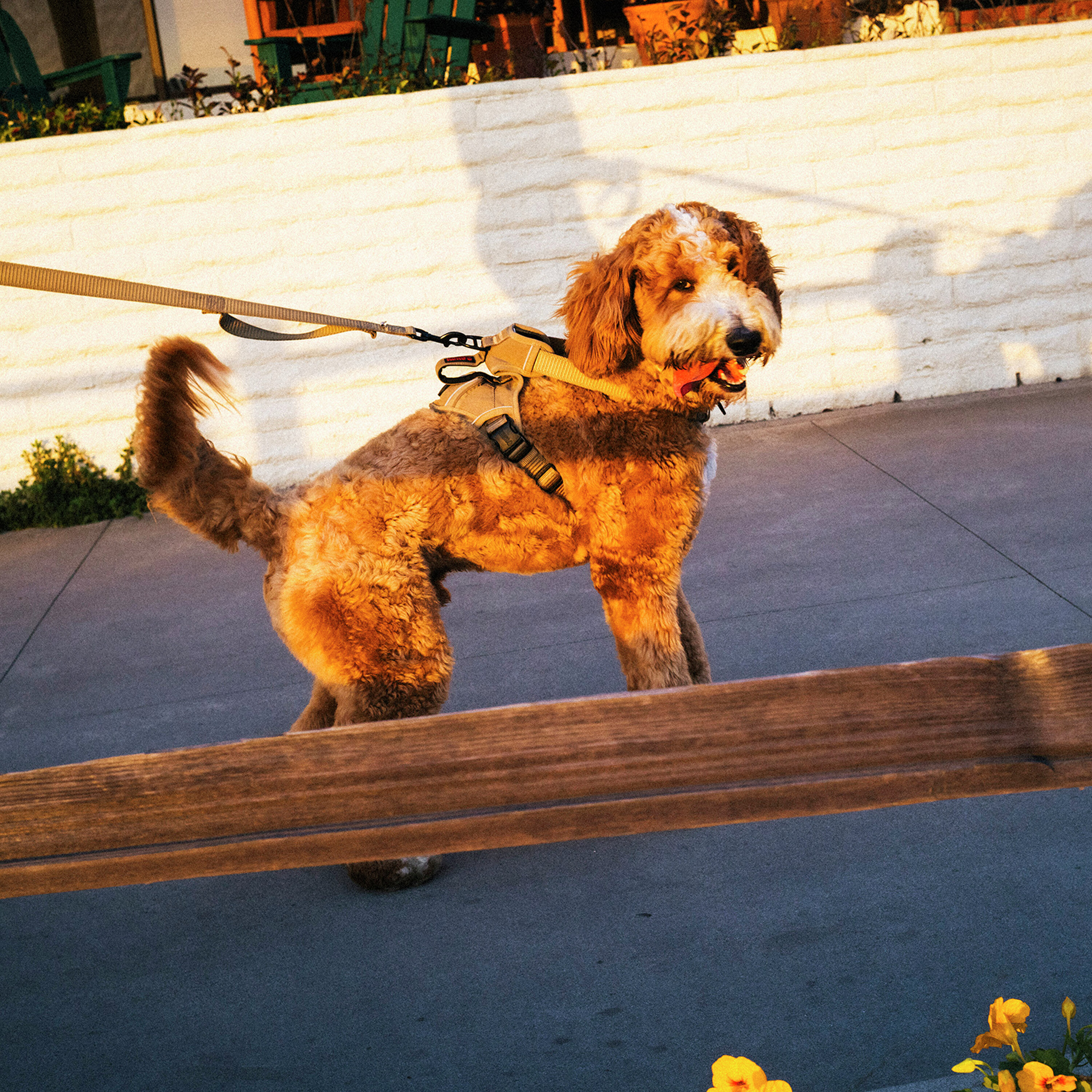
You cannot find a coat anywhere like this in the animal kingdom.
Speaker 1It's a live human, a live teddy bear.
Speaker 4They're sweet, they're smart, they're cudly, and you'll never go to the bathroom alone.
Doodles have become a big business, one that could be worth more than a billion dollars.
Speaker 3I'll be walking my dogs down the street and like downtown, and somebody from across the street will be like, doodle, and I'll be like, yeah, doodle, and you know, it's kind of like, you know, thumbs up, because they have a doodle too.
Speaker 4But the ubiquity of these muppet like hoodle mixes has also come with some puppy drama.
Speaker 1I think it's fair to say that there is a little bit of disagreement between sort of like the institutional gatekeepers and who have four centuries had the final say over what is considered and is not considered a dog.
Speaker 4That's Ali Conti, a journalist who recently wrote a story about doodles for Bloomberg BusinessWeek.
Speaker 1And then these women who have you know, started their own small businesses sort of breeding dogs, saying you know, wait, I don't need your permission to say that I've created a dog.
Speaker 4So will these pups stay on top?
Or has America reached peak doodle?
Sarah Holder And this is the big take from Bloomberg News today.
On the show Welcome to doodle Mania, we go inside the biology and the business behind the doodles rise to fame.
I'm gonna give you thirty seconds and you need to or you you are welcome to name as many doodle breeds as you can.
Are you down?
Speaker 1Yes?
I think I might embarrass myself, but let's go for it.
It's gonna be great.
Speaker 4Okay, stop watch and putting thirty seconds in the clock.
Speaker 1Ready go well?
Golden Doodle, burn a doodle, Labordoodle.
That's like the Holy Trinity, so to speak.
She poo multi poo ca a poo shnoodle U Golden Mountain Doodle, double doodle, great noodle.
That was the one that I love.
I'm glad I got that in before the clock.
Speaker 4How many of those doodles did you know about before reporting?
Speaker 5This?
Speaker 1People?
One?
Which one?
The Golden doodle, the ubiquitous one.
Speaker 4Back in twenty twenty four, reporter Ali Conti started looking into a strange phenomenon why doodles seemed to be everywhere on sidewalks with their owners, in cafes, breweries, on TikTok in her editor's neighborhood in New Jersey.
Ali set out to find out just how big the doodle biz had gotten.
Speaker 1This is like super back in the Nappian.
But I think it is just north of a billion dollars.
Speaker 4Wow.
Speaker 1And what goes into that calculation the number of dogs, then the mouth that they cost, and then how much it costs to maintain them.
So like golden doodles, for instance, actually costs more to maintain than other dogs because they need more grooming, so that factors in as well.
But it's just just north of a billion.
Speaker 4There are no official doodle population figure, but for the past several years, the PetCare site rover dot com has found that doodles are among the most popular dogs on their platform.
The Pet Insurance division of Nationwide has reported that from twenty thirteen to twenty twenty one, the number of doodles they were ensuring had increased one hundred and sixty percent.
Each of these dogs can cost thousands of dollars a year.
Doodle breeders charge an average of two thousand dollars per dog and there are higher end options too.
A company called Pride and Prejudoodles asks for more than fifteen thousand dollars for a fully trained dog.
Then there's about three thousand dollars a year in maintenance costs think grooming, feeding, and healthcare.
Speaker 1It adds up.
Speaker 4So how did the doodle market get so big?
To understand that, you have to begin far away from New Jersey.
Speaker 1So the doodle origin story is that in nineteen eighty nine, a man named Wally Conran in Australia bred this dog that was supposed to be for this blind woman with an allergic partner.
So he combined a lab and a poodle and you know, after like I think it was like thirty three different trial runs of this, he found like the magic sort of combination of dogs that could like you know, be like the seeing eye dog for this person.
So you know, obviously very intelligent and you know, listens to people and can be taught, and then also didn't trigger the partner's allergies.
So that was sort of how this started.
It was to fill a very specific need, ironically, and now the dog has become like the dog of choice for all different kinds of people.
Speaker 4The doodle began to take off in the US in the late nineties when a couple of American breeders started marketing them widely.
Speaker 1And then once one person got one, they would tell their friends, and then you know, the friends would want the sibling dog, and then that kind of grew from there.
Speaker 4That word of mouth reached Lauren Houston.
She got her f doodles straight from Australia in two thousand and four and joined a passionate and growing community of doodle lovers.
Speaker 5While I was waiting for this puppy, I was on the breeder's chat page like every day, looking at photos and connecting with people.
So when I got Reagan, I felt like I kind of knew this whole group of people and it was pretty It was a pretty extensive network, actually, I have to say.
So we would do plate eights, birthday parties for the dogs and stuff like that.
Speaker 4And as labradoodles became more and more popular, breeders tried to ride the wave and come up with new variations.
They were making all kinds of poodle mixes, cockapoos, multipoos, golden doodles, miniature golden doodles.
The dog's popularity grew to the point that by the end of the decade, a doodle nearly reached the highest office in the land.
Speaker 1So another inflection point would be two thousand and nine Obama famously I say famously, but like it's only because I know, sorry, it's when Obama famously was like considering getting a doodle.
Speaker 4It was a milestone that caught the attention of the American Kennel Club, a group founded in the nineteenth century that registers purebred dogs and advocates for dog health.
Speaker 1And the AKC like released a statement being like, oh, well, he should really think twice about this.
You never know what you're getting into.
Like they clearly had like this like pr crisis, where like, oh my god.
Speaker 4Like and is that why he went with the Portuguese water dog.
Speaker 1I would imagine that it probably gave him pause or you know, we've all seen deep I feel like there was a conversation.
Speaker 4The doodle may have come short of being America's first pup, but people like Lauren were already hooked.
In twenty fourteen, Lauren got another pet doodle named Skylee.
She made her an Instagram account.
Within a year, it had twenty five thousand followers.
In twenty sixteen, Lauren started working for Skye's breeder, running their social media accounts.
Then COVID hit and doodle demand reached new heights.
Speaker 5People were home and everybody was getting puppies.
But for our program anyway, or their program, it was explosive.
Speaker 4Lauren decided to go solo.
She launched her own breeding program in twenty twenty one.
Since then, she's sold eighty three puppies.
Her website says each puppy currently costs thirty four hundred dollars plus tax, and on Instagram and Facebook, her doodle related accounts have a following of more than one hundred and forty thousand.
Speaker 5I'll just say it, I'm a beast.
Like when I have puppies on the ground, I'm posting a minimum of like forty stories a day.
It's all day long.
There will never be a family that can say I don't know what's happening over at Sunny Heart.
Doodles like no, they see everything.
Speaker 4But the rise of the doodle has raised some concerns from purebred enthusiasts and some of the most powerful gatekeepers in the The doodle drama That's After the Break as part of her reporting on the doodle business for BusinessWeek, Ali Conti also wanted to understand another aspect of the doodle boom it's critics.
Online, you'll find a lot of vitriol directed at doodle breeders and a fierce debate over whether they're breeding practices are ethical.
Speaker 1So if you talk to people who breed doodles, they will often talk about like doodle hate and how they get a lot of hate mail and people commenting on their Facebook pages from people who are into purebred dogs, essentially saying these dogs are bred and ethically they're not healthy, spreading messaging about like you never know what you're gonna get when you get a doodle.
Speaker 4And Ali says you can find some of the loudest doodle opponents at events put on by the American Kennel Club, the nonprofit registry that is final say on what is and isn't considered an official breed in the US.
The organization's stamp of approval is the best way for an emerging dog breed to become popular with the public, and the AKAC doesn't recognize doodles.
An AKC spokesperson told Ali that no doodles have applied to be recognized.
Earlier this year, Ali went to the Clubs Meet the Breed's event in New York.
Speaker 1That's where people go and like basically proselytize about their favorite breed.
And it's like funn you get to go pet a bunch of dogs.
But people have these like antidoodle like buttons on what does an antidoodle button look like?
You know, make sure of a doodle.
It's so cute.
It just says doodle with the line through it.
Speaker 4The AKAC makes the majority of its one hundred million dollars in annual revenue from registering purebread dogs and selling tracking chips to owners.
But since doodles hit the scene, the AKAC has seen purebread poodle registrations declined.
In nineteen ninety, they were just under seventy two thousand registered poodles.
By two thousand and eight, that number had dropped to just under twenty two thousand.
They haven't released dog registration data since then.
Speaker 1So it's kind of like the AKC is rapidly losing its it's relevance.
Like people are not super hung up on having a pure red dog anymore.
I mean, this is their livelihood, right and the rise of the doodle has absolutely cut into their market share.
You know, they always say, like, this is about the health of the dogs, and there are backyard breeders who are doing unethical things for sure, but there are also ethical breeders.
So it's not really fair to say if you get a golden doodle, it's gonna have health problems, you know, it's going to be from an unethical breeding situation.
Like that's not true at all, but that is sort of the line.
Through A spokesperson, the AKAC told us in an email that quote, we are not anti mixed breed or antidoodle, nor do we see these dogs as a threat to the organization in any financial or organizational way.
The spokesperson also said they don't consider financial factors when considering whether to recognize a breed.
When asked whether doodles were cutting into their market share, the spokesperson said no, that there was no way for them to track that.
She said the organization includes doodles in quote many of the AKC sanctioned sports and activities, and that they value the enthusiasm, athleticism, and joy that they bring to their events and to the dog community as a whole, and how has the doodle community responded.
Well, if you ask anyone who's like an ethical breeder in the doodle world, they will say, well, we want nothing to do with AKAC.
And it's hard to know if they don't really care about getting this recognition from the AKAC because they just don't need it, or if it's in a reaction to like how they've been treated by these these purebred breeders.
So it's hard to know.
Speaker 4The AKC spokesperson said in an email quote.
Rather than centering the conversation on claims about profits or competition, which do nothing to improve outcomes for dogs, we should be working together to support and protect responsible breeders so they can continue doing what is best for the dogs in their care.
Speaker 1Unquote.
Speaker 4As a doodle breeder, Lauren Houston says she's learned to live with a discourse.
She just cares about her dogs.
Speaker 5In my personal life, like everybody loves my dogs.
Everybody just adores them.
In the public space, it's a little more critical because there are many people who hate breeders and who hate doodles.
I don't care who adopts what or who buys what pure bread.
I don't think that there are a whole lot of people out there who are going to be able to convince people who love doodles to not get doodles.
Speaker 4Allie, When you think about the future of the doodle industry, have we hit peak doodle or could their popularity rise even more?
Speaker 1I think the popularity could rise even more.
You know, like there is still a bit of a stigma around doodle ownership, in part due to day CAC's messaging and the messaging of some of these individual purebred readers, and if that were to disappear, then I think there would be absolutely no barrier to doodles completely overtaking every dog park in America.
Speaker 4This is The Big Take from Bloomberg News.
I'm Sarah Holder.
The show is hosted by Me, David Gera, and Wanha.
The show is made by Aaron Edwards, David Fox, Eleanor Harrison, Dengate, Patti Hirsch, Rachel Lewis, Krisky, Naomi Julia Press, Tracy Samuelson, Naomi Shaven, alex Udia Julia Weaver, Yang Yong and Taka Yasuzawa.
To get more from The Big Take and unlimited access to all of Bloomberg dot Com, subscribe today at bloomberg dot Com.
Slash Podcast offer thanks for listening.
We'll be back on Monday.