How China Defied the Odds in 2025
Episode Transcript
Bloomberg Audio Studios, podcasts, radio news.
Speaker 2At the start of twenty twenty five, China's economy was under strain and its outlook was daunting.
Speaker 1You had property in China doing terribly, You had weak consumer spending.
Speaker 2John Liu is Bloomberg's executive editor for Greater China based in Beijing.
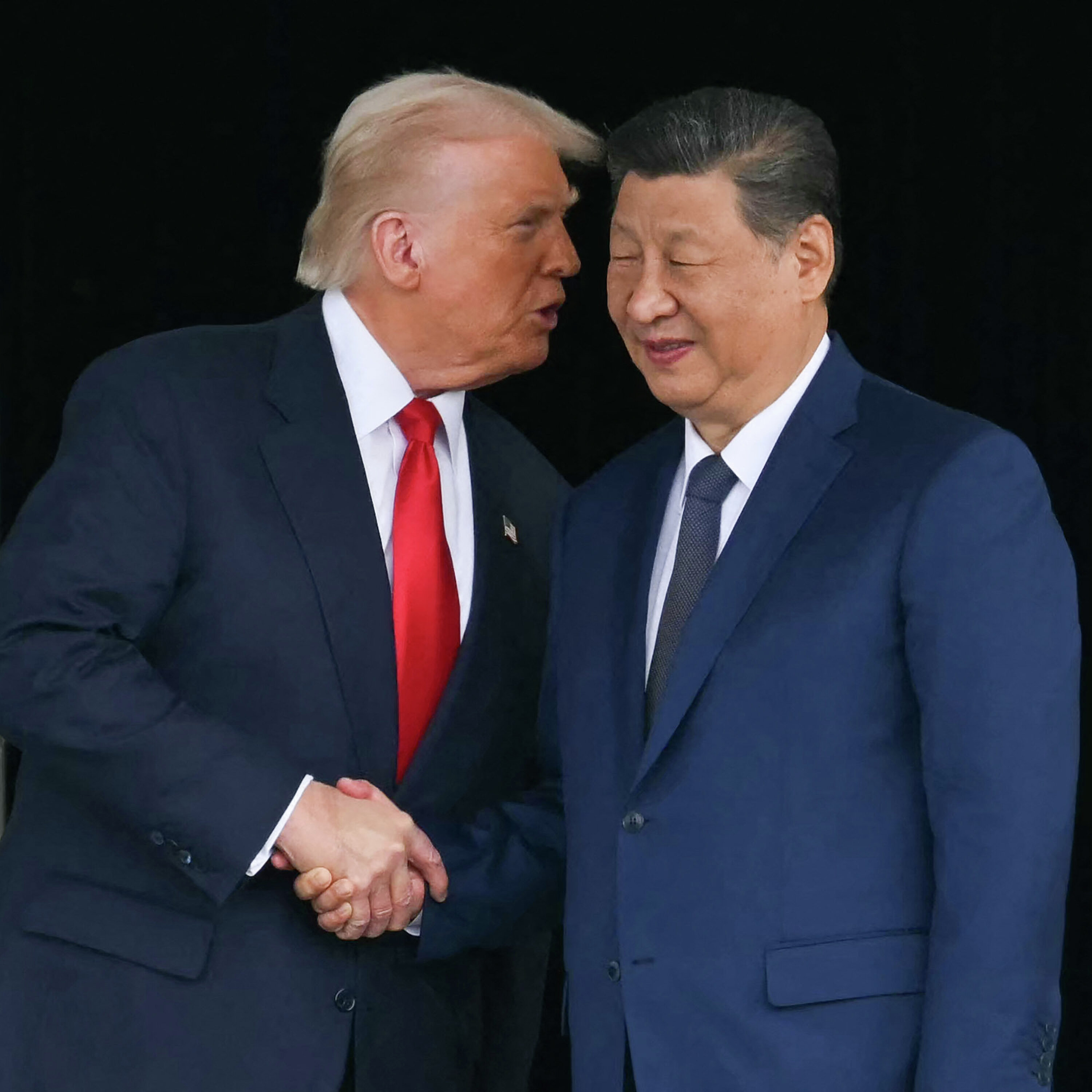
Speaker 1Donald Trump had come into office saying that he was going to put up tariffs, and so there was this expectation that, you know, experts were going to suffer, China was going to suffer, and there was going to be a lot of tension between the world's two foremost powers.
Speaker 2Economists warned of a potential lost decade, drawing parallels with Japan's stagnation in the nineteen nineties.
At the beginning of the year, global investors accelerated their exit of the Chinese market, with some investors calling the stocks uninvestable.
Speaker 3The sensing the investment community is overwhelmingly pessimistic right.
Speaker 2Shuly Wren is a Bloomberg opinion columnist covering China mar markets based in Hong Kong.
Speaker 3There was also talk of investing in emergent markets ex China.
Basically, peepoches left China for dead, but.
Speaker 2By the year's end, the perception of China couldn't be more different.
Speaker 1The release of deep seek Ai from a Chinese company should be a wake up call for our industries.
Speaker 4Tech talks in China up again because China, throughout this process has learned that it has a very critical leverage tool of its own, and that is those rare earths that the United.
Speaker 1The start of twenty twenty five, I think the question was how bad is China going to get beat up by Trump?
And now it seems like the general census China won.
Speaker 5This is the Big Take Asia from Bloomberg News.
I'm Wanhu.
Speaker 2Every week we take you inside some of the world's biggest and most powerful economies and the markets, tycoons and businesses that drive this ever shifting region.
Today, in the show, we dive into China's dramatic twenty twenty five, from dire predictions to technological breakthroughs.
How was China able to navigate this year's turmoil largely unscathed, and looking ahead to twenty twenty six, what dangers could derail its growth over the past year.
I've sat down with John Liu and truly ran more times than I can count.
When we talk, it's mostly about China.
We've tracked Beijing's response to President Trump's tear fur, its efforts to boost domestic spending, and it's pushed to become the dominant player in artificial intelligence.
We even made room for La Booboo, long before those little monsters were picking out from under your Christmas tree.
I asked John and truly to join me again earlier this month to make sense of what's been a chaotic year for China going into twenty twenty five.
The mood on the ground was one of apprehension.
China's economy was battling challenges on multiple fronts, persistent deflation, a crippling property crisis, and a stock market sell off.
Then there was a cloud that loomed over everything else.
Speaker 1Twenty twenty five it felt like the quiet before the storm, and the storm being named Donald Trump, of course.
Speaker 2And quite a storm it was.
The US took China and the rest of the world on our tariff roller coaster.
The US raised levies on Chinese goods, first to ten percent, then twenty percent, then one hundred and forty five percent, before landing back at ten percent.
Suly I want to start with you, it's been a wild ride for China this year.
But as we close the book on twenty twenty five, how is China looking?
What surprised you the most.
Speaker 3Just the fact that the animal spirit is starting to come back in China.
That's just so surprising because we just didn't feel that way at the beginning of the year.
Right, Like when you talk to global investors, what they're saying is that at the beginning of the year there was the sense that, Okay, China does have the world's most powerful factory.
It has manufacturing locked.
But if AI manages to come along and develop further, there's a chance that the you know, in the future or the manufacturing will be automated and China would lose its biggest edge.
And they turned out at the end of the year, actually, you know, China is stealed the world's most powerful factory despite Trump's tariffs.
Speaker 2Now, AI, as you mentioned, was a big win for China.
It started the year with that big win.
In January, deep Sea came out of nowhere right and emerged as its low cost AI breakthrough, and that triggered a massive selloff in US stocks.
Speaker 1China's deep seek is freaking out the AI world right now text talks Tom what does.
Speaker 6It say about China that it's managed to clock so much progress in high tech even as the US was trying to hold it back by restricting sale of these advanced ships that they need to develop AI with.
Speaker 3I think the seeds of success were sold a long time ago, and the only by the law of large numbers that innovation comes out in China.
Let's start with like a higher education to present.
Shooting King's credit, he has fostered higher education during the last ten plus years.
In two thousand, basically twenty five years ago, only ten percent of high school graduates they will go to universities.
These days, close to half they will go to universities, and engineering is by far the most popular graduate school studies for Chinese students.
And if you look at like global rankings of top AI researchers, close to fifty percent graduated from universities in China versus only eighteen percent in the US.
Speaker 6Now, John You and I talked in March during the National People's Congress about how the export sector was really at that point the only bright spot in China's economy, and it was facing serious threats from Trump's tariffs.
I wonder now, you know, as we look back, what kind of report card grade does China get in navigating this trade war.
Speaker 1I would say it gets a B plus.
And the reason it doesn't get an A is instead of shipping all those goods to the United States, they're still getting shipped out of China, They're just getting shipped to other markets.
But China has a trade surplus of over a trillion dollars for a second year, and it's not a sustainable way to run an economy.
Speaker 6What is that though?
Say to you about China that it's managed to pull off a record trade surplus of a trillion dollars, that it's emerged unscathed really from this trade war.
Speaker 3Economic central planning has its advantages, right Like, you cannot pull this feast of blocking rear earth exports if you do not have a powerful central planner.
It's pros and cons And in the way, you start to see a little bit more central planning even coming out of the US the trump An administration.
They are trying to adapt somewhat China's industrial policy because they do recognize its advantages.
Speaker 2Trade war winds aside, we're also seeing China's tech industry drive the stock market revival.
After a couple of really rocky years, we're now seeing tech rallies and markets rebound, and I guess that raises the question is China investible again?
Speaker 1So this is a little bit processing, but you know, every morning we get together as a newsroom and we decide what are going to be the biggest stories of the day.
And when we have a exciting IPO coming to market, as we had today the company called meta x, which makes chips, people are hoping it might one day be China's answer to Nvidia.
For a company like this, for an IPO, we set a bar for, you know, how much the stock has to go up before we send alerts and red flashy headlines everywhere to let people everywhere know something big has happened.
And as we were talking about it, our colleague on the stock market team said the bar would be a fifty percent increase in the stock and I had to stop.
I said five zero, and she's like, yes, fifty percent.
I know our expectations are very high.
When I looked before I came back, the shares were up seven hundred and fifty five percent.
Speaker 5Wow, that's crazy.
Speaker 1That's something that would not have happened in twenty twenty four in China, and I think it speaks to greater confidence, more optimism about technology and the investability of China.
But that's primarily a local Chinese investor base we're talking about getting into that stock.
I don't know that investors in the US or Europe their minds I don't think have changed as much.
Speaker 6So then what do you think in terms of the broader picture?
I mean, are we seeing that fundamental shift in how foreign investors are now looking at the Chinese market as well?
Speaker 5This year?
Speaker 3In twenty twenty five, AI is a huge theme and that any market that doesn't have the AI exposure, they're just not going to do as well.
And I'm about India, whereas China right now we have this AI exposure and you just cannot stay out of this market at this point because we all know this.
This theme is going to continue into twenty twenty six, and there are two competing forces fighting for the crown jewel, right who wins the AI race?
And you cannot invest in the US without investing in China somewhat as well.
Speaker 6Just as diversification now to the extent that China's navigated this year's turmoils so well, how much of the credit goes to present Cijinpin and what that says about his leadership?
Speaker 1I think, you know, in a system like China that is so top down, there has to be a lot of credit given to Sijinpin and the way that he not only executed his strategy, but his decision to use the strategy to stand up to the United States by putting up tariffs every time Trump put up tariffs, to put an emphasis on technology, to be willing to spend the billions and billions of dollars that Beijing has thrown at chips and ai, not knowing if ultimately it would pay off.
I think a lot of credit goes.
Speaker 6To him, truly, you have any thoughts on that.
Speaker 3I think it cuts both ways.
This year we are seeing a very strong China standing up to a bully basically President Trump, right, But three years ago we also saw a very unfitted China refusing to exit COVID zero and locking down the big chunk of the nation.
So I think it all depends on the narrative, right, Like maybe in twenty twenty six or twenty twenty seven, the narrative will shift back.
It's just the nature of China's political system.
Speaker 1I suppose, I think truly makes a very good point, and I would add that like on certain fronts, the success that President She has had Visa v.
Trump, Visa VI Tech, Visa v.
Markets belies the fact that actually the domestic economy in China is in many ways still suffering and in many ways probably in a way worse condition today than it was at the end of twenty twenty four.
Speaker 2Coming up after the break, how China's domestic challenges from rising deflation to youth unemployment could undermine the gains it made this year.
Going into twenty twenty five, China's top priority was to get its populations spending.
Again, that push hasn't had much success.
Consumption was soft throughout the year, and China's leaders have again made consumer spending the top priority for twenty twenty six.
Speaker 5It's an uphill battle.
Speaker 2Chinese consumers are increasingly priced sensitive.
That's prompting businesses to roll out steep discounts to lure buyers.
But Bloomberg surely Ren and John Lieu say the price wars don't seem to.
Speaker 5Be helping much.
Speaker 3I just don't see Chinese people consuming at all.
I mean, this whole deflation thing.
It's a mindset, right, If you expect a cup of coffee to cost a ten end this year, next year, it might just be a u n right, Like it's so ingrained, Like it's very common for consumers to go to a restaurant I ask for deals at this point, Like before people start ordering, they will open their dmping or made to one at app and start looking for online deals.
Speaker 6What does it feel like for you, John on the ground there in terms of spending and deflation.
Speaker 1You know, I can feel the prices going down because I am enjoying a lot of discounts, so in some ways not bad.
But the other thing that I've noticed is how much people are saving.
Chinese households have always been big savers, but during the pandemic it got really outsized.
I think at some point people were saving a third of their incomes, and I think that reflects the sense that you know, if you're getting ready for retirement, you're getting ready for old age and maybe needing medical care.
You are depending on yourself, You're depending on your family.
You are not expecting very much help from the government.
Speaker 6So with all that saving that's going on, what does it mean for China on whether it's on track to meet the five percent growth target that it had set earlier this year.
Speaker 1I think China will meet the five percent GDP target that I believe is pretty clear.
But I think what's interesting there is the five percent GDP target is real GDP growth.
So real GDP growth is nominal.
So you take the actual dollar terms of GDP this year, and you subtract what last year was and you get the difference, and then you account for inflation or in China's situation, deflation, and so actual nominal GDP is Actually, it may not even hit four percent this year because there's deflation in China.
You know, we're adding on another percent of growth to compensate for that, which is how you get to five percent.
So yes, we'll get to the target, but no, it may not feel like we're growing that fast on the ground.
Speaker 2With prices falling all across the board, China is experiencing its longest streak of deflation since the nineteen nineties.
Economists worry that if deflation persists, China could end up experiencing its own version of Japan's lost decades of economic stagnation.
One of the biggest issues China has to deal with, John says youth unemployment.
Speaker 1Youth unemployment is much higher, multiples higher than the rate of unemployment for other segments of the population, and I think that reflects both a stagnation with corporates because of deflation.
They're not growing, so they're not hiring more.
I think it's probably also starting to reflect the prevalence of AI and so companies just in their hiring their behavior has changed.
Other than that, I think property is still a big issue.
Falling home prices makes everybody feel a little poor, even if their incomes are not changing.
There's talk about providing subsidies for people's mortgage payments and so that could help, but you know, we're still watching prices go down.
Speaker 2China's real estate sector has been declining since twenty twenty one.
Both investment in property and sales of real estate have fallen since their peaks that year.
Local governments, which rely on property sales to fund their budgets and invest heavily in real estate, are trillions of dollars in debt.
All of these domestic issues are leaving the Chinese economy vulnerable to risks abroad.
China shifted its economic strategy to a reliance on foreign demand to drive growth for much of this year.
That created a trillion dollar trail surplus that John says could create a problem for China down the line.
Speaker 1You cannot have the livelihoods of your people based on your ability to sell a trillion dollars more stuff than you buy from other people.
That sort of statistic means that there's just going to be endless trade tensions, and we've seen that between China and the Europeans, Latin America, even with some African countries.
Just the flood of goods coming from China, you know, they're cheap, and companies in those other jurisdictions find it very hard to compete.
For example, recently there was a spat with the EU trying to put tariffs on European pork imports that you put tariffs on Chinese cars, And actually just this week China actually lowered the tariffs that it was putting on European pork too, somewhere between four to fourteen percent, and it had been as high as over sixty percent.
And in turn, you saw the French President Emmanuel Macron saying that you know, putting up tariffs would not the cooperative way to deal with these differences.
And so I think you see both China and its trading partners trying to find a way to get through this.
Speaker 5However you slice it.
Speaker 2Twenty twenty five has been a big year for China and uncertain start, a mountain of opposition, but the country has stuck to its principles and done a good job of resisting a double barreled onslaught in the form of tariffs and verbal abuse from Donald Trump.
But that resistance hasn't come without a cost, and there are plenty of challenges ahead for China.
Speaker 3If you speak to business people in China, people still talk about Taiwan.
It's still an issue that has not been resolved.
So this kind of tensions my flare up.
And again the interaction with the White House, I mean, that is still a question mark.
Speaker 1So in twenty six I think there's a very interesting phenomenon where President Trump says he's going to visit China in April and that he wants President she to then visit the US.
But then at the end of the year, China is hosting APEC in the middle of November and Shinjin, and then the United States is hosting G twenty in Miami, and so you have the situation where the two presidents could meet each other face to face four times in twenty twenty six.
That could provide pillars of support stability for the relationship.
But it could also, as we've seen ahead of these meetings, you have the potential for flare ups to happen.
People are trying to put themselves in the best bargaining position by putting out this tariff or that export control and so it could also be that next year we're going to see four flare ups before we see four solutions, and so it could be more tumult of anything.
Speaker 6So as we wrap up music for thought, what do you think is a good theme song for China as it steps into twenty twenty six.
Speaker 5I will pick a beto'sa Yellow sup Ring.
Speaker 3We just have no clarity into the future, right like we just have a glimpse of this and that, and then we're just hidden under the water.
And I feel like twenty twenty six is going to be like that.
Speaker 6And John, what about you?
Speaker 1One of the big issues for China at the moment is there is a lack of money for a lot of local governments and to some extent even the central government.
And you see a lot of local governments because the property market is so bad.
They used to make so much money selling land.
That money's gone.
They're finding it hard to finance the projects they want to do.
And so the song I would pick is there's an old Motown song called money.
Speaker 5Our best thing.
Speaker 1I think it goes, but you can keep them for the birds and bees.
I want.
Speaker 6What I want.
Speaker 1That's what I want.
That's what I want.
That's how it goes.
Speaker 2That's Bloomberg's John Lee.
Ladies and gentlemen, John truly, you guys have been fantastic.
Happy holidays.
Speaker 5Thanks to you all.
This is The Big Take Asia from Bloomberg News.
I'm wan hu.
Speaker 2To get more from The Big Take and unlimited access to all of Bloomberg dot Com, subscribe today at Bloomberg dot com slash podcast Offer.
If you liked the episode, make sure to subscribe and review The Big Take Asia wherever you listen to podcasts.
Speaker 5It really helps people find a show.
Thanks for listening.
To see you next time.