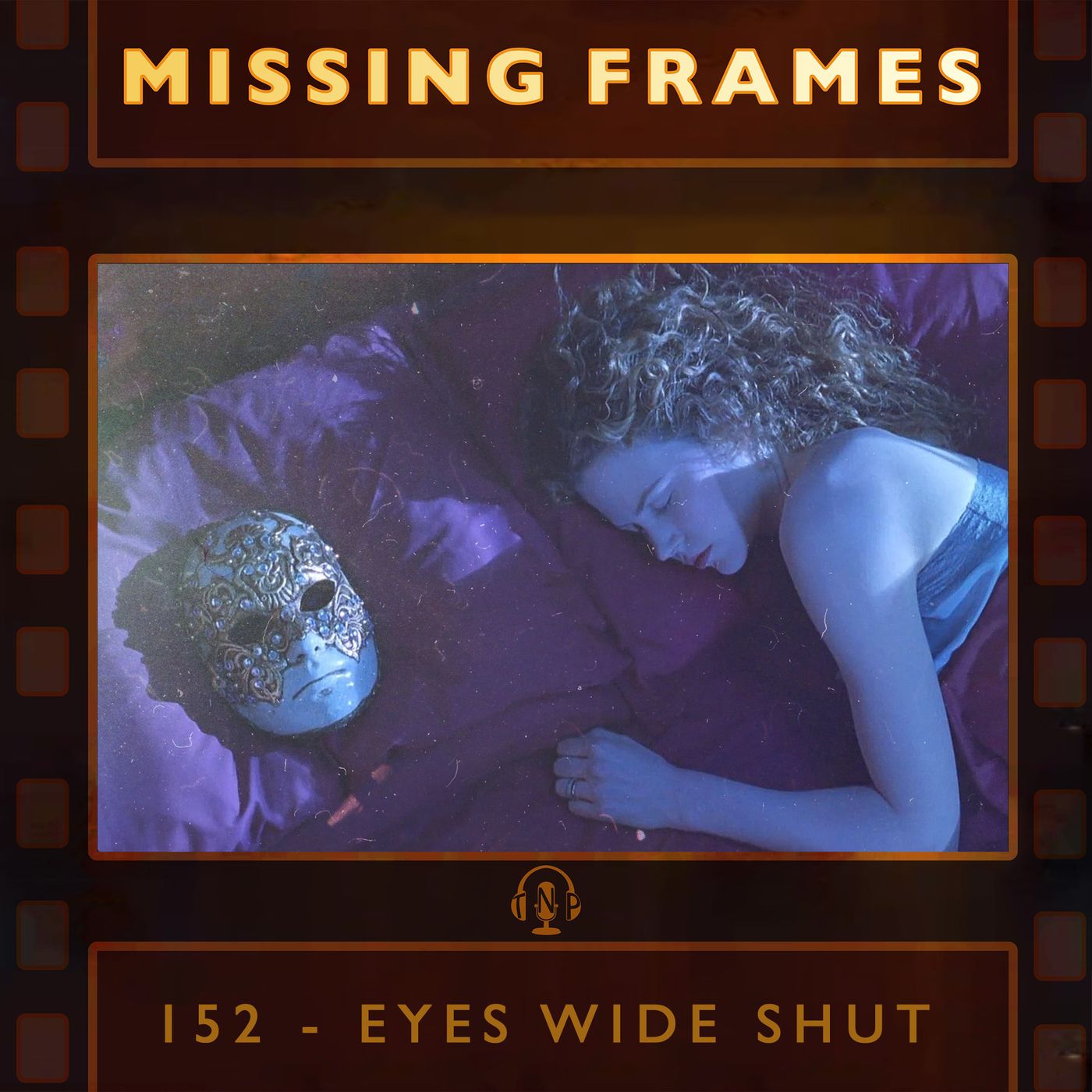
Episode 152 - Eyes Wide Shut
Episode Transcript
Welcome to the ned Paute.
Speaker 2Hello, and welcome to another episode of Missing Frames.
This is the podcast where we watch all of the movies we should have seen.
Speaker 1By this point in our lives.
I am your host, Sean Eastridge.
Speaker 2We're hanging out on the nerd Party Network, a collection of podcasts dedicated to all things entertainment, so make sure you check us out.
It's the nerd Party dot com at Join nerd Party on Twitter and just the nerd Party on Facebook and Instagram.
And we are wrapping up twenty twenty five, which has just been the year of Superman.
Speaker 1I know, what a year, What a year for Superman.
Speaker 2It has been not a great year for actual Missing Frames episodes, but I'm hoping we're ending strong and joining me to wrap up this wonder year is my dear friend, Richie Papillo.
Speaker 1Richie, welcome back to my God Sean.
Speaker 3So good to see you.
Speaker 1Good to see you, so good to see you, so good to talk.
Speaker 3I'm ready for Christmas, as in ready for Christmas.
I've gotten nothing, but I'm mentally prepared.
I'm mentally prepared to in the mad dash get some gifts for some people and ideally maybe a switch to for myself.
Speaker 1You've earned it.
Speaker 3You know, you've earned it.
Speaker 1You know.
Speaker 3I feel like I give the gift of my presence throughout the years as a present to me.
Yeah, exactly, it's on you two.
You too, Sean.
You're keeping the Superman light alive and you've always kept it burning within me.
I we've said this story on this podcast before, but we connected through the Superman theme, and I feel like ever since it's built a bond, it's forged the lasting barn.
Speaker 1It's true.
Speaker 2And that's what's so funny about this is that throughout the entire year, I think the person I know in my life who loves Superman as much as me, uh, who like I, who I know personally is you.
And here you are finally on a Missing Frames episode, and it's not a celebrating Superman episode, but we celebrate Superman.
It's because we are always celebrating.
I don't think any there's not a conversation that goes by with you where it's not somehow celebrating Superman.
So it's, uh, it's but now we're gonna be talking about an actual and actually, unlike those dumb Superman movies, we're gonna be talking about cinema today, the type that Martin Scorsese would approve of, the type that people come to missing frames for and have abandoned ship because I've spent the whole year talking about how much I love Superman.
But we we needed to watch a Christmas movie.
We needed to end.
Speaker 1The year on a high.
Speaker 2And I didn't realize until I brought up to you.
I was like, we should do an episode together, Let's do a Christmas movie.
And I hadn't realized that you had not seen Stanley Kubrick's Wide Shut, which I think qualifies as a Christmas movie.
Speaker 3My eyes have been shut to that movie.
And I remember it came out when we were but lads, before we even went to high school, talk about twenty plus years ago, and I feel like it was around the same time.
Maybe Six Cents was out too, So I think I was becoming.
Speaker 1More aware of, like, more.
Speaker 3Sophisticated films, cinema, et cetera.
I loved, always loved to go into the movies, but that this was not a movie that I would have one like, had really much of a desire to go see.
I think I was curious about it because there was a lot of buzz around it, right, But I and I remember, and I used to like watch you know, like ah, I used to go online like cool dot com and like, what are the message boards for the Star Wars prequels saying we're gonna see like a Star Wars episode one when when Queen Amidala watches the invasion of her planet, she's she's gonna get an oscar.
Speaker 1The new trailer for Phantom Menace will be attached to.
Yeah, I don't know.
Speaker 3There's I was becoming more aware of like cinema, you know, and so I was aware of its presence and in the zeitgeist.
And however, it was like, oh my god, it's very you know, what's the word you use.
Speaker 1Scandalous?
Speaker 2Yeah, scandalous.
I remember, That's what my vibe was it because I didn't know anything about Stanley Kubrick.
Way too young to see Eyes White Shut.
But what I knew about Eyes White Shut was it was like, oh, it's a sexy movie.
It's like a dirty movie.
And everyone was talking about it because Tom Cruise and Nicole Kidman were in it and at the time they were married, they were the power couple.
I didn't know much, you know, I didn't know much, if anything, about Stanley Kubrick, but of course his name was all over the place and in the advertisements, and then you had the combined combining all of that with the fact that he had passed away right before the film was released, so it was in the news a lot.
But all I knew about it was it was like, oh, it's it did not register remotely on my interest level.
Was young, and I didn't care.
I was eleven or twelve, I think in ninety eight, and so I was not remotely paying attention, not concerned.
Speaker 3Just cracking open Harry Potter, that was.
Speaker 2Cracking up at that point.
Yeah, that's probably what was going on.
I was, you know, my favorite film was Lost in Space, so that was.
Speaker 1That was Lost in Space and the role in Emerick Godzilla, So that's where my brain.
Speaker 2Was at the time.
But that was really it, and that was all I knew.
But I didn't come to Stanley Kubrick's work until high school.
Really do you remember when like your first understanding or exposure to Stanley Kubrick.
Speaker 1I think I had.
Speaker 3Seen the shining, but I wasn't.
I wasn't fully aware of like, oh, that's a Stanley Kubrick movie.
I mean that was just a movie that was always on TV and it was like a great Halloween movie.
So and then I as it became more I think, you know what, when we were probably like right as we were getting into middle school, the AFI Top one hundred first came out, and that was that was a CV special that I watched, We all a lot of people watched, and that got me maybe more aware of like movies that were culturally important and maybe movies I should should start educating myself in.
So as I like started to get into high school, I started to try and seek out those movies at the local Blockbuster.
Speaker 1But I never really like I tried.
Speaker 3Two thousand and one A Space Odyssey, and my favorite you know, slow moving space movie was Star Trek the Motion Pigture.
So like, I just it took me a while to really like appreciate that style of filmmaking.
But and then you know Doctor Strangelove too, so I had started to see more of his stuff.
But I think I'm still under under exposed to Stanley Kubrick.
I'd love to see Burry Lyndon.
I'd love to see as well.
Shut I'd love to see you know, I think I need to rewatch two thousand and one because I feel like there's a lot of gaps in you know, because I've always like, I've caught it in pieces throughout my life, right, so I appreciate it, but there's I think this is going to be my first step into a larger world.
Speaker 1Well, we were both we were both very lucky that.
Speaker 2We were our friend David Nelson, Dewey Nelson.
Speaker 1He had an extensive DVD.
Speaker 2Collection, and when the three of us started hanging out in high school, that was kind of the beginning of my film education because he was very knowledgeable and had grown up with a lot of these films.
Speaker 1He owned a lot of them.
Speaker 3Always had Turner classic movies on and the house, yes, and the older brothers had watched a lot of those, you know, had a great knowledge of cinema.
Speaker 1Two.
Speaker 2So the three of us had very similar tastes in terms of we'd all kind of been raised on the same movies as Star Wars and Spielberg and like Back to the Future, all of these classics that our parents love, like we kind of grew up with those.
So I was very well versed in the realm of like classic blockbuster cinema.
Speaker 1I wasn't watching a whole lot of.
Speaker 2Like uh, you know, like you were saying cinematic masterpieces or the films that like the film scholars would hold up as these are the examples.
Speaker 1And so when we.
Speaker 2Started hanging or when I started hanging out with Dewey, he had all of these and it was right at you know that, I'd say probably my junior year of high school, so seventeen.
I was seventeen, and then really that kicked off my interest in going to film school, and my film school had a wide library.
But this is all to say at the time, this was not this is not an era of streaming.
This was not an era of Netflix.
These things were either like you had to find them through a friend or like a cheap like used DV.
Speaker 3Had to wander through a video warehouse and do like their five five five five movies for five dollars for five yals and like, so, all right, what's the best what's the coolest looking cover that?
Speaker 2Right, like there wasn't even really like there wasn't a rotten tomatoes really, so you were kind of just flying blind and you know, whatever was available to you.
So I remember I think.
The first Kubrick movie that I saw was I Think, I want to say, A clockwork Orange, A clockwork Orange, And that was from Dewey.
Speaker 1He had a copy of it.
Speaker 2I remember the first time i'd heard of two thousand and one.
I mean, I'm sure i'd heard of it, but as far as like a first hand experience of watching it was from Dewey, who described it to me as like the worst, most boring movie he'd ever seen.
And this we were, you know, seventeen or eighteen.
His opinion may have changed, but I remember it made such an impression on me because he was so emphatic about how boring it was, and he told me he described he said, I had a bottle of coke while I was watching it, and I knew that by the you know, if I could drink this coke as I got closer to the bottom of it, I would be that much closer to finishing the movie.
And that got me through just drinking the coke.
And so I was like, oh wow, it sounds like, you know, two thousand and one is a movie I want to stay away from, and so I stayed away from it.
He successfully scared me away from it, but I did watch a Clockwork Orange that had kind of stuck out to me because it was such a scandalous movie like Eyes Wide Hut.
So many Stanley Kuper movies are like have that like aura of scandal to them, but Clockwork Orange because of the fact that it was so riskue and what it was addressing and in its content, and I knew it had been X rated when it first came out, and I'd seen images of Malcolm McDowell his own which is.
Speaker 3What I whenever I think of Eyes Wide Shut, I always think of Malcolm McDowell's Eyes from Orange.
So I'm like, I have no idea what the connection to the plot of Eyes Wide Shut.
The title has of right, that same movie, but I Clockwork Orange, Yeah, I mean that was something I didn't see until high school, late high school, but like that was something that like my dad always talked about.
You know, he'd read the book and he was he loved, loved the movie.
And there's a picture of him in high school where he's dressed up as Malcolm McDowell's character.
So it was like, oh, so it was like, yeah, you know, Luckily I don't know, my dad also helped with my you know, he showed me Terminator when I was seven, and ever since I've been horrified of like a nuclear apocalypse.
So he is part of my problem, I think.
But but yeah, I I remember two thousand and one, around the same time Dewey had seen and I tried to watch it, and I had similar issues because I had seen actually Planet of the Apes movies, all five of them at a very early age, the originals, and and loved them.
And so like, we're spending this much time on some guys in monkey suits and they're not speaking in British acts.
Speaker 1I've seen it already turned me off.
Speaker 3I've seen this movie and like, what this is a this monolith.
I'd rather see a statue of liberty sticking out of the beach.
I don't need to see a modelith So yeah, I don't know.
I think even the opening itself turned me off.
And I think one of our we had a friend who had kind of a snobby opinion of movies where it was like, oh, you liked Star Wars, You've never tried, You've never lived until you, you know, sad through two thousand and one, so it was almost like, in protest, I'm not going to even try to like this movie.
So but you grow up and you appreciate your preciety of tastes.
Speaker 1Well, that's what I mean.
Speaker 2It was the timing was perfect for me to start discovering Kubrick movie because I was in my first year of film school.
It was very much like a you know, there were a couple teachers that were fantastic and were really really instilled in myself and my classmates just this love and excitement for like, there's a whole world out there of filmmakers and films that you probably haven't watched because you've been watching a lot of the stuff that is the most mainstream, the most popular, and the most readily available.
But now we're going to introduce you to all this stuff and the filmmakers that really shaped.
Speaker 1What cinema is as an art.
Speaker 2So I was just very excited to like, all right, well where do I start?
Okay, Stanley Kuber Like like I said, I had a great library of films at my film school, and I remember I think The Shining was maybe the second or third one I watched, and The Shining I loved.
Wasn't even particularly a horror fan at the time, but I think the shining kind of started to crack.
Speaker 1That door open a little bit.
Speaker 2And then I remember, finally I was like, well, I guess I should watch two thousand and one of Space Odyssey, bracing myself based on what you had told me, what Dewey had told me for a dreadful experience, and then it ended up being one of the greatest movies I had ever seen.
And so I was like, Okay, maybe I'm ready, Maybe I've grown up and I'm like ready to experience cinema as a whole.
But you know, as I've gotten older, Kubrick has remained as a staple of my personal like, not just my growth, but my appreciation for cinema.
I think it's very there's a solid, solid argument to make about Stanley Kubrick being the filmmaker, and we can debate, like, you know, I am the one who is more partial to Star Wars than two thousand and one of Space Odyssey, but I would also not argue with anyone who says, well, two thousand and one is the great science fiction film of all time.
I'm like, yeah, I can appreciate that.
I think that's probably true.
Same with Stanley Kubrick.
I think some of his films are harder to connect with on an emotional level.
I think, particularly the latter half of his career, because what people don't realize is, you know, two thousand and one and everything that he's the most well known for was really the second half of his career.
There were other films prior to that, and those films are very stylized and very particular, and there's a streak of perfectionism.
Speaker 3In them since the Perfections.
Speaker 2Yes, yes, yes, which is on the one hand, if you are a centophile and you're watching that and you're on that level, you're like, oh my god, this is glorious.
But on the other hand, can it can leave you feeling emotionally cold.
I think he became less interested in maybe the I don't want to say he became less interested, but I think in some ways, you I can understand the complaints about Kubrick being sort of sterile and calculated, and I think this is something Christopher Nolan has had.
Speaker 1Levels.
Speaker 3Yes, yeah, I'll say there's something about him about Kubrick where the coldness I think you kind of you know that's what you're in for, and there's generally kind of a little bit more of a stilted Any older cinema is likely going to be more stilted and kind of maybe detached or removed from from the reality that we know day to day.
That kind of like there's something about Nolan stuff where it does often feel a little too I don't want to say robotic, because I feel like he gets great performances from his actors, but it does feel in some of his movies very like almost like overly plotted, overly choreographed in a way where I don't know, maybe i'd I'm a little more forgiving of Kubrick, at least of kubrick films that I've seen, because it's just like it's almost like he's doing the best with the tools that he has, and he's able to create something that's that's so timeless, whereas like it's rare that you get something that feels from Nolan that feels like Dunkirk, which felt a little bit more like scrappy and and like, I don't know, embedded in the elements.
Speaker 2Then yeah, now I know what you're saying.
Then maybe like Tenet or Resteller.
Speaker 3And the one that I have the biggest issue with, I like the Interstellar a lot but I do think that there's still elements of it that that feel a little too convoluted form my taste.
Speaker 2And I think too like what I realize as I because I think Kubrick's films grow on you, and what you start to realize is Kubrick's kind of emotional detachment in terms of his style and how he approaches his films and the filmmaking techniques he uses is almost kind of the point like a lot of his characters are emotionally disconnected from the worlds they're in, and it becomes you start to realize as you're when you go back and rewatch films that you thought you didn't appreciate, you suddenly gained the appreciation because you understand what he was kind of trying to do and you sense a warmth in there.
I think Nolan kind of wrongfully gets accused of that same coldness in the same way.
I think Kubrick kind of gets labeled in that cold that kind of cold way.
But I I think I that was kind of my feeling the first time I watched Eyes Wide Shut was sort of like I was impressed by it on a technical level, intrigued by its ideas and then kind of but like emotionally, I was kind of like, there's not really a way in, so it felt like an exercise and technique and that was cool, But for me, I was like, I'm less interested in that and more interested in like engaging with a really compelling story and characters.
But like many of Kubrick's films, and like so many films of that style, it just stuck with me and it kept gnawing away at my brain, and I kept thinking about Eyes White Shut and holding in retrospect, thinking about it far more positively than when I'd watched it and the ideas it has.
And then you read people's critiques and criticisms and thought pieces on what Kubrick was going for.
You start to read about the behind the scenes and learn more about Kubrick's approach and what he was thinking, what he was reading, and what inspired and you start to gain an appreciation for it.
And I've found that every time I go back to Eyes White Shut, I've loved it more and more, and to the point where I would go so far as to call it a masterpiece, and I definitely one of my favorite films.
And I think that is kind of the genius of Kubrick's work and what he accomplished.
Speaker 1Throughout his career.
Speaker 2But also what's so fascinating about it is the fact that there's this whole controversy around Eyes White Shut and whether or not it is what Kubrick intended, whether it is the final quote unquote version, because as everyone knows or may not know, but Kubrick died maybe a week or.
Speaker 1Two before the film was supposed to.
Speaker 2Premiere, and he had delivered a version to Warner Brothers that was like, this is the final cut.
But people who know Kubrick and fans of Kubrick's are well aware he has a tendency after premiering a film, watching it with an audience to like, ah, you know what, I can tell this part isn't working, so I'm going to trim that down, or I'm going to cut that scene entirely.
You know, Kubrick was one of those filmmakers who would, after an initial release, go back and tinker a little bit more.
So there's always been this debate about is this the intended version?
And that's part of I think what makes Eyes Wide Shut fascinating.
Without going too much into it, because I don't want to talk details.
Speaker 3Well, yeah, I'm intrigued to watch the movie because I I wonder if I am even on the same way, like if I even understand what it actually is about, because it's like over the years, I'm just through a game of telephone trying to understand what I've heard about the movie and synthesizing that into like whatever, my I don't know whatever I expect to see, and I might be way off, But I was about to make a joke where you're talking about he keeps tinkering at, you know, with his movies, or kept tinkering with his movies to the end, and I was just thinking of like all the special editions that Lucas and Spielberg were greating of their movies where it's like, oh, like an ET, you know, with eyes wide shut.
He was going to replace the dildos with walkie talkies.
You know, I don't know, I don't even know what to expect are there.
It's like we I just know.
Speaker 1It's like a weird psycho sexual kind of like story thriller.
Speaker 2Maybe, yeah, tell me give me a little bit, Like as we always do on missing frames before we watch, we have the person who hasn't seen it give me a you're kind of leaning into or you're starting to tread into the water a little bit.
Give me based on whatever knowledge you have of the film, give me just a brief plot description what you think the film is about.
Speaker 1We know we've got Tom Cruise, We've got Nicole Kidman.
Speaker 3Yeah, you've got Tom Cruise.
We've got Nicole Kidman.
It's like Moulin Rouge, but in Italy, without the music, but with more consumption, more TV.
Speaker 1Uh So there's I'm assuming.
Speaker 3It's a couple that they're having trouble, they're having issues.
They either live in Italy or they're going for some reason.
I think of Italy with this movie.
They're going to Italy and they're gonna spice up their lives.
And one of them gets invited to a crazy, weird, kinky party and the other one is like, well, I'm gonna go too, and then they both kind of descend into this world of debauchery among these like elites who like to, you know, do weird.
And there may be some guy who who runs this thing is like to to pit them against each other.
I don't know, that's the vibe I get.
I've seen like videos of I think like or not videos like clips of maybe like oh, there's a bunch of weirdos and masks, and it's almost like that scene from The Shining where it's like, uh, you know there's the bear given a bj.
Speaker 4Too all that this scene into two and a half hours, but it's like weird, kinky, elite sex parties and I'm imagining that.
Speaker 3It's like what.
Speaker 2I was just imagining that, Like that's all I'm thinking about now.
Speaker 3But like, like, what how Kubrick faked the moon landing?
He also faked Epstein Island.
I'm just kidding.
I think they're both.
I think they're both real and terrible.
We never should have gone to the moon and they should have known that they should have never gone to that island.
So yeah, Cooprick was really ahead of his time.
I'm interested.
I feel like the vibe that I get from this movie, and based on what you've told me, is that it's I'm gonna feel maybe very I know the story is very different, but I feel maybe similarly to how I felt about Godfather three, where I think like, oh, it's a flawed movie, said Midaly, with these kind of like this rich like almost nostalgic color palette or what I would imagine feel like this kind of very like classical color palette, very dramatic, deep dark reds and rags, And I'm just imagining kind of this color palette that I don't even know what exists.
But I felt like Godfather three did a great job of setting a tone, setting a mood.
There are some flawed moments and flawed performances in there, and the story feels a little less complex than Godfather one and two.
And maybe that's how I'm going to feel about this movie compared to other Kubrick films that I've seen, both in terms of like setting colors and comparing it to the director's earlier works.
Speaker 1But other than that, I have no idea.
Speaker 3I don't know who else is in this.
Speaker 2Yeah, that's an interesting it's an interesting plot description.
Speaker 1I'm excited.
Speaker 2I'm excited to see what you think I am.
I think what I would I kind We talked about it a little bit before we started recording, but I would say go into this with the mindset of of two thousand and one in terms of pacing, not as like calculatedly slow, but Kubrick films are some are more I wouldn't say plotting, but kind of thoughtfully paced than others two thousand and one, Barry Linden's another one.
Speaker 1You know, Clockwork Orange.
Speaker 2I think in full Metal Jacket have that kind of vibe.
Eyes white shut.
Speaker 1Yeah, I'm not going to say anything else.
Speaker 3I like a movie that commits to a movie.
Speaker 1Yes, do you think you're gonna enjoy it?
Speaker 3I think well, I'm often like on you you Tube, just putting on like ambient noise to work too, and just like, oh, the cinematic sounds of gladiators.
Speaker 2Of eyes white shirt, you like Tom Cruise, Tom Cruise, the asmr of Tom Cruise walking through an orgy, It.
Speaker 3Would be so calming and soothing.
I uh yeah, I feel like I like a vibe movie.
I've grown into like like appreciating that more too, And I feel like this movie is gonna have a very strong vibe and hopefully.
Speaker 1It sticks with me.
We'll see, yeh, I'm excited to see.
I'm very curious.
So wait, let's do it.
Speaker 3Thank you for exposing me.
Speaker 2Oh, you're so welcome, and we'll expose everybody else to your thoughts when we return.
Speaker 1Now available to oh non video cassette.
Speaker 2All right, we're back, Richie are you?
Are you filled with the Christmas spirit?
Speaker 1That open Creed actually was inspired by.
Speaker 2This film to song and I can see that we're all the better because it's like a religious experience is inspiring everybody.
Speaker 1So how do you feel.
I enjoyed it.
I liked it.
Speaker 3I I don't know if I should give it a rating already, like we're just starting off.
Speaker 2People or people wait like they wait for the ratings.
They want to wait till the very end.
That's how I grip them and make them listen.
That's how I clicks in the engagement.
Speaker 1Well, I think it's great.
Speaker 3So I'm at my aunt's place for the holidays, my uncle's and and this is a perfect holiday movie.
Speaker 2But everyone gather around the television.
Well yeah, eyes white shutt and it's a wonderful life.
Speaker 1Well I had no, I didn't I knew.
Speaker 3It's like, oh there's I didn't know, like if I didn't know whether this was like there was implied sexuality or what was like soft course skinemax, And it's kind of a mix between the two.
Sometimes the lighting feels like cinemaxy a little bit.
But so I'm at my gund uncle's place for the holidays, and this is I didn't even put this on.
I the Matrix is on TV and everybody's like milling about, like nobody's really paying attention.
I go downstairs.
I'm doing some laundry in the basement.
I come back upstairs, Matrix has ended.
Matrix Reloaded is on and it's the Org like the Underground Orgy scene where it was like everybody, the whole cast is freaking screwing each other in like long John's and goggles and they're sweaty as hell, and Neo and Trinity are just naked and grinding in a cave.
Speaker 1And I always hated that.
I don't know why.
I was like, why is this happening?
Speaker 3Eyes White, shut gear, No, No, So this was on and I'm like, oh, it's like I always hated that scene, even when I saw it in theaters.
I was like, why the hell I always hated this orgy?
Who wants to watch Eyes Wide shut.
Speaker 1Off?
The Hatred and Reloaded forced you to watch this movie.
Speaker 3For the podcast exactly, and I, uh, yeah.
Speaker 1The first shot is Nicole Kidman naked, which is hilarious.
Yeah.
Speaker 3I was gonna watch this on my work computer.
Because I was like, I need to watch because I can't find it.
I couldn't find it on TV.
Then when I actually was looking like I couldn't just for some reason, like the streaming service is available to me.
Speaker 1So I was like, and it's a holiday movie.
Every this should be on ABC every year.
Speaker 3I assumed it would be like accessible on demand for christ on one of the Christmas channels, just because like some some sark has to have it.
The Hallmark's version of Eyes Wide Shut would be great.
Speaker 1It would be eyes I don't know, I don't know, all eyes on Me And it's about.
Speaker 2Cole Kidman is a is an aspiring, romantic holiday writer who needs a little She needs a little kick.
Speaker 1She's trying to to.
Speaker 3Commemorate the one hundred and fiftieth anniversary of the town.
She's trying to throw an orgy in the square just to bring everybody.
Yeah, She's like, I if I have to leave the big city to come back to the small town, I'm gonna bring a little piece of the big city with me.
And that piece is an orgy of elites who run all the industries, wearing masks and cloaks and railing in the town square.
No, this movie is like it's like a classy version of the Dino de Lorentz's Caligula, Like but like with Champagne, you know, it's it's like the Champagne version of Caligula.
It's great, but it doesn't overwhelm you, Like it's not like the movie itself isn't that pretentious.
I feel like it's full of pretentious characters.
Speaker 1Like I feel like the.
Speaker 3Characters are like they're like, we don't really like Tom Cruise and Nicole Kinman's characters.
They're not.
They're kind of on the precipice of like they're doing really well for themselves.
Like he's a doctor, but he's even as like a doctor, like that's one echelon of society, but he has no way into the party that like the the the.
Speaker 2Dies he knows, the guy he knows and he's so he's not.
Speaker 1Quite on that elite level, but they are allowed to participate.
And then the guy he knows is the help.
Speaker 3The guy he knows is not like, you know, somebody involved the guy Actually the twist are we allowed to do spoilers on?
Speaker 1Let's do it?
Yeah, the spoil everyone everyone.
Speaker 3The twist that Sidney Pollock is basically who he knows who we meet in the beginning is you know, we don't even know how high up he is, but he could very well be because he's supplying one of the girls.
I think it's you know, it's what the woman who recognizes him masked is is the is the woman he's having Sidney Polla's character is having an affair with in the beginning, and which I thought, I mean, I didn't even I was like, how does she know right away that this masked stranger is Tom Cruise and that he doesn't belong Maybe the way.
Speaker 2She's like, well, he's five foot, he's at least seven he's seven inches shorter than everyone else, and.
Speaker 3He's got scientology eyes.
I can tell, I can tell.
But that was great.
I I enjoyed it and I liked it didn't feel too complex of a story, Like I don't know, I feel like the same way I feel about Shining in a way where like the Shining is very it's a very simple story.
There's layers and there's some complexity there and some depth, but it's like doesn't overwhelm you.
Speaker 1No films are like that.
Speaker 2That's why it's interesting when people are so up at arms about like, you know, we talked about cinema and like what you know, how we discovered Kubrick and kind of are taking our first cautious steps into the world of cinema classics and masterful cinematic filmmakers, like the people who have really create, like shaped the art form.
And I think Kubrick is extraordinarily accessible.
He knew his films are like technically superb like as close to perfection as cinema can get, but he also wanted to entertain an audience.
He was not on another like you know, you look at somebody like Tarkowski and you watch a film like Stalker, and I love Stalker, but that's definitely somebody a filmmaker who was so obsessed with, like my creative vision, and you're going to get on my level.
And I don't care if it connects.
I just have something I want to share and I think that's great.
But also I don't think that was Kubrick.
Kubrick was very interested in in connecting with his audience, even though the protagonists can be cold, even though the emotional content can be limited.
I don't think he ever wanted the audience to feel stupid.
He always he wanted them, he wanted to manipulate, and he wanted to like bring them into his world.
So there's an olive branch with his films that kind of invites you in.
And with eyes white shut, I think really the olive branch is Tom Cruise and Nicole Kidman just them, like having those movie stars in the film, yes.
Speaker 1And you just you know them.
I could.
Speaker 3I can imagine maybe you relate relating to this movie if you're you know, in a long term relationship or a marriage and you know, I don't know, every relationship that kind of has its highs and lows, and these characters are in a particular low.
But it doesn't really feel very realistic, like in terms of like there everybody.
I mean, I don't know, I'm not Tom Cruise, but everybody literally everybody's coming on to Tom Cruise in this movie.
And I imagine that's probably what his life is like.
That's probably what his life is like.
But I imagine there was some like that's like he's setting Cooper is setting a tone here where it's like there is it's like a hyper like overly sexualized.
He actually in a lot of instances turns it down.
But even like Alan coming as the hotel clerk, desk clerk is coming on to him, and when Tom Cruise is like, at least it seems like he's flirting with him.
Yeah, Tom Cruise, like asking about his pianist friend who might be dead at this point, was beaten up, roughed up.
So it's I feel like everybody's horned up and ready to go.
Speaker 1And I think that's a choice.
Speaker 3I mean, obviously the whole movie's supposed to feel like hyperly overly sexualized, and.
Speaker 2It's it's based on a story, a novella called dream Story.
Speaker 1I can't remember the name once.
Speaker 3I know, while you look that up, I about this.
You're talking about a dream story that's I think was written in so Far and originally you know Austrian.
Speaker 1Maybe yes, I looked that up too.
Speaker 3Yeah, but I thought for some I said this earlier, when we talked about this before I watched it, I thought this was set in Italy for some reason.
Speaker 2I think probably, well, probably the masks and like that whole sequence is very European.
Speaker 1Those crazy feel are always like they're wild parties.
Speaker 2It's Arthur Schnitzler, nineteen twenty six novela dream story, which centers on a doctor his wife in suburban Vienna.
So Kubrick moved it to New York to give it that, like, you know, to make it American.
Speaker 1But I don't know much about it.
Speaker 2I have the book and I've been wanting to read it for a while, but everything in the film is you know, at the beginning, you have those two models who are hanging on Tom Cruise and like, where do you want to take me to the end of the rainbow?
Speaker 1Or whatever they say.
Speaker 2And I think the idea of the film is it is it is an exaggerated reality.
So in some way, it's almost like it's one of like those Greek mythologies where the hero is sort of wandering and being tempted by all these different things.
And Tom Cruise is kind of that character.
But he's also like completely clueless and way in over his head.
Speaker 1He all he knows is his His.
Speaker 2Whole reality has been obliterated because his character, as you say, they're like they're well off, they are high class, but they're not elite class.
But he kind of functions in this mindset of I am I'm a gift to the world.
He's not snobby, but he is like a little against.
Speaker 3The world kind of is at his feet.
He can, Yes, he has, everything's very accessible.
He kind of like has the ability, and part of that's living in New York, part of that's his social he has.
Speaker 2He has the most gorgeous wife, and and even that's not enough, like every other gorgeous woman is coming on, yes, and he's and he's just kind of takes it for granted.
And he takes for granted the fact that he's like, I've you know, of course, everything's fine.
You love me, Like why would you know?
We're I'm happy with you.
Women don't feel things like they don't aren't tempted in the same way that men are.
And his wife Alice obliterates his whole worldview when she's like, actually, I had this fantasy about the sailor that we saw, and I love the he left and I was really the way Nicole Kivin delivers that, but it obliterates him, and from that point on he kind of is down the rabbit hole, and then the film is not really connected to reality until the next day he's suddenly in his own world and there are you know, there are techniques that Kubrick employees to kind of reinforce that.
And one of the funny things is, you know, people criticize the film for like, oh, the New York like it was shot, you know, shot in Europe.
Tuber was famously afraid of flying, so he refused to fly to New York.
Speaker 1But he had his Uh.
Speaker 2I don't know which crewment.
Probably the location scout of the production designer take extensive photographs of like door knobs and designs in New York City so that they can create sets, and a backlot that looked like New York in.
Speaker 3One of the back lot I didn't realize that was well, that's what's funny.
Speaker 2People called it out for like there were critics who were like, oh my god, it's a backlot.
It looks so terrible and Kubrick's lost his edge.
But I think the idea of the film is that it's supposed to be like this kind of stylized not quite reality.
There are shots where Tom Cruise were it's the shots where you're looking directly at Tom Cruise walking and it's actually it's a rear projection of New York.
Speaker 3I've seen that before.
I didn't realize that was for this movie.
For some reason, I was like, was that Vanella Sky.
Speaker 1It's been a.
Speaker 2While, so like there were it was a purposeful attempt to kind of create this disconnected reality.
Speaker 1It's not.
It is not.
When the film was released.
Speaker 2And it was criticized for these things, I think these were very purposeful things.
And I think it's funny Kubrick's entire career, not his entire career, but the filmography he's most famous for.
Every time one of these films is released, they get kind of shot down and like, oh, this is terrible, like what was he thinking?
Speaker 1And then you kind of.
Speaker 2Realize, like, oh, that is funny, that's that is what he was thinking, right, But it is you know, Tom Cruise kind of goes on this weird psychological trip where he's interacting with women.
Women come on to him, he never actually engages them and any any sexual things.
Speaker 1Like he barely kisses one of them, Like he.
Speaker 3Does not have a thing with the girl who's HIV positive, right.
Speaker 2Right, they kiss and it's literally like almost like borderline sibling.
There's there's a more heat between Luke and Lea when she makes out with him.
An empire strikes back, but like it's almost like a brother sister kiss like a little well even.
Speaker 1And the roommate lets him man, and she's got a thing with.
Speaker 3Which also feels like a choice directorially where she's got this weird thing with him, and that like leading the audience on to believe that that there's something's going to happen here.
And then she's like, I should tell you, yes, the blood And that's the one.
Speaker 2Time where he is like actively trying to like get in this woman's pants and like very and she's like being seduced by him.
But then she's like, oh, I should tell you this.
My roommate is HIV positive.
So it's like everything is like preventing him from succeeding in his.
Speaker 1His sexploits, like what he's trying to do.
Speaker 3And then most everybody's like all like Dracula's wives, like everybody has like a hyper sexed up like everybody exists to tempt, which all which leans into this like it almost feels in a way like a modern biblical or mythical telling of something.
He is like an everyman.
He's got like a lot of these like Greek and Roman heroes were kings or some like Demi God or something his is like kind of the modern version of that.
He's a doctor, he's like a master smith or expert in his field.
And once he's unmoored from his reality, he's got to go searching for some deeper meaning.
That's the quest he goes on.
And each of these encounters with mostly women, sometimes men often like even like the guys on the street who are like yelling slurs at him.
It's almost like the Odysty where like every ten minutes Odisse this is kind of the winds blast him to a new island in a new adventure.
Speaker 2And it's all and it's it's all bringing into question, like his sexuality or his appeal as a physical specimen, which he's been very confident in and now he doesn't know.
Speaker 3Well, he's basically he's presented like an everyman, but the way he presents, the way he lives his life, it's very much like Patrick Bateman, like he's not literally a psycho, but he's there's something about him.
Speaker 1That feels not.
Speaker 3Normal.
Yeah, he got an elevated life.
Speaker 2Yeah, and I think that was purposeful, Like it was purposely done.
Kubrick knew what he was doing when he cast Tom Cruise and Nicole Kidman.
There's so many great, great, terrible stories about how Kubrick kind of manipulated them and exhausted them to the point of like, which.
Speaker 1Is what he's done to Yes, but has an effect.
Speaker 2It has an effect, and I and the thing, Yes, I well, but also I think what people will take out.
People are very quick to be like, oh, Kubrick was a terrible he was a bully and victimize these were people, but these were uh, these were willing participants in his vision.
They Tom Cruise and Nicole Kibben.
They knew what they were getting into.
They knew Kubrick's methods, They understood what he was going for.
Speaker 3They really had themselves out there too.
I mean, I didn't expect to see really much nudity at all from Nicole Kidman, and she's yes, let.
Speaker 1It all, let it all, let it all hang out.
Yeah.
Speaker 2And Kubrick like he had them signed open ended contracts basically, I will release you from the film when it's finished.
Speaker 1I mean, these are Nicle Kidman and Tom Cruise at the time.
Speaker 2They still are in a certain way, but not certainly not like they were in the nineties.
They were the superstars.
They were the superstar couple.
So Kubrick was like, you are here to serve me for however long I see fit.
And this whole our whole process here is going to be nitpicking and digging into your insecurities as a couple and putting it on display, because of course you have the script you're working from.
Speaker 1But what Kubrick was doing, He's like, I'm going to take the poster.
Speaker 2Child of celebrity couples and I'm going to on like put them on full display and dig into them.
Obviously they're portraying characters, but Kubrick knew he was messing with them.
He knew he was messing with the audience and their perception of celebrity couples by having them on display and this kind of emotionally raw fashion.
And he would do things with Tom.
You know, he had notoriously Kubrick does many many takes, but like there were takes of Tom Cruise, like ninety eight takes of him walking through a door to get yeah, and things like that, and he had Tom Cruise, i know, developed an ulcer and and hit it from Kubrick because he was so stressed out by the production.
There were things like the the.
Speaker 3And this is not like there's no stunts in this movie.
No, Like Tom Cruise does not even run in this movie.
There's no Tom Cruise running, and there's no running.
Speaker 2He barely raises his voice.
He I don't think he thin.
The closest he gets is all I think.
Speaker 1Look, because you're my wife, a law of you.
Yes, it's like that.
But like he.
Speaker 2Worked them to the bone and they knew, like they were like.
Speaker 1You know, we're we're in this together.
Speaker 3But like, yeah, he's an in seasoned icon, he's an institution.
So yes, if you get the chance, and you get the chance, they you know, picked right because they got in his last movie.
Speaker 1Yes, and they also like their opportunity and they embrace it.
Speaker 2There's this there's this thing about Tom Cruise that I hate where I remember I had a film professor who used to say, like Tom Tom Cruise is one of those actors who just plays himself in every movie.
And I think by this point it was just like okay, Magnolia, like like what are we talking about?
Speaker 1This guy has done so much and.
Speaker 3I feel like it's a great vessel for a certain type of role that like you're not going to get a performance like that from anybody else.
Speaker 1Exactly, and he's but he's done.
Speaker 2I think, particularly through the late eighties and after he became a superstar, his goal was to be taken seriously as an actor.
It kind of reminds me of like, like I don't know, like Ryan God or Timothy Schlamee like kind of this, like oh, they could be in a Marvel movie, but instead they're taking these really interesting roles and doing different things.
And so I've always looked at Tom Cruise like that, but on a superstar level.
Speaker 1And I this film is really if you talk about.
Speaker 2Tom Cruise and like, oh my gosh, like you know, the superstar who doesn't do anything dangerous, He just takes the same roles over and over.
This whole movie is basically making him look like a buffoon, like he's not competent.
Those guys like when they like knock him over in the alley, like those big tough guys who were like, hey you want some of this, you gay gay boy, and like calling him names and slurs, Like Tom Cruise does not come out on top in those moments, Like he is not portrayed as like the I've got the upper hand.
He is constantly like on edge and being made to look like a fool.
And I look at that performance and I'm like, you know, on the one level, you could have said he cast Tom Cruise and Nicole Kibben for their status, and Kubrick certainly did that, but Nicole Kimmen and Tom Cruise were like, we're in it to win it, like we are here and.
Speaker 1We're gonna make this happen.
Speaker 2So I think I think both Cruise and kid Then are insane.
Speaker 1In this movie.
Speaker 2I think they're both delivering insane performances, but it's all in the service of like like they're really kind of bearing their souls.
And you know, I don't know exactly when did they get divorced.
I don't think it was much longer after this movie.
Speaker 1Two thousand and one, so not not long after this two years so they filmed this.
Speaker 2I think this is it's in the Guinness Book of World Records, is like the longest single film shoot really, so I think four hundred straight production days.
Speaker 3Well, I would like I'm interested to see like how much was cut out, like, because there's a lot if I was if somebody else was directing this movie, even if I like if I was directed this movie like I would have I would have shortened the first two acts because it seems like like I would watching it.
I appreciate the atmosphere that and the tone is set, so I don't really have any complaints for the structure of it.
But I was like, what am I gonna get to the Ice White Shut part?
You know, because you're watching it and you're like, the get to Borgie and where is it?
Speaker 1They don't get to the party until an hour and a half.
Speaker 3In that party, they have like the boring party, which is also like this is like the wildest and this is the wildest boring work party I've ever seen, because again, everybody's coming on to everybody else.
Nicole Kidman's dancing with that old, charming Frenchman guy who's like reminds me of have you ever seen that SNL sketch where Kevin Klein is like this charming debonair foreign man who like can't stop farting.
Speaker 2Yes, you sent that to me, and that's that's actually what it made me think of.
Speaker 1When you sent it to me, I was like, this is a lot like Eyes White Shut.
Speaker 3Yeah, I'm so happy you didn't spoil that for me, But I did not expect that we were only going to get We were only going to get one eyes wide shut party, and it wasn't gonna happen until an hour and a half in, And the rest of the movie is spent dealing with like the fallout from that and the aftermath of that, and it's really interesting.
But I honestly go into this movie I also expected, like I thought Nicole Kidnen was gonna be more involved.
I thought there was like, now we're gonna go to We're gonna keep getting invited all these white shut parties and we get lost in this weird CD underworld with all these elites.
But really it's like he he can't get a break.
This guy can't get a break in his own life or at least with his with his marriage right now, and he also can't break into get a break at this this elite social like weird ritual that all these rich people are engaging in.
Yes, I thought that was interesting and not what I expected, because again, Nicole Kimmen kind of takes a back seat after the first hour of the movie, and I thought they were gonna be like kind of even like equally involved in weird stuff.
Speaker 1Yes, that's what I think.
Speaker 2So when the film was released, it was kind of marketed as an erotic thriller, and people had this expectation of, oh, kind of what you were saying, it's gonna be a crazy like sex.
Speaker 1Like like.
Speaker 2Yes, yes, exactly, and then when they saw it and like you said, there's really no like there's like tame sexual content kind of and there's this sort of like pornographic fantasy that Tom Cruise is having about his wife like this, you know, this scenario in which she ended up with the sailor.
And other than that, it's a it's a thoughtful, kind of weird dissection of marriage and long term relationships and how they affect people.
Speaker 1And audiences did not want that.
Speaker 2Like some of the critiques of the film are literally like, wow, this wasn't sexy at all.
Well, and I'm like, these are professional critics, and I'm thinking, like, what did you want?
Speaker 1Like what did you like?
You go into a I appreciate that it wasn't and.
Speaker 2Yeah, you go into a Stanley Kubrick movie and you're a film critic for the New York Times and this is not I don't think this is what the New York Times said specifically, but just like these are people who are are professional film scholars, quote unquote, and they go into this movie and they're and they come out and they're like, where are the boobs?
Like that was the complaint about the film was that there wasn't enough sex, that it wasn't how it's like, oh, I what a disappointment audiences Like I understand an audience wanting to go into it and like say, like, wait a second, this is like a weird head trip and I wanted it to be more visceral, and the you know, the cinema score for the film I think was like a D minus, so almost an average.
Is amazing.
But it like, to me, the fact that the critical reception from the community that's supposed to be lifting Kubrick up and celebrating great cinema, the fact that they came out of it and they were like I was expecting something, but I could just get it for free on the internet and that was their reaction is really fascinating to me.
But I think it speaks to what you're saying more elegantly.
You should be writing for the New York Times.
You're just like you're like, what I was expecting it to be a little bit more scandalous, and it was actually a little more somber.
Yes, And it was a little bit more like we talked about Kubrick's kind of cold calculated approach.
Like one of the complaints is like that orgy scene, like, oh, how tame and.
Speaker 3Boring, but like, no, I don't need more, right, I don't.
Speaker 2Like the intention of that whole sequence is not supposed to be like.
Speaker 1Oh, how how sexy.
Speaker 2It's like very uncomfortable, disturbing and creepy.
And also like there is a sort of clinical like the the sex ex that are taking place are almost like staged and clinical in a way.
Speaker 3Ye, Like there's no passion ritualistic, and there's and its voyeuristic to the way everybody's kind of the crowd is gathered around watching there's something about it that feels very old world and archaic, kind of lost to the present.
There's something about it that I think is really interesting what it comes to like we're watching like like you've said this multiple times in our conversation year like where Tom Cruise, Nicole Kimban were picked for a reason that we've watched them as kind of like America's sweethearts, and now he's going to put them in this weird story, these weird situations that are going to make us as an audience uncomfortable.
We are watching this movie and kind of made uncomfortable by the their the state of their relationship.
And then like we're in the position of these because we're sitting in the darkness masks as well.
Almost we're like participating in this event too.
Speaker 1We're peeking in and watching.
Speaker 2You're right, and I love that, And I think, like you.
Speaker 1Said that, that is all very intentional.
Kubri.
Speaker 2It was notoriously a perfectionist in his film, but he what made his film so great is that he did think about this stuff, and he designed his films in such a way that they reinforce whatever the theme of the film was.
He was doing that in the technique.
It's part of his genius.
And I I think it is such a misread of the film, such an obvious misread to go into this and complaining like, oh, it wasn't sexy enough, it wasn't steamy enough, And I think that I think that's maybe, you know, obviously that's a failure on the part of Warner Brothers.
Speaker 1Marketing.
Speaker 2Who they were, they they knew how to get the butts in the seats.
Obviously it made money, but it is uh, it's a failing of the critical community and audiences in general to connect with the film on that.
Speaker 1Yeah, it's like.
Speaker 2It's but it's also not that different from what Cooprick had already done, you know, Like it's not like you go into it's like you watch this and you're like, if you've seen any Stanley Kubrick films, you don't go into this and watch it and be like, wow, that was so different from what Couprick has done before.
Like it feels very much tonally and stylistically a Kubrick film, just with Tom Cruise and Nicole Kidman.
Speaker 3Yes, and the lighting and the cinematography.
It all feels very deliberate.
It's slow moving in an intentional way.
It doesn't feel slow in a boring way.
It's all just atmospheric, setting a tone, like just kind of like a world that washes over us.
There's something about like I don't know if I'm reading too deeply into things.
I'm actually just very curious.
It's like, what was Kubrick's intention, Like, what's the story that he's he's actually trying to tell And there's all these like you know, the documentaries about like the Shining and like it's got him confessing to being involved in like the.
Speaker 1Moonland the JFK assassination.
Speaker 3But you know, there's all these stories now of and more that get get uncovered, not just with the Epstein files, but with past like kind of conspiracies that maybe like elites have been involved in, Uh what kind of like weird, seedy, dark, disturbing things did they acts?
Speaker 1Do they engage in?
What?
And like are are are these like generational?
Do these go back?
Speaker 3Are these something that like governments have done for years and years like through the ages.
The only reason I bring that up is because there's something about the event, the party like at the Mansion, the actual ice white shot like orgy where everybody's masked and cloaked, that feels so ritualistic with the chanting and the guy in the red cloak that's kind of leading it.
And is it like satanic or is it like almost like a druid pagan ritual?
And there's something about that that's like is this is this an event that's been kind of passed down and done for eons.
Is this something that that's been And I don't think it really matters in the grand scheme of this particular story, but there's something about that like as a as an extra layer to what Kubrick is presenting.
And it also just makes me wonder like it was there a reason behind him setting it at Christmas time?
Is it like just opposing like the warmth of Christmas and like you see that in the lighting too, but the lights that are just strung throughout the city scape.
But is there a reason, like is he juxtaposing that warmth against like the weird, dark, kind of gross like sexual things, Yeah, a kind of happening or is there also like like is he is he tying like Christmas has a lot of like roots in kind of pagan riches in terms of just the traditions, and is that connected in some way to like the weird rituals that are happening at this eyes wide shut party.
And then he turns the key Tom Cruise unplugs the Christmas lights at the end, right before he has a conversation with his wife.
Speaker 1That's kind of the first time.
Speaker 3That that's the only time that really happens in the movie.
Speaker 1So that there's a meaning behind that.
So I don't know.
Those are just thoughts that I have.
I don't really I think.
Speaker 2I think the answer is d the all of the above.
But that was what I was going to say, is what I noticed in this view This is the fourth or fifth time I've watched it.
What I noticed in this viewing was was what you just pointed out.
The lights are off and the scene where he confesses everything, and I think the Christmas I think on a visual level, when we see Christmas lights and we see that warmth and magic, we think of that.
Speaker 1It's that vibe and it's you know, we're in a not quite reality.
Speaker 2We're in a specific time and place that's supposed to make us feel warm and magical.
And with the idea of this being like a dream story and he's kind of wandering through a dream, I think the Christmas lights kind of reinforced that unreality in a way.
They're in almost every scene.
They're not in the mansion.
I don't think they're in the mansion, but I feel like it's the morning, you know, the morning after the magic is gone.
Tom Cruise has revealed everything.
They are broken, And someone pointed out I can't remember which critic did, but like, you know, she is devastated and not remote made up, and he's for the first time, he's been wearing these suave suits and now he's in like an oversized sweater and he's kind of like looks like a little boy.
Kind of Yeah, it's but like the what I noticed was the Christmas tree.
The lights are out, and to me, I was like, well, this is the morning after.
Like they've had their he's had his quote unquote magical journey through this strange wonderland, this winter wonderland, and now it's.
Speaker 3Only one night, which is shocking, like so much happens in one night, but it has to be one night, yes, because everything has to be very condensed and intense, right.
Speaker 2And you know he has the one like this weird night, and then the next night is the morning after of him kind of in the reality trying to put the pieces together, which I think is also you know, Kubrick films, a lot of them have that division between the first half and the second half, and usually the first half of the film is the more exciting quote unquote part of the film, and the second half is the slower, more kind of like thoughtful part like a clockwork Orange Barry Lyndon Full Metal Jacket, Like all these people, like all almost universally fans of Kubrick, fans of these films, and people who don't like these films have pointed out like, yeah, the first half of Full Metal Jacket is so interesting with Vincent Dianafrio, but then the second half is just so boring, like nothing happened.
So I think that's Kubrick's thing, and I think the second half of his films end up being more of a reflection on what the first half is trying to tell us.
So the second half of Eyes White Shut is Tom Cruise like in broad Daylight, wandering around trying like I love like I'm a doctor, Like he's like a detective, but he uses his doctor identification as like his badge, Like yeah.
Speaker 3Like that works, Yeah, yes, it works.
Speaker 1So it's like, you're gotta.
Speaker 3Get a blood test for my friend who plays piano next door.
Speaker 1I'm like, okay, sure.
Speaker 3I was like in my mind like yeah, somebody asked me that I might be I might be like.
Speaker 1All right, well, if he's a doctor, he's a doctor.
Speaker 2I yeah, he's flashing his badge everywhere.
So the rest yeah, yeah, and like the rest of that film is is we're not really in that magical world anymore.
Speaker 1We're not like scandalous stuff is not happening.
Speaker 2The last hour of the film is really just him wandering around talking to people, and you.
Speaker 3Almost because everybody what else is interesting?
Because everybody's masked at the event, you start to question like who else was there because certain people seem like they know him where they know too much, even Alan coming that way, even Alan coming.
But then also like after the party, the guy, the the costume shop owner is like so friendly with him that he's even willing to give up his daughter.
Speaker 1It's like very right, Yes, I don't really understand.
I guess it's just like.
Speaker 3There's something mystical about like the allure of Tom Cruise's character, where this is like everybody is giving up everything for this, just.
Speaker 1Right, I think that's it.
Speaker 2Well, but like you know, the man is angry at his daughter for seducing these like these Asian businessmen, but then realized them.
Yeah, I think that's that's the implication, like what did you do?
And but then he realizes like, oh I can use this as a business thing and is kind of like he switched, like when money and power comes into it all of a sudden, like.
Speaker 1Well, I didn't realize.
Speaker 3There were certain instances where I was like, wait, she was a prostitute or is she just saying she's a president?
Like there's something about everybody's kind of maybe that's a statement that too these making because every is kind of horing themselves out.
Speaker 1I mean, this whole thing felt like the.
Speaker 3Weirdest production of Sleep No More I've ever seen, Like if you're just which is sleep.
Speaker 1Sleep No More?
Speaker 2Is?
Speaker 1Uh?
Speaker 3Certain cities have it throughout, but I know, like in New York.
I don't remember where if it originated in New York, but it was basically a telling of Macbeth, but in a hotel that was rented out by company, and you're basically guided through.
Everybody wears a mask, even the audience, and each room is like a different scene from Macbeth's.
You could see it out of order, but you're kind of just like kind of wandering through the story.
You're in it because you're un a mask.
The actors will interact with you too.
Speaker 1I like that.
So it seems really, when was that written?
When was that done?
That was done probably in the past ten years.
Speaker 2Okay, I was gonna say, maybe it sounds like it was inspired by Eyes White Shutting Away, But I was gonna say, did Eyes White shut take some inspiration from that if it was older?
Speaker 3No, No, I'm sure there's versions.
There's always like weird theater productions that have like, you know, we're going to retell Shakespeare or we're gonna you know, it's an environmental piece that you go to walk through.
Speaker 1But I don't think.
Speaker 3I think Eyes Why Chet was probably inspired by other things.
Speaker 2Actually, one of the things that I really enjoyed.
We were talking about the masks and like who was there and who wasn't.
But then also Nicole Kidman, when Tom Cruise comes home after this crazy night, she's in bed laughing and wakes up and recounts this horrible dream she.
Speaker 3Had and she it's kind of and she's laughing during the dream.
Speaker 2Well, she laughs during the dream because she's like, oh, I was, you know, thinking of you.
I knew you were somewhere watching and I wanted you to be humiliated and it made me laugh and you know, but she talks about like there were all these people around watching me banging these men and d and and we're kind of touching on the party that Tom Cruise was just at.
She's tapped into in her dream.
She's tapped into the world that Tom Cruise was just in.
Speaker 1Unless she is there.
Is that unless she was there?
Speaker 3Yeah, the implication is that he is.
It's the ultimate fomo.
It's everybody's invited to this party except for him and when he's and literally anybody in his life could be there.
That's what you're implying, I'm assuming, right.
Speaker 2I well, I know I like that idea.
What I was implying is that she's by dreaming this and having a dream that is kind of like similar to the world he.
Speaker 1Was just in.
Speaker 2It suggests to me that he wandered into a dream, which reinforces the idea of like the dream story and he's we're not quite in reality.
But like to your point, I do think that is a part of what the film is trying to say about this guy, is that this guy is like always on the outside, never quite scoring with any of these women.
And then you know, it's just very funny because he's so helpless and clueless, and then ultimately his whole journey is I am a powerful man.
Speaker 1He's not like the air.
Speaker 2He's arrogant, not in an off putting way, but he's just kind of like this is how men work, this is how women work, and that's the way it always is.
But his whole journey is almost realizing like a woman basically sacrifices herself maybe to save his life, but so he is ultimately at the power of the woman.
Like this whole thing is he's lost all power and has had to sacrifice it to his wife, to the female like as like an entity, and he is at their mercy this entire film.
And so I think there's a really really interesting idea there.
And then to top it all off, there's this whole Sidney Pollock monologue where basically it's like the Bond villain monologue of like here's what really happened, where he's like, oh, it was an accident, like she just ohdeed, And how how did you feel about that scene?
I think that's a scene that is notorious, like where Kubrick people who loved the movie look at that scene and say, maybe this is what Kubrick might have trimmed down a little bit.
This like very extensive monologue of wondering everything.
Speaker 3I'm not a post that it does remind me of the ending of Psycho, which I know, Yes, that's a really good TRUFO wasn't a fan of like, loved the movie but didn't like the detective at the end, explaining.
Speaker 1That sounds right.
I don't know.
Speaker 2I don't know if there's anyone.
I'm sure there is something out there arguing for its merits, but I think it's.
Speaker 1I don't love it.
Speaker 2It is a clunky, Yes, it is a clunky, unnecessary scene where it's like we got it like and this it's like.
Speaker 1The voiceover and Blade Runner, the original cut of Blade Runner.
Speaker 2It's like, none of this is necessary and it ruins kind of ruins the movie that I think that's a great example and a great comparison.
Speaker 1Thank you.
Speaker 3I didn't mind the scene.
I was struck kind of just by and I think this happens throughout the movie.
But I don't want to say it's again, it's not a slow moving movie, but there's a lot of there's a lot of considering, long pauses between dialogue.
If you were to look at the script, there's probably not a ton of lines in it.
It feels like there's a lot of people talking about people really take their time delivering and expounding and explaining themselves.
And so I kind of appreciated that about the movie because it never looted the pauses.
There's not tension that's lost between them, so it's like the tension always builds and is maintained throughout.
Speaker 1I didn't.
Speaker 3I appreciated that, Like Sidney Pollack's character came back.
Speaker 1I appreciate it just.
Speaker 3Makes a huge cast.
It made sense narratively.
Speaker 2So I and he's really good, Like they're both they're both great in the scene considering it's an exposition dump, and it's also like.
Speaker 1Not it it's kind of robbing the movie of its mystery.
But it's also like is.
Speaker 3This guy like I don't I don't trust him exactly exactly.
Speaker 2I remember the maybe the second time I watched it feeling like, oh, that's kind of dumb if this is.
But then it occurred to me, I was like, this guy's probably making all this up too, and so you like.
Speaker 3And how high up is he?
Like it'd be really compelling if he's like why.
Speaker 1Is he telling too?
Speaker 2Like why why does like why tell him?
Like and be like, yes, I was there and you need to stop this, and nothing's it's okay, everything's fine.
It's like somebody Tom Cruise respects and trusts, and.
Speaker 1And he sat him.
Speaker 2Yes, exactly.
So all of this stuff is like, very very strange.
What I love about the behind the behind the scenes piece of trivia.
Cindy Pollack, of course is a famous director in addition to acting.
But apparently to mess with Pollock because as a director, he'd figured out like, Okay, I'm going to walk over here when I say this lne and Kubrick would make him.
He knew that he'd planned out his moves, so Kubrick would be like, actually, I want you to start from over here and make him every take do something like different or like start with a different place in mind.
Basically to mess him up and make him have to rethink everything along the way.
Speaker 1And I just love that, you know.
Speaker 2Nicole Kidman, I think, in a more recent interview, talked about the sequence, the dream sequence that Tom Cruise has of her with the sailor there their whole scene.
Nicole Kimman talks about that they shot it over I think three days, and Kubrick was basically like he wanted it to be borderline pornographic, like very extreme, very intense, and uh kidman was like, you know, it was not comfortable, it was not fun to shoot, but it was She was like, I.
Speaker 1Didn't feel exploited.
Speaker 2I knew what he was very clear about what his vision was.
I knew what his vision was, and I was with him.
So it was not something in which Kubrick, like you know people again like to talk about like coober oh so manipulative and cruel and cold hearted.
Kubrick cared about the film and he respected the artists that were working with him.
Speaker 1Yeah, and he knew and where he clashed with.
Speaker 2People was if they he sensed they were not giving one hundred and ten percent all the time, then there was a problem.
But otherwise for everybody, I'm sure you need to be very go again.
Yes, yes, and I think and but the thing is, like I I think there's a misconception that like he was like I'm going to abuse you, and like you're gonna do what I want.
From what I understand just reading biographies about Kubrick and reading interviews with the people who've worked with them, he could be tough, but for the most part, he was like very like warm and like invited the actors in.
Speaker 1It was not like it's my way or the highway.
Speaker 2It was like, we're all part of making this thing that's going to last forever, and we're all in it together, so enjoy it.
What's crazy about that whole sequence is they shot it over three days.
It was very uncomfortable, and Kubrick forbade Nicole Kidman from discussing the details of the scene with Tom Cruise.
He was like into exactly to feed into that natural paranoia and discomfort and so just the way of how Couber would manipulate them and were and how it would feed into the film itself.
But this is also to speak to Like Nicole Kidman was very vocal about like She's like, no, no, no, it was not a scenario in which I was being abused or like something like that.
Speaker 1Like she was like, it was.
Yeah.
Speaker 2She was very emphatic about how much she loved working on this movie.
I think she said it's the most rewarding experience she's had on a film.
Like she said, it was like going to film school.
On the flip side, Tom Cruz did not enjoy shooting.
He loved like of course he loved working with Kubrick, but for him it was not an enjoyable experience, which makes sense too, because his character is not going through an enjoyable scenario and the level of desperation and emotion that he has to hit, the level of vulnerability and insecurity he has to show that's on full display, and then on top of that working with an ulcer.
Like it's like it makes sense that he did not enjoy the process of shooting, but like he knew he wanted to do the movie because he had to well.
Speaker 3And I think it's really interesting of all his contemporaries, he's kind of like the brat pack star from the eighties that really had the biggest, the biggest career.
I mean a lot of them had big careers, but he's had the biggest, and it was like his staying power kind of was strengthened at around the time of this movie, and it was almost like after this movie, it seems like he was able to have or exude the most control on the sete even if another directors directing it.
Maybe with the exception of say Spielberg, Tom Cruise is like the guy who's really calling the shots.
At the end of the day, and the fact that he didn't have as much control on this film maybe spurred him onward to like for soup opportunities that he's going to be in total absolute control.
Speaker 2I think you're onto something there, and like there's something people have touched on too about like you know, scientology and Tom Cruise is very like, very much the famous scientologist.
And how much did this film touch on like that stuff?
And is there stuff that's like kind of made to evoke kind of the cultishness of scientology and like was was Cruise was probably aware of what was going on, and I think Kubrick was having fun with him there too, messing with that perception of him.
But I think you're right, like thinking of this if this is ninety eight or ninety nine what ever, this was released after this it was like a minority report mission impossible to I just there was a slew of films where it was like Tom Cruise is the superstar, and then he kind of had his dip where like the scientology thing became way creepier.
Speaker 1His marriage to what's her name, Katie Holmes.
Speaker 2Was like he acted very strangely and he kind of went through this dip where like people didn't want to be associated with Tom Cruisey.
Speaker 3We had a spat with Brooks Shields too.
I just watched her documentary over her being on Medicaid for the depression.
Speaker 2And you watch the interviews with him around that time, and you do think of this guy as like he got a little big for his breeches, that ego.
Speaker 1And it's interesting that this there.
Speaker 2And this is where I'll flip the script a little bit because I've been playing Devil's advocate with Kubrick and saying like it's all for the greater good.
I don't think any actor should be put through hell, tortured, like manipulated, and in a like in a way you can argue like, oh, Kubrick's films.
Speaker 3Are per fit as a poster child for that because yet obvious.
Speaker 2Yes, And I think it affected Cruise and Kidman too.
Obviously the marriage ended not long after this film came out.
Cruise kind of went really kooky where he was suddenly like you watch the interviews he did, and you brought that up because there's a he's talking.
Do you know it's in this medication?
Do you understand?
Speaker 1Like, what was it?
Matt Lower?
Speaker 2I think there's an interview with Matt Lauer where Tom Cruise is like very creepy Cruise is how I like to refer to him.
Speaker 1And he grew out of that.
Speaker 2Now he's like Papa Cruz, the Savior of cinema, where he's he's abandoned scientology for his love of film, which I'm like, hey, I am here for that.
Speaker 3The guy will put his life at risk for the coolest, craziest stuff.
Speaker 1He's the best, He's the best.
Nine Please give me more, We give me more.
Please.
Speaker 2But like, I think this was a point where like maybe his ego kind of exploded, and you could you that.
Speaker 1The way Kubrick.
Speaker 2Affected him and messed with the marriage and created a film in which he's portraying a character who is completely helpless and beat up and pushed around, maybe it did, like without him realizing it, affect his trajectory of his career.
On the flip side, I think to your point, what the benefit of that is is Tom Cruise is arguably the most beloved and respected actor in the stage, at least like from a film the most Yes, yeah, he is arguably the last movie star quote unquote, Like there is that argument to be.
Speaker 1Made and he's earned it.
Speaker 2Is the biggest thing about him is I think it's not a all these opportunities fell into my lap.
It's like opportunities fell into my lap.
But he also sought out the difficult works that way.
Speaker 1I think he works at all.
Speaker 3You know, we don't always have a lot of options, you know, streaming it seems like, oh, an embarrassment of riches.
There's so many, so many movies out, but we're really at the mercy of just the quality of what these few companies that monopolize the film industry now.
Speaker 1Dane to create for us.
Speaker 3But when you see a Tom Cruise movie, you know it's going to be top notch.
You know, the stunts are gonna be great, special effects are going to be great, the story is going to be at least generally good usually great.
So that's where I think the control factor kind of like he's involved as an artist too, but also the fact that he has such control and has I think good taste as a as like a blockbuster filmmaker, it benefits us as an audience.
Speaker 2Yes, And I think I think, you know, he's a producer on the mission impossible films.
I'm almost positive he as a producer on Top Gun Maverick.
He I believe, yes, he can wait, like he can kind of swing his star power around in control.
But I based on the way he talks about film and this is you know, this is all speculation, I.
Speaker 1Believe he, like Kubrick, is fully.
Speaker 2In service to the product, if that makes sense.
I don't think he's walking around saying like we're gonna do it my way, because I'm Tom Cruise and I know what I'm doing.
Speaker 3I think he'll give if somebody has a better idea.
I don't know, yes, like he'll yeah, for sure.
Speaker 2I think he's I think he's yes.
I think he knows like he has the power to be part of the conversation and say like, well you know, I'm thinking this.
But like a really great example, there was a great story about like Mission Impossible, Rogue Nation, the finale with Simon Peg he gets kidnapped by the bad guy and there's like a battle of wills and wits that they have.
It's not like a big climactic finale that you're used to.
And during the test screenings, audiences were like, this goes on way too long.
It goes on way too long, and the producers were like, maybe we've got to cut some of this out, and Tom Cruise is like, no, no, no, it's not.
It's not the film itself, it's the temp music.
Because every time, like, look at all these big moments, it goes like you're thinking it's like the Return of the King, belong fade outs, like the audience is thinking, oh, this must be the end.
Speaker 1No, no, it's not, and that's what is causing them.
Speaker 2He's like, when we put in the real music, it's gonna be okay, and lo and behold the film comes out, nobody complains about the ending anymore.
They get the actual music in there, that's gonna be the final music.
He knows he intrinsically understands filmmaking and storytelling, and I just see him as somebody who wants who celebrates that, and is so in love with the craft of movie making that he is willing to surrender himself.
This has just become a big Tom Cruise love fests.
I also just rewatched a few good Men Rest in Peace Rob Reiner.
Oh we should watch that, just because you know, Rob Reiner one of the all time great filmmakers.
Like heartbreaking, what happened to him.
I was so glad I watched that recently, but like just watching Tom Cruise's performing, it's in there, incredible, incredible across from Jack Nicholson and like just like standing toe to toe, like I I love that movie and I love him in it, and I just I feel like, weirdly enough, like this is not a guy who needs anyone to defend him.
But I just feel like this because I grew up with like in a Mission Impossible I saw before I saw James Bond, I saw it in theaters.
I was so in love with that movie and that franchise that I've I've felt in a way my cinema journey is tied into Tom Cruise's journey.
Speaker 1And we're still going, potentially still going.
Speaker 2And I and I respect so much Eyes White Shut is part of that conversation because I White Shut is not the choice of a egotistical actor.
That is the choice of an actor who wants to be challenged and wants to create great art.
And I have so much respect for him for doing this movie and for doing the movies he's done.
But back to Eyes Wide Shut, what else said.
Speaker 1What else do we have cover?
Speaker 2I mean, we've covered almost everything I'm trying to think of any.
Speaker 3Other I thought, well, the one thing that stuck out to me, and I think it's deliberately delivered this way is the last line yes, where she's saying there's only one thing we need to do now, Yes, and it's and it's there's something about obviously, like the word raw gets thrown out a lot for this, but it's like raw, it's a little trashy.
But it makes me wonder too, like it were I think it works on multiple levels.
It seems very like blunt and flippant, and is it like does that mean their relationship is reaching a new level?
Does that mean that's literally the only thing left that even care about between each other.
It's also like the way it's delivered again, it's so blunt that to me it's almost like unin I get an unintentionally funny reaction to it, But then I think about it, it doesn't seem like anything's unintentional, So then I'm like, is it also like, is it supposed to be funny?
Does Cooper even view this as a dark comedy?
Almost this whole thing a comedy?
Speaker 1To him?
What is it?
Speaker 2Originally he wanted to have it be more of a comedy like he was thinking about, like because this came like the he found the story back in the sixties and he originally had it as his follow up to two thousand and one.
He wanted to make it.
I remember his wife.
I think she told him she was like, do not do this movie right now?
Like, not right now, please, You're gonna explode our lives, Like this is such a bad idea, because he knew, like he was thinking about the movie is about marriage.
Speaker 3And long term relations would be Richard Burton and Elizabeth Taylor.
Speaker 2Steve Let's see Steve, Steve, Martin Woody Allen, Like those are the people he was thinking of.
Wow.
Yeah, so it was gonna like literally like something more along the lines of Doctor Strangelove.
Speaker 1Wow.
Speaker 2And I think you know, by the time he got to this point in his career where he felt ready to do it, he matured as a filmmaker in terms of like as not to say, like, you know, Doctor Strangelove is one of the greatest movies ever, not to say, like comedy is not, but sure and great.
But I think he what he was doing with film had grown in a way that wouldn't allow for that like simple approach, But.
Speaker 1I do think the comedy is there.
Speaker 2There is bizarre slabs when that the costume shop owner finds his daughter with those Asians, it's like creepy and uncomfortable, but also very wacky and funny.
I do think the last line is supposed to be kind of that blunt, sort of like you kind of chuckle at it.
Yeah, but then you do, like you're saying you think about it, Like what does that mean for their relationship?
Are they just are they like accepting like this is all we all that matters anymore, Like this is all we have left, like we can only give into our base impulses.
Speaker 1This is all we you know.
Speaker 2Have they learned their lesson or are they just like reduced to recycling this whole thing over and over again.
Speaker 3Well, and yeah, maybe that's that's like everything has hinted at, like like it's always borderline pornographic, But that also implies that the pornographic thing, the actually gray thing, is happening off camera.
Yes, there's still some wall between class and classless.
And I also wonder too if it's like he's such a sophisticated filmmaker and a lot of his work is feels very elevated and feels artistic, and the fact, I don't want to say he sullies it with that line, but it's almost like he's putting that in there, even to his critics, to say, hey, it's it's just a movie.
Speaker 1It's just a movie.
But yes, just a movie.
I think.
Speaker 2So I think, you know, I just read I don't remember, let me look it up real quick.
Speaker 1But it's the biography that came out just a few years ago.
Speaker 2Yeah, two oh no, just twenty twenty four.
So it's by Robert P.
Kohler Kolker and Nathan Abrams.
Speaker 1It's just called Kubrick in Odyssey.
Speaker 2I just read that, and what it came clear to me is like, yeah, Kubrick was definitely an asset points and like could be cruel and had a perfectionist streak that did tip over into cruelty, but it was also like very funny and kind of warm, and I think, uh, you see that in all of his movies.
There is and the guy who made this guy made Doctor Strange Love, which is one of the wackiest, funniest movies ever made.
So it's like, you know, this guy has a good sense of humor.
He's he was, I don't he never took himself too seriously, and so I do think there is some merit to that, like that feeling of like it was kind of a laughline and he was kind of poking fun at the audience.
Speaker 1I appreciate.
Okay, So I appreciate that too.
Anything else, I mean, we are That's it's all that I have.
Speaker 3I mean, you know, people will have to check my I'll have to upload all my names.
Speaker 1Please.
Well that's great.
What what are our final ratings?
Then?
What is it?
Masks?
How many masks do you give the movie or how many uh masks?
Speaker 3It's gotta be that's what stands out.
Speaker 2You go ahead out of out of what five being the highest, one being the lowest.
Speaker 3Oh, I mean I would say four four great.
Yeah, I loved it.
I appreciate it, the experience.
I appreciate the movie.
It's not something that I'm probably gonna be like, I'm gonna watch this every Christmas, but.
Speaker 1Maybe every Christmas when I'm horning.
Well, it's funny.
Speaker 2Your reaction is better than mine when I first saw it.
I think my original review or not review, but my original star rating on letterbox is like three stars, and I would say probably four and a half.
Speaker 3Now four and a half, that's quite a job.
Yeah, I want to say I was between three and a half and four and just talking about it more.
Speaker 1And there's so much great stuff about the film.
Speaker 2Yeah, there's so much great stuff about the film out there that I think has helped me better appreciate it and understand it, this conversation being one of them.
Speaker 1But I think there's no shortage of great material.
Speaker 2But I really think like Kubrick's, all of Kubrick's films, what I realized is I watched it, enjoyed it.
It was just kind of like, oh, it's fine, but like it just sticks with you.
It's in the back of your mind.
Did you think about it?
And you read all this stuff and you start to appreciate it more and more and then just coming back to it.
Criterion released a stunning for k remaster of the film.
It looks incredible.
Speaker 1I think just the combination of all those things and it's Christmas time.
I'm just in the mood for Eyes White Shut Well.
Speaker 3It was just so great about my experience too, which maybe was it's like the least ideal watching like way to view a movie.
But because of I couldn't get it streaming on the TV, and I didn't want to watch it on my work computer.
Speaker 1I watched it on a cell phone.
Speaker 3And which is which is insane, but also like I feel like for the twenty first century, it's there's something about it.
You're peaking into these people's lives throughout them all.
Speaker 2It's Cooper didn't even know that that was the best way to watch.
Speaker 3I filmed it for an iPhone sixteen or fourteen or sixteen pro mats.
Speaker 1Yes, yeah, but it's great.
Speaker 2I think a fantastic final film for him, yea, though of course it was not intentionally his final film.
It ended up being a great, great way to end a great career.
Speaker 1So awesome.
Well, speaking of letterbox, where what is your user name on letterbox?
Tell people where they can find this review?
R P E P.
Speaker 3You can find me on letterbox.
I have some other reviews.
I try to be snarky and a great time.
Uh, I dabble and stand up.
It's been a while, but we'll see.
Hopefully I'll get back to that again soon.
And yeah, maybe you'll find my writing elsewhere.
We'll see, Sean have me back sometime and I'll keep the audience updated.
Speaker 1Oh, I would love to.
I love I love it.
I always love having you on.
Speaker 2And I'm at Schondorman oh five.
Why do I say at, I'm just so used to adding everything.
I think it's just Shon Doorman oh five on Letterbox, and then at.
Speaker 1I'm at a schondor Man on Twitter, and then just shon door.
Speaker 2Man on Instagram, and I'm here on Missing Frames.
Speaker 1Hope you enjoy it.
Speaker 2Merry Christmas, everybody, go watch eise wide shirt with the fam.
Speaker 1And we'll see you in the new year, and we'll see you at the movies.