Episode Description
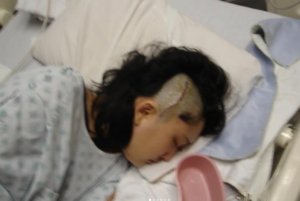
At 4:00 AM, Judy Kim Cage woke up in pain so extreme that she was screaming, though she doesn’t remember the scream. What she does remember is the “worst headache ever,” nausea, numbness, and then the terrifying truth: her left side was shutting down.
Here’s the part that makes her story hit even harder: Judy already lived with Moyamoya syndrome and had undergone brain surgeries years earlier. She genuinely believed she was “cured.” So when her stroke began, her brain fought the reality with everything it had. Denial, resistance, bargaining, and delay.
And yet, Judy’s story isn’t about doom. It’s about what Moyamoya syndrome stroke recovery can look like when you keep going, especially when recovery becomes less about “getting back to normal” and more about building a new, honest, meaningful life.
What Is Moyamoya Syndrome (And Why It’s Called “Puff of Smoke”)
Moyamoya is a rare cerebrovascular disorder where the internal carotid arteries progressively narrow, reducing blood flow to the brain. The brain tries to compensate by creating fragile collateral vessels, thin-walled backups that can look like a “puff of smoke” on imaging.
Those collateral vessels can become a risk. In Judy’s case, the combination of her history, symptoms, and eventual deficits marked a devastating event that would reshape her life.
The emotional gut punch wasn’t only the stroke itself. It was the psychological whiplash of thinking you’re safe… and discovering you’re not.
The First Enemy in Moyamoya Stroke Recovery: Denial
Judy didn’t just resist the hospital. She resisted the idea that this was happening at all.
She’d been through countless ER visits in the past, having to explain Moyamoya to doctors, enduring tests, and then being told, “There’s nothing we can do.” That history trained her to expect frustration and disappointment, not urgent help.
So when her husband wanted to call emergency services, her reaction wasn’t logical, it was emotional. It was the reflex of someone who’d been through too much.
Denial isn’t weakness. It’s protection. It’s your mind trying to buy time when the truth is too big to hold all at once.
The Moment Reality Landed: “I Thought I Picked Up My Foot”
In early recovery, Judy was convinced she could do what she used to do. Get up. Walk. Go to the bathroom. Handle it.
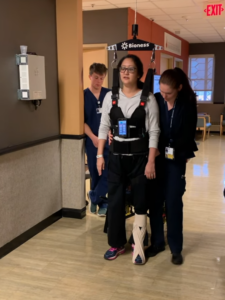
But a powerful moment in rehab shifted everything: she was placed into an exoskeleton and realized her brain and body weren’t speaking the same language.
She believed she lifted her foot, then saw it hadn’t moved for several seconds.
That’s when she finally had to admit what so many survivors eventually face:
Recovery begins the moment you stop arguing with reality.
Not because you “give up,” but because you stop wasting energy fighting what is and start investing energy into what can be.
The Invisible Battle: Cognitive Fatigue and Energy Management
If you’re living through Moyamoya syndrome stroke recovery, it’s easy for everyone (including you) to focus on the visible stuff: walking, arms, vision, and balance.
But Judy’s most persistent challenge wasn’t always visible.
It was cognitive fatigue, the kind that makes simple tasks feel impossible.
Even something as ordinary as cleaning up an email inbox can become draining because it requires micro-decisions: categorize, prioritize, analyze, remember context, avoid mistakes.
And then there’s the emotional layer: when you’re a perfectionist, errors feel personal.
Judy described how fatigue increases mistakes, not because she doesn’t care, but because the brain’s bandwidth runs out. That’s a brutal adjustment when your identity has always been built on competence.
A practical shift that helped her
Instead of trying to “finish” exhausting tasks in one heroic sprint, Judy learned to do small daily pieces. It’s not glamorous, but it reduces cognitive load and protects energy.
In other words: consistency beats intensity.
Returning to Work After a Moyamoya Stroke: A Different Kind of Strength
Judy’s drive didn’t disappear after her stroke. If anything, it became part of the recovery engine.
She returned slowly, first restricted to a tiny number of hours. Even that was hard. But over time, she climbed back. She eventually returned full-time and later earned a promotion.
That matters for one reason: it proves recovery doesn’t have one shape.
For some people, recovery is walking again.
For others, it’s parenting again.
For others, it’s working again without losing themselves to burnout.
The goal isn’t to recreate the old life perfectly. The goal is to build a life that fits who you are now.
[Quote block mid-article]
“If you couldn’t make fun of it… it would be easier to fall into a pit of despair.”
Humor Isn’t Denial. It’s a Tool.
Judy doesn’t pretend everything is okay. She’s not selling toxic positivity.
But she does use humor like a lever, something that lifts the emotional weight just enough to keep moving.
She called her recovering left hand her “evil twin,” high-fived it when it improved, and looked for small “silver linings” not because the stroke was good, but because despair is dangerous.
Laughter can’t fix Moyamoya.
But it can change what happens inside your nervous system: tension, stress response, mood, motivation, and your willingness to try again tomorrow.
And sometimes, tomorrow is the whole win.
Identity After Stroke: When “Big Stuff Became Small Stuff”
One of the most profound shifts Judy described was this: the stroke changed her scale.
Things that used to feel huge became small. Every day annoyances lost their power. It took something truly significant to rattle her.
That’s not magical thinking. That’s a perspective earned the hard way.
Many survivors quietly report this experience: once you’ve faced mortality and rebuilt your life from rubble, you stop wasting precious energy on what doesn’t matter.
Judy also found meaning in mentoring others because recovering alone can feel like walking through darkness without a map.
Helping others doesn’t erase what happened.
But it can transform pain into purpose.
If You’re In Moyamoya Syndrome Stroke Recovery, Read This
If your recovery feels messy… if you’re exhausted by invisible symptoms… if the old “high achiever” version of you is fighting the new reality…
You’re not broken.
You’re adapting.
And your next step doesn’t have to be dramatic. It just has to be honest and repeatable:
- Simplify the day
- Protect energy
- Build routines
- Accept help
- Use humor when you can
- And find one person who understands
Recovery is not a straight line.
But it is possible to rebuild a life you actually want to live.
If you want more support and guidance, you can also explore Bill’s resources here:
This blog is for informational purposes only and does not constitute medical advice. Please consult your doctor before making any changes to your health or recovery plan.
Judy Kim Cage on Moyamoya Stroke Recovery, Cognitive Fatigue, and Finding Purpose AgainShe thought Moyamoya was “fixed.” Then a 4 AM headache proved otherwise. Judy’s comeback will change how you see recovery.
Highlights:
00:00 Introduction and Guest Introduction
01:43 Life Before the Stroke
11:17 The Moment of the Stroke
19:56 Moyamoya Syndrome Stroke Recovery
25:36 Cognitive Fatigue and Executive Functioning
34:50 Rehabilitation Experience
42:29 Using Humor in Recovery
46:59 Finding Purpose After Stroke
54:19 Judy’s Book: Super Survivor
01:05:20 Conclusion and Final Thoughts
Transcript:
Introduction and Guest Introduction
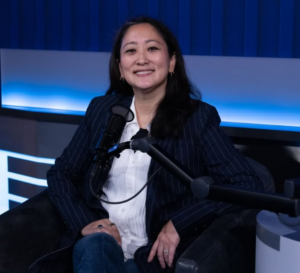
Bill Gasiamis (00:00)
Hey there, I’m Bill Gasiamis and this is the Recovery After Stroke podcast. Before we jump in a quick thank you to my Patreon supporters. You help cover the hosting costs after more than 10 years of doing this independently. And you make it possible for me to keep creating episodes for stroke survivors who need hope and real guidance. And thank you to everyone who supports the show in the everyday ways too. The YouTube commenters, the people leaving reviews on Spotify and Apple.
The folks who bought my book and everyone who sticks around and doesn’t skip the ads. I see you and I appreciate you. Now I want you to hear this. My guest today, Judy Kim Cage, woke up at 4am with the worst headache of her life and she was so deep in denial that she threatened to divorce her husband if he called 911. Judy lives with Moyamoya syndrome, a rare cerebrovascular condition often described as the puff of smoke on imaging.
She’d already had brain surgeries and believed she was cured until the stroke changed everything. Judy also wrote a book called Super Survivor and it’s all about how denial, resistance and persistence can lead to success and a better life after stroke. I’ll put the links in the show notes. In this conversation, we talk about Moyamoya Syndrome, stroke recovery, the rehab moment where reality finally landed.
and what it’s like to rebuild life with cognitive fatigue and executive functioning challenges and how Judy used humor and purpose to keep moving forward without pretending recovery is easy. Let’s get into it. Judy Kim Cage, welcome to the podcast.
Life Before Moyamoya Syndrome
Judy Kim Cage (01:43)
Thank you so much, Bill
Bill Gasiamis (01:45)
Thanks for being here. Can you paint us a picture of your life before the stroke? What were your days like?
Judy Kim Cage (01:51)
Hmm. Well, my life before the stroke was me trying to be a high achiever and a corporate nerd. I think so. I think so. I, you know, I was in the Future Business Leaders of America in high school and then carried that forward to an accounting degree.
Bill Gasiamis (02:04)
Did you achieve it?
Judy Kim Cage (02:20)
and finance and then ⁓ had gone to work for Deloitte and the big four. ⁓ And after that moved into ⁓ internal audit for commercial mortgage and then risk and banking and it all rolled into compliance, which is a kind of larger chunk there. But ⁓ yeah, I was living the corporate dream and
Traveling every other week, basically so 50 % of the time, flying to Columbus, staying there, and then flying back home for the weekend and working in a rented office for the week after. And I did that for all of 2018. And then in 2019 is when my body said, hang on a second. And I had a stroke.
Bill Gasiamis (03:17)
How many hours a week do you think you were working?
Judy Kim Cage (03:19)
Well, not including the treble, ⁓ probably 50-55.
Bill Gasiamis (03:26)
Okay.
Judy Kim Cage (03:26)
Oh, wish, that wasn’t that that really wasn’t a ton compared to my Deloitte days where I’d be working up to 90 hours a week.
Bill Gasiamis (03:37)
Wow.
in that time when you’re working 90 hours a week. Is there time for anything else? you get to squeeze in a run at the gym or do you get to squeeze in a cafe catch up with a friend or anything like that?
Judy Kim Cage (03:51)
There are people that do. think, yeah, I mean, on certain particular weekends and my friends, a lot of my friends were also working with me. So there was time to socialize. And then, of course, we would all let off some steam, you know, at the pub, you know, at the end of a week. But
⁓ yeah, I remember on one of my very first jobs, I had been so excited because I had signed up to take guitar lessons and I was not able to leave in order to get there in time. ⁓ so that took a backseat.
Bill Gasiamis (04:40)
Yes, it sounds like there’s potentially lots of things that took a backseat. Yeah, work tends to be like that can be all consuming and when friendships especially are within the work group as well, even more so because everyone’s doing the same thing and it’s just go,
Judy Kim Cage (04:44)
Yeah, definitely.
Absolutely. We started as a cohort essentially of, I want to say 40 some people all around the same age. And then, you know, as the years ticked by, we started falling off as they do in that industry.
Bill Gasiamis (05:19)
Do you enjoy it though? Like, is there a part of you that enjoys the whole craziness of all the travel, all the hours, the work stuff? it? Is it like interesting?
Judy Kim Cage (05:31)
Yeah, I do love it. I actually do love my job. I love compliance. I love working within a legal mindset with other lawyers. And basically knowing that I’m pretty good at my job, that I can be very well organized, that it would be difficult even for a normal healthy person and challenging and that I can do well there.
And yeah, no, was, when I had put in a year, when I was in ⁓ acute therapy, ⁓ I had spoken with a number of students and they had interviewed me as a patient, but also from the psych side of it all, ⁓ asking, well, what does it feel like to all of a sudden have your life stop? And I said, well,
⁓ and things got a bit emotional, I said, I felt like I was at the top of my game. I had finally achieved the job that I absolutely wanted, had desired. ⁓ I felt like I’d found a home where I was now going to retire. And all of a sudden that seems like it was no longer a possibility.
Bill Gasiamis (06:55)
So that’s a very common thing that strokes have over say who I interviewed. They say stuff like I was at the top of my game and there’s this ⁓ idea or sense that once you get to the top of the game, you stay there. There’s no getting down from the top of the game and that it just keeps going and keeps going. And, I think it’s more about fit. sounds like it’s more about fit. Like I found a place where I fit. found a place where I’m okay.
or I do well, where I succeed, where people believe in me, where I have the support and the faith or whatever it is of my employers, my team. Is that kind of how you describe on top of your game or is it something different?
Judy Kim Cage (07:41)
I think it was all of those things, ⁓ but also, you know, definitely the kindness of people, the support of people, their faith in my ability to be smart and get things done. But then also ⁓ just the fact that I finally said, okay, this was not necessarily a direct
from undergrad to here. However, I was able to take pieces of everything that I had done and put it together into a position that was essentially kind of created for me and then launched from there. So I felt as though it was essentially having climbed all of those stairs. So I was at the top. Yeah.
you know, looking at my Lion King kingdom and yeah.
Bill Gasiamis (08:43)
just about to ascend and, and it was short lived by the sound of it.
Judy Kim Cage (08:49)
It was, it was, it was only one year beforehand, but I am actually still at the company now. I ⁓ had gone and done ⁓ well. So I was in the hospital for a few months and following that. Well, following the round of inpatient and the one round of outpatient, said, okay, I’m going back.
And I decided, I absolutely insisted that I was going to go back. The doctor said, okay, you can only work four hours a week. I said, four hours a week, what are you talking about? ⁓ But then I realized that four hours a week was actually really challenging at that time. ⁓ And then ⁓ I climbed back up. was, you know, I’m driven by deadlines and…
⁓ I was working, you know, leveraging long-term disability. And then once I had worked too many hours after five years, you know, I graduated from that program, or rather I got booted out of the program. ⁓ And then a year later, I was actually, well, no, actually at the end of the five years I was promoted. So, ⁓
after coming back full time.
Bill Gasiamis (10:20)
Wow. So this was all in 2019, the stroke. You were 39 years old. Do you remember, do you remember the moment when you realized there was something wrong? We’ll be back with more of Judy’s remarkable story in just a moment. If you’re listening right now and you’re in that stage where recovery feels invisible, where the fatigue is heavy, your brain feels slower.
or you’re trying to explain a rare condition like Moyamoya and nobody really gets it. I want you to hear this clearly. You’re not failing. You’re recovering. If you want extra support between episodes, you can check out my book at recoveryafterstroke.com slash book. And if you’d like to help keep this podcast going and support my mission to reach a thousand episodes, you can support the podcast at Patreon by visiting patreon.com/recoveryafterstroke.
All right, let’s get back to Judy.
The Moment of the Stroke
Judy Kim Cage (11:16)
Yes, although I was in a lot of denial. ⁓ So we had just had dinner with ⁓ my stepdaughter and her husband ⁓ and ⁓ we were visiting them in Atlanta, Georgia. ⁓ And we said, OK, we’ll meet for brunch tomorrow. You know, great to see you. Have a good night.
It was four in the morning and I was told I woke up screaming and I felt this horrible, horrible worst headache ever ⁓ on the right side. And I think because I have, I have Moyamoya syndrome, because of that and because I had had brain surgeries, ⁓
10 years or back in December of 2008, I had a brain surgery on each side. And that at the time was the best of care that you could get. You know, that was essentially your cure. And so I thought I was cured. And so I thought I would never have a stroke. So when it was actually happening, I was in
denial said there’s no way this could be happening. But the excess of pain, ⁓ the nausea and ⁓ it not going away after throwing up, the numbness ⁓ and then the eventual paralysis of my left side definitely ⁓ was evidence that something was very very wrong.
Bill Gasiamis (13:09)
So it was four in the morning, were you guys sleeping?
Judy Kim Cage (13:14)
⁓ yeah, we were in bed. Yep. And yeah, I woke up screaming. According to my husband, I don’t remember the screaming part, but I remember all the pain.
Bill Gasiamis (13:24)
Yeah, did he ⁓ get you to hospital? Did he the emergency services?
Judy Kim Cage (13:30)
I apparently was kind of threatening to divorce him if he called 911.
Bill Gasiamis (13:38)
Wow, that’s a bit rough. Oh my lord.
Judy Kim Cage (13:41)
I know. mean, that could have been his out, but he didn’t.
Bill Gasiamis (13:45)
There’s worse things for a human to do than call 911 and get your support. Like marriages end for worse things than that.
Judy Kim Cage (13:53)
because I’ve been to the ER many, many, many times. And because of the Moyamoya, you would always, it being a rare disease, you would never be told, well, you would have to explain to all the doctors about what Moyamoya was, for one. For two, to say if I had a cold, for instance, that Moyamoya had nothing to do with it.
Bill Gasiamis (14:11)
Wow.
Judy Kim Cage (14:19)
But also, you know, they would give me an MRI, oof, the claustrophobia. I detested that. And I said, if you’re getting me into an MRI, please, please, please, a benzodiazepine would be incredible. Or just knock me out, whatever you need to do. But I’m not getting into that thing otherwise. But, you know, they would take the MRI, read it.
and then say, hours and hours and hours later, there’s nothing we can do. The next course of action, if it was absolutely necessary, would be another surgery, which would have been bur holes that were drilled into my skull to relieve some sort of pressure. ⁓ In this particular case, the options were to ⁓ have a drain put in my skull.
and then for me to be reliant on a ventilator. Or they said, you can have scans done every four hours and if the damage becomes too great, then we’ll move on. Otherwise, we’ll just keep tabs on it, essentially.
Bill Gasiamis (15:37)
Yeah. So I know that feeling because since my initial blade in February, 2012, I’ve lost count how many times I’ve been to the hospital for a scan that was unnecessary, but necessary at the time because you, you know, you tie yourself up in knots trying to work out, is this another one? Isn’t it another one? Is it, it, and then the only outcome that you can possibly come up with that
puts your mind at ease and everybody else around you is let’s go and get a scan and then, and then move on with life. Once they tell you it was, ⁓ it was not another bleed or whatever. Yeah. However, three times I did go and three times there was a bleed. So it’s the whole, you know, how do you wrap your head around like which one isn’t the bleed, which one is the bleed and
It’s a fricking nightmare if you ask me. And I seem to have now ⁓ transferred that concern to everybody else who has a headache. On the weekend, my son had a migraine. And I tell you what, because he was describing it as one of the worst headaches he had ever had, I just went into meltdown. I couldn’t cope. And it was like, go to the hospital, go to the hospital, go to…
He didn’t go, he’s an adult, right? Makes his own decisions. But I was worried about it for days. And it wasn’t enough that even the next few days he was feeling better because I still have interviewed people who have had a headache for four or five or six days before they went to hospital and then they found that it was a stroke. it’s just become this crazy thing that I have to live with now.
Judy Kim Cage (17:26)
I essentially forced Rich to wait 12 hours before I called my vascular neurologist. And once I did, his office said, you need to go to the ER. And I said, okay, then that’s when I folded and said, all right, we’ll go. ⁓ And then, ⁓ you know, an ambulance came.
Bill Gasiamis (17:35)
Wow.
Judy Kim Cage (17:53)
took me out on a gurney and then took me to a mobile stroke unit, which there was only one of 11, there were only 11 in the country at the time. And they were able to scan me there and then had me basically interviewed by a neurologist via telecall. And this was, you know, before
the days of teams and zoom and that we all tested out ⁓ from COVID. ⁓ yeah, that’s.
Bill Gasiamis (18:35)
That’s you, So then you get through that initial acute phase and then you wake up with a certain amount of deficits.
Judy Kim Cage (18:37)
Yeah.
my gosh. ⁓ Well, yeah, absolutely. ⁓ Massive amounts of pain ⁓ from all the blood absorbing back into the brain. ⁓ The left side, my left side was paralyzed. My arm fell out of my shoulder socket. So it was hanging down loosely. ⁓ I had dropped foot, so I had to learn to walk again.
Double vision and my facial group on the left and then. Bluff side neglect.
Bill Gasiamis (19:31)
Yeah. So, and then I see in our, in your notes, I see also you had diminished hearing, nerve pain, spasticity, cognitive fatigue, ⁓ bladder issues. You’d also triggered Ehlers-Danlos symptoms, whatever that is. Tell me about that. What’s that?
Moyamoya Syndrome Stroke Recovery
Judy Kim Cage (19:56)
So I call myself a genetic mutant because the Moyamoya for one at the time I was diagnosed is discovered in 3.5 people out of a million. And then Ehlers-Danlos or EDS for short is also a genetic disorder. Well, certain versions are more genetic than others, but it is caused by a defect in your collagen, which
makes up essentially your entire body. And so I have hypermobility, the blood, I have pots. So my, my blood basically remains down by my feet, it pulls at my feet. And so not enough of it gets up to my brain, which also could, you know, have affected the moimoya. But
Essentially, it creates vestibular issues, these balance issues where it’s already bad enough that you have a stroke, but it’s another to be at the risk of falling all the time. Yeah. Or if you get up a little too fast, which I still do to this day, sometimes I’ll completely forget and I’ll just bounce up off the sofa to get myself a drink and I will sway and all of a sudden
Bill Gasiamis (21:07)
Yeah.
Judy Kim Cage (21:22)
onto the sofa or sit down right on the floor and say, okay, why did I not do the three-step plan to get up? ⁓ But sometimes it’s just too easy to forget.
Bill Gasiamis (21:37)
Yeah, yeah. You just act, you just move out of well habit or normal, normal ways that people move. And then you find yourself in a interesting situation. So I mean, how, how do you deal with all of that? Like you, you go from having experienced more and more by the way, let’s describe more and more a little bit, just so people know what it is.
Judy Kim Cage (22:02)
Absolutely.
So, my way is a cerebrovascular disorder where your internal carotid progressively constricts. So for no known reason, no truly known reason. And so because it keeps shrinking and shrinking, not enough brain, blood gets to your brain. So what the brain decides to do to compensate
is it will form these collateral vessels. And these collateral vessels, which there are many of them usually, you know, the longer this goes on, ⁓ they have very thin walls. So due to the combination of the thin walls, and if you have high blood pressure, these walls can break. And that is what happened in my case. ⁓
Well, the carotids will continue to occlude, but what happens is, ⁓ least with the surgery, they took my temporal artery, removed it from my scalp, had taken a plate off of my skull and stitched that.
temporal artery onto my brain so that it would have a separate source of blood flow so that it was no longer reliant on this carotid. So we know that the carotid, sorry, that the temporal artery won’t fail out. ⁓ So usually, ⁓ and this was my surgery was actually done at Boston Children’s Hospital ⁓ by the man who pioneered the surgery.
And he was basically head of neurosurgery at Harvard Medical School and Boston Children’s because they more often find this in children now. And the sooner they find it, the fewer collateral vessels will form once the surgery is performed.
Bill Gasiamis (24:17)
Okay, so the long-term risk is that it’s decreased, the risk of a blade decreases if they do the surgery early on too. I love that.
Judy Kim Cage (24:25)
The rest.
But I was diagnosed at the age of 29. So I had quite a while of these collateral vessels forming in what they call a puff of smoke that appears on the MRI. ⁓ And that is what, you know, Moyamoya essentially means in Japanese, is translated to in Japanese, it’s puff of smoke.
Bill Gasiamis (24:50)
Wow, you have been going through this for a while then. So I can understand your whole mindset around doctors, another appointment, another MRI. Like I could totally, ⁓ it makes complete sense. You you’re over it after a certain amount of time. Yeah, I’m the same. I kind of get over it, but then I also have to take action because you know what we know what the previous
Judy Kim Cage (25:07)
Absolutely.
Bill Gasiamis (25:19)
outcome was and now you’re dealing with all of these deficits that you have to overcome. Which are the deficits that you’re still dealing with that are the most, well, the most sort of prolonged or challenging or whatever you want to call them, whatever.
Cognitive Fatigue and Executive Functioning
Judy Kim Cage (25:34)
The most significant, I guess it’s the most wide ranging. But it is. ⁓ Energy management and cognitive fatigue. ⁓ I have issues with executive functioning. ⁓ Things are, you know, if I need to do sorting or filing. ⁓ That actually is.
one of my least favorite things to do anymore. Whereas it was very easy at one point. ⁓ And now if I want to clean up my inbox, it is just a dreaded task. ⁓ And so now I’ve learned that if I do a little bit of it every day, then I don’t have, it doesn’t have to take nearly as long. ⁓
Bill Gasiamis (26:26)
What
it’s dreaded about it is it making decisions about where those emails belong, what to do to them or.
Judy Kim Cage (26:33)
Oh, no, it’s just the time and energy it takes to do it. It drains me very quickly. Because you have to evaluate and analyze every line as you’re deciding what project it belongs to. And there’s a strategic way to do it in terms of who you normally deal with on each project, etc. etc. This chunk of time, calendar dates you’ve worked on it, etc. But, know,
That might by the time I get to this tedious task, I’m not thinking about it strategically. ⁓ Yeah, I’m just dragging each individual line item into a little folder. ⁓
So, ⁓ but yeah, like the cognitive deficits. gosh. mean, I’m working on a computer all day. I am definitely a corporate desk rat or mouse, you know, on the wheel. ⁓ And a lot of Excel spreadsheets and just a lot of very small print and sometimes I get to expand it. ⁓
And it really is just trying not to, well, the job involves making as few errors as you possibly can.
Bill Gasiamis (28:01)
Yeah.
Judy Kim Cage (28:02)
⁓ Now when I get tired or overwhelmed or when I overdo it, which I frequently frequently do, ⁓ I find out that I’ve made more errors and I find out after the fact usually. So nothing that’s not reversible, nothing that’s not fixable, but it still is pretty disheartening for a perfectionist type such as myself.
Bill Gasiamis (28:30)
Wow. So the perfectionism also has to become something that you have to deal with even more so than before, because before you were probably capable of managing it now, you’re less capable. yeah, I understand. I’m not a perfectionist by all means. My wife can tend to be when she’s studying or something like that. And she suffers from, you know, spending
Judy Kim Cage (28:46)
the energy.
Bill Gasiamis (29:00)
potentially hours on three lines of a paragraph. Like she’s done that before and I’ll just, and I’ve gone into the room after three hours and her, and her going into the room was, I’m going to go in and do a few more lines because she was drained or tired or, you know, her brain wasn’t working properly or whatever. I’m just going to go do three more lines and three hours later, she’s still doing those three lines. It’s like, wow, you need to get out of the, you need to get out. need to, we need to.
break this because it’s not, it’s not good. So I totally get what it’s liked to be like that. And then I have had the cognitive fatigue where emails were impossible. Spreadsheets forget about it. I never liked them anyway. And they were just absolutely forget about it. Um, I feel like they are just evil. I feel like the spreadsheets are evil, you know, all these things that you have to do in the background, forget about it. That’s unbelievable. So, um,
What was it like when you first sort of woke up from the initial stroke, got out of your unconscious state and then realized you had to deal with all of this stuff? I know for some time you were probably unable to speak and were you ⁓ trapped inside your body? Is that right or?
Judy Kim Cage (30:19)
I was in the ICU.
I was paralyzed on the left side, so I was not able to get up, not really able to move much. ⁓ I was not speaking too much, definitely not within the first week. I was in the ICU for 10 days. ⁓ And yeah, I just wasn’t able to do much other than scream from the beam.
⁓ And then I, once I became more aware, I insisted that I could get up and walk to the bathroom myself. I insisted that I could just sit up, get up, do all the things that I had done before. And it being a right side stroke as well, you know, I think helps contribute to the overestimation or the…
just conceitedness, guess, and this self-confidence that I could just do anything. Yes, absolutely. And I was told time and time again, Judy, can’t walk, Judy, can’t go to the bathroom, Judy, you can’t do these things. And I was in absolute denial. And I would say, no, I can, I can get up. And meanwhile, I would say that
Bill Gasiamis (31:30)
Delusion
Judy Kim Cage (31:51)
husband was so afraid that I was going to physically try to get up and fall over, which would not have been good. ⁓ And so, you know, there was, there were some expletives involved. ⁓ And, ⁓ and then eventually once I was out of the ICU, ⁓ I didn’t truly accept that I couldn’t walk until
Bill Gasiamis (32:00)
but.
Judy Kim Cage (32:20)
one of the PT students had put me into an exoskeleton and I realized that my foot did not move at all, you know, like a full five seconds after I thought I picked it up. And I said, wait, hang on, what’s going on here? And I said, ⁓ okay, I guess I have to admit that I can’t walk. And then I can’t, I can’t sit upright. I can’t.
You know, and like you had mentioned, you know, I had lost the signals from my brain to my bladder. They were slow or whatnot. And I was wetting the bed, like a child at a sleepover. And I was pretty horrified. And that happened for, you know, pretty much my, pretty much all my time at Kratie, except I got the timing down.
⁓ eventually, which was fantastic. But then when I moved to post-acute, ⁓ then I had to learn the timing all over again, just because, you know, of different, rules being different, the transfers being different, and then, ⁓ you know, just ⁓ the timing of when somebody would answer the call button, et cetera.
Bill Gasiamis (33:45)
Yeah.
Do you, what was it like going to rehab? I was really excited about it. I was hanging out because I learned that I couldn’t walk when the nurse said to me, have you been to the toilet yet? And I said, no, I hadn’t been to the toilet. We’re talking hours after surgery, you know, maybe within the first eight or nine hours, something like that. And I went to put my left foot down onto the ground. She was going to help me. She was like a really petite Asian.
framed lady and I’m and I’m probably two feet taller than her, something like that, and double her weight. And then she said, just put your hand on my shoulder and then I’ll support you. So I did that. I put my hand on her shoulder, stepped onto my left foot and then just collapsed straight onto the ground and realized, ⁓ no, I’m not walking. I can’t walk anymore. And then I was then waiting.
hanging out to go to rehab was really excited about that. ⁓ What was it like for you?
Moyamoya Syndrome Stroke Rehabilitation Experience
Judy Kim Cage (34:48)
Initially, well, do you so you mean. ⁓
Bill Gasiamis (34:56)
Just
as in like, were you aware that you could ⁓ improve things? Were you kind of like, we’re gonna overcome this type of stuff? Because you had a lot more things to overcome than I did. So it’s like, how is that? How do you frame that in your head? Were you the kind of person who was like, ⁓ rehab’s around the corner, let’s do that? Or were you kind of reluctant?
Judy Kim Cage (35:19)
It was a combination of two things. One, I had been dying to go home. I said, I absolutely, why can’t I go home? I was in the hospital for three weeks before we moved to the rehab hospital. And once we had done that, I was there basically for the entire weekend and then they do evaluations on Tuesday.
And so I was told on Tuesday that I would be there for another at least four to six weeks. And so that was even before therapies really began. So there was a part of me saying, I don’t care, let me go home and I’ll do outpatient every day and everything will be fine. At least I get to go home. But then the other part.
Bill Gasiamis (35:52)
Thanks.
Judy Kim Cage (36:11)
said, okay, well, once I realized I was stuck and that I couldn’t escape, I couldn’t go anywhere, ⁓ I actually, I did love therapy. ⁓ I loved being in speech therapy, being in OTE, being in PT even, because my girls were fantastic.
They were so caring, so understanding. They made jokes and also laughed at mine, which was even better. And when you’re not in therapy, especially on the weekends, you’re just in your room by yourself. And you’re not watching TV because that input is way too heavy. Listening to music.
maybe a little bit here and there. ⁓ You know, all the things that you know and love are nowhere to be found, you know, really. ⁓ Yeah, absolutely. Yeah, yeah. And I get claustrophobic in the MRI, in the hospital, et cetera. yeah.
Bill Gasiamis (37:14)
Oscillating.
Yeah.
I was on YouTube, searching YouTube videos that were about neuroplasticity, retraining the brain, that kind of stuff, meditations, type of thing. That really helped me on those weekends. The family was always around, but there was delays between family visits and what have you that couldn’t be there that entire time. ⁓ So I found that very interesting. And you know, rehab was a combination of
frustration and excitement, excitement that I was getting the help, frustration that things weren’t moving as quickly as I wanted. ⁓ And I even remember the occupational therapist making us make breakfast. And I wouldn’t recommend this breakfast for stroke survivors. I think it was cereal and toast or something like that. And I remember being frustrated, why are they making me make it? My left side doesn’t work. Like I can barely walk.
I cannot carry the glass with the tea or anything like that to me. What are these people doing? They should be doing it for us. I wasn’t aware. I wasn’t aware that that was part of the therapy. I just thought they were making us make our own bloody breakfast. I thought these people are so terrible. And it took a while for me to clue on like, ⁓ okay.
Judy Kim Cage (38:44)
you
Bill Gasiamis (38:52)
They want me to be able to do this when I get home. ⁓ understood. Took a while. I’m thick like that.
Judy Kim Cage (39:00)
Fortunately, wasn’t made to cook until close to the end. And also during outpatient, I was tasked to make kind of a larger, you know, crock pot dinner so that, you know, I could do that at home. Meanwhile, the irony of it all is that.
I can cook and I used to love cooking, but I don’t do it nearly as much as I used to. So that skill did not really transfer over. ⁓ I have Post-it notes up by the microwave that tell me right hand only because if I use my left hand, the temperature differential
I will burn myself ⁓ without even realizing it or even reaching for a certain part of a pan that I think is going to be safe and is somewhat heat resistant. And I touch it and then poof, well, you know, get a burn. So there are post-it notes everywhere. There’s one by the front door that says, watch the steps, because I had a couple of times flown down them and gashed my knee.
Bill Gasiamis (40:13)
Yeah.
Judy Kim Cage (40:26)
And it’s amazing actually how long a Post-It note with its temporary stick will stay up on a wall.
Bill Gasiamis (40:35)
Well, there’s another opportunity for you there, like do a project, ⁓ a longevity of Post-it Notes project, see how long we can get out of one application.
Judy Kim Cage (40:46)
Yeah, well, this one actually, so I think it was three months after I had moved in, which would have been 10 months into my stroke recovery. And that’s when I fell down these steps. And that’s when I put up the Post-It note. it has been, a piece of tape has been added to it.
but it only fell down, I think, a couple of years ago.
Bill Gasiamis (41:18)
Yeah. So 3M need to shift their entire focus. I feel like 3M. Yeah. I think 3M needs to have a permanent ⁓ post-it note application, but easy to remove. if I want to take it down, like it’s permanent once I put it up, but if I want to take it down, it’s still easy to remove and it doesn’t ruin my paint or leave residue.
Judy Kim Cage (41:44)
They do actually have that tech. have it for, they call it command. It’s what they have for the hooks for photos and whatnot. And then if you pull the tab and then release it, it will come off and leave the wall undamaged, but it will otherwise stay there for a long.
Bill Gasiamis (42:04)
Yes, yes, I think you’re right. Most of the time it works, yes. Okay, well, we’re moving on to other things. You’ve overcome a lot of stuff. You’re dealing with a lot of stuff. And yet, you have this disposition, which is very chirpy and happy, go lucky. Is it real, that disposition, or is it just a facade?
Using Humor in Moyamoya Syndrome and Stroke Recovery
Judy Kim Cage (42:29)
No, no, it’s real. It’s real. ⁓ I think I’ve always ⁓ tried to make light of things. ⁓ Humors, probably my first defense mechanism. ⁓ And I think that helped out a lot ⁓ in terms of recovery. And also, ⁓ it put my therapist in a great mood.
Also, because not many people did that apparently. You know, most people curse them off or, you know, were kind of miserable. And there were times when I was miserable too. Absolutely. But, but I probably took it out more on my husband than I did the staff. And he, and he would call, you know, I said, I was so mean to you, Rich. was so mean to you. And he said, yeah, you were nicer to the nurses than to me. And I.
I apologized for it, but at the same time I’m like, yeah, but sometimes, bud, you are so annoying.
Bill Gasiamis (43:33)
You had it coming.
Judy Kim Cage (43:34)
Yeah. Why are you so overprotective? Why do you point out every crack in the sidewalk? Why do you know, you still say I have to stop to tie up my hair when we’re walking on the sidewalk, you know, because you’re not supposed to do two things at once. ⁓ Yeah. So I felt as though I would make jokes all the time. I when my left hand would start to regain function.
I called it my evil twin because I didn’t even recognize that it was mine. But then I would give it a high five every time I started gaining function back. And I would say things like, yeah, hey, evil twin, congrats. Or ⁓ I would say, I guess I don’t have to clean the house anymore. I don’t have to use my left hand to dust. I’m not capable of doing it. So why do it?
Bill Gasiamis (44:29)
Yeah.
Judy Kim Cage (44:30)
And I’m like, let’s always look for the silver lining. And it would usually be a joke. But, you know, if you couldn’t make fun of it or think about the ridiculousness of it, then I think it would be easier to fall into a pit of despair.
Bill Gasiamis (44:48)
I agree with you and laughing and all that releases, know, good endo, good endorphins and good neurochemicals and all that kind of stuff really does improve your blood pressure. It improves the way that your body feels, you know, the tightness in your muscles and all that kind of stuff. Everything improves when you laugh and you have to find funny things about a bad situation to laugh at, to kind of dial down the seriousness of the situation. can
you know, really dial it down just by picking something strange that happened and laughing at it. I found myself doing that as well. And I’m similar in that I would go to rehab and they would, you know, we would chit chat like I am now with you and would have all sorts of conversations about all kinds of things. And the rehab was kind of like the, the, it was like the vessel, you know, to talk shit, have a laugh. ⁓
you know, be the clown of the rehab room. And I get it, everyone’s doing it tough, but it lightened the mood for everybody. You know, was, it’s a hard thing. You know, imagine it being just constantly and forever hard. And it was like, I don’t want to be that guy and wish they have fun as well. And, and I think my, my, my tough times were decreased as a result. Like, you know, those stuff, mental and emotional days, they, they come, but they go. then
you have relief from them. And I think you need relief.
Judy Kim Cage (46:23)
Absolutely. Otherwise, just could feel perpetual and just never ending. ⁓ And why or how could you possibly survive feeling that way?
Bill Gasiamis (46:39)
Yeah. So who are you now? as in your, how does your idea of who you are sort of begin to shift after the initial acute phase and now six years in, almost seven years into your stroke journey?
Finding Purpose After Stroke
Judy Kim Cage (46:59)
I think I am.
I’m pretty confident in who I am, which is funny. ⁓ I ⁓ actually lean more into making more jokes or ⁓ lean into the fact that things don’t, they don’t have nearly the importance or the impact that you would otherwise think. ⁓ One of my sayings, I guess I say all the, you know, how they say don’t sweat the small stuff.
my big stuff, like big stuff became small stuff, you know. So it would have to be something pretty big in order for me to really, really, you know, think about it. And a lot of the little things, you know, the nuisances in life and stuff, would usually just laugh or if I tripped or something, then I would just laugh at it and just keep moving on. ⁓ And I think, you know,
It’s funny because some people will say, ⁓ gosh, like stop, you know, there is toxic positivity, right? And there’s plenty of that. And ⁓ I stay away from that, I think. But when I try to give people advice or a different outlook, ⁓ I do say, well, you you could think of it this way, you know.
It’s not all sunshine and rainbows and flowers and, you know, care bears, but it is, you know, but it, but you can pull yourself out of a situation. You can try to figure out a way to work around it. You can, you know, choose differently for yourself, you know, do things that you love. You know, you’re only given a certain amount of limited time on the earth.
So how do you want to spend it? And if you are on your deathbed, you know, would you have, do you have any regrets? You know, like you did read the books about, you know, that, ⁓ why am I forgetting? Doctors ⁓ that perform palliative care and, you know, they’ve written books about
you know what people’s regrets have been after, know, once they are about to pass and you know, that not taking action was a regret. You know, like why didn’t I do this? Or why didn’t I do this? Why didn’t I try this? Like really, what would have been the downfall to trying something? ⁓ And I find that, you know, aside from just naturally being able to see
things to laugh at or, or positive sides of things. ⁓ I tried, like, I wish that people could experience that without having gone through what we went through. ⁓ but that’s virtually impossible. I think.
Bill Gasiamis (50:18)
I think it’s impossible, totally, 100 % impossible because everybody thinks they’re doing okay until they’re not. You just cannot prevent somebody from going through something by taking the learning first. The learning has to come second.
Sad as that is.
Judy Kim Cage (50:39)
⁓ Well, and we all think we’re invincible to a large extent. ⁓ But ⁓ I think what I’ve been trying to do or me now, I’ve always, you know, volunteered in various ways, but now I take and hold extra value in being a mentor for other stroke patients.
Bill Gasiamis (51:03)
Yeah, yeah, that’s
Judy Kim Cage (51:04)
And for, you know, individuals that even just come up to me and talk about all of their medical problems, it doesn’t matter if it’s circulated or not, you know, it’s medically they’re like, there’s some white matter on my MRI, what do think I should do? I’m like, it’s not that simple of an answer. I think you should go to the doctor. Get on a list.
Bill Gasiamis (51:29)
Yeah.
Your journey seems like you’re growing through this adversity, like as in it’s very post-traumatic growth type of experience here. Something that I talk about on my book, the unexpected way that a stroke became the best thing that happened. Not something that I recommend people experience to get to the other side of that, of course. But in hindsight, like it’s all those things that you’re describing.
Judy’s Book: Super Survivor
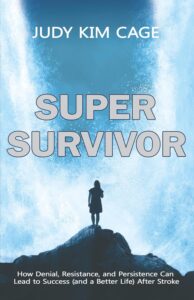
And I look at the chapters because in fact, you’ve written a book and it’s going to be out after this episode goes live, which is awesome. And the book that you’ve written is called Super Survivor. And indeed that is a fitting title. Indeed it is. How denial, resistance and persistence can lead to success and a better life after stroke. Right? So just looking at some of the chapters, there’s
a lot of overlap there, right? And one of the chapters that there’s overlap in is the volunteering and purpose. I’ve got parts of my book that specifically talk about doing stuff for other people and how that supports recovery and how the people who said that stroke was the best thing that happened to them, the ones that I interviewed to gather the data, one of the main things that they were doing was helping other people, volunteering in some way, shape or form. And that helped shape their purpose in life.
and their meaning in life. And it’s how I got there as well. It was like, okay, I’m gonna go and prevent stroke. I’m gonna go talk on behalf of the Stroke Foundation. We’re gonna raise awareness about what stroke is, how to take action on stroke, what to do if somebody’s having a stroke. And I started to feel like I gained a purpose in my life, which was gonna to not allow other people to go through what I went through. And then,
With that came public speaking and then with that came the podcast and then the purpose grew and it became really ⁓ all encompassing. It’s like, wow, like I know what my mission is. I didn’t seek to find it. I stumbled across it and the chapter in my book is called stumbling into purpose because you can’t think it up. You just have to take action and then bam, bam, it appears. Like, is that your experience?
Judy Kim Cage (53:53)
⁓ Well, so much of my identity had been wrapped up in my occupation. ⁓ And so when, you know, the stroke first happened, et cetera, but then as time has passed, ⁓ yeah, I’ve absolutely found more meaning in providing comfort to other stroke patients.
whether it’s because they see me as inspiring that I was able to recover so quickly or that I was able to go back to work, you know, permanently. And just to give them hope, really. And ⁓ when I was in acute, I felt as though like,
We do so much of the recovery alone ⁓ and there isn’t a ton of, you know, of course our therapists are fantastic and they’re, you know, they’re loving and they’re caring. But in terms of having to make it through, you know, certain darkness alone or, ⁓ you know, just feeling sorry for yourself even sometimes, or feeling like, hey, I can do everything, but nobody’s encouraging that.
because they think it’s dangerous. ⁓ I had wished that, you know, there were more people who could understand ⁓ what survival and then recovery was, you know, truly like. And so I had read that in a number of books before hearing people tell me their stories in person because
Emotionally, I absorbed too much of it. ⁓ I wanted to, I think I passed that five-year survival mark of the 26.7%, which I know varies for everybody. ⁓ at the same time, I said, wow, I did, I made it to the other side, I beat these odds. I think I wanted to keep it secret from all the people I worked with.
which I still have actually, it won’t be for too much longer. ⁓ But ⁓ just being able to share that and to be vulnerable and to say all the deficits that I have and what I have overcome, ⁓ I think it’s also given people some hope that they can, if she was able to do it, then maybe it isn’t as tough as I think it is.
Bill Gasiamis (56:43)
Anyone can. Yeah, I love that. That’s kind of my approach to, you know, I’m just a average, humble, normal, amazing guy. You could do it too. You know, I could, I could teach you to what you need to do is learn. ⁓ but that’s true. It’s that it’s that we are, I get, I get people come on the podcast going, I’m so nervous to meet you. You’re on the, I’m on your podcast.
Dude, you don’t know who I am. Like if you think I’m the podcast guy, you’ve got no idea. I’m in the back of my, in my garden, in a shed. what was something that’s meant to be a shed that looks like a studio and amazing and all this kind of stuff. Like, dude, I’m just.
Judy Kim Cage (57:29)
would not have known if you hadn’t told me.
Bill Gasiamis (57:32)
That’s right, because looks can be deceiving and that ideas that we get of people are just, you know, they’re just not accurate until we get to spend time with people and understand them. And I always try and play down who I am so that people can see that I am just a regular guy who went through this and had no, no equipment. had no ⁓ knowledge. had no skills overcoming learning. Like I just, I picked up what I needed when I could just so that I can stumble through to the next
hurdle and stumble through that one and then keep going. I really want people to understand that even the people who appear to be super fabulous at everything, like they’re just not, nobody is that, everyone is just doing their best they can. Even the guy who’s got more money than you, a bigger house, whatever, a better investment, all that stuff, they’re all faking it until shit hits the fan and then they’ve got to really step up to be who they are.
You know, that’s what I find. But attitude, mindset, ⁓ approach, know, laughing, doing things for other people all help. They are really important steps, you know. The other chapter that kind of.
made me pay attention and take note ⁓ was you talk about the night everything changed, complicated medical history, lifesavers, volunteering and purpose, the caregivers, ⁓ easing back into life, which I think is a really important chapter, returning to work, which is really important. then chapter nine, life after stroke continued. That kind of really
is something that made me pay attention because that’s exactly what it is, right? It’s life after stroke. It’s like a continuation. It’s a never ending kind of ⁓ unattainable thing.
Judy Kim Cage (59:27)
It just keeps rolling on. doesn’t stop. You know, even if you’ve gone through a hardship and overcome it, it doesn’t mean that life stops. You’ve got to keep learning these lessons over and over and over again. Even if you don’t want to learn them, however stubborn you are. ⁓ And I, you know, I one thing that I had written about was that I had resented ⁓
you know, what I had gone through for a little while. I said, why do I still have to learn the same lessons that everybody else has to learn? You know, if I’ve gone through this kind of transcendental thing, why do I still have to learn, you know, these other things? But then I realized that I was given the opportunity ⁓
from surviving, was given another chance to be able to truly realize what it was like to be happy and to live. And I’d never, I mean, I had, I had been depressed, you know, for an anxious for years. And, you know, I’ve been in therapy for years and, ⁓ you know, it really wasn’t truly until kind of getting this push of the fast forward button
on learning lessons that it truly became happy, like true, true happiness. And I said, wow, that was the gift. And then to try to pass that on.
Bill Gasiamis (1:01:10)
It’s a pretty cool life hack. A shit way to experience it, but a pretty cool life hack.
Judy Kim Cage (1:01:15)
Yeah, yeah, yeah, definitely don’t I don’t recommend it I don’t
Bill Gasiamis (1:01:20)
Yeah. You get the learning in a short amount of time instead of years of years of wisdom and developing and learning and overcoming, which you avoided up until your first, you know, 38 years. And then, you know, you then, and then you kind of all of a sudden go, okay, well, I really have to buckle down and do these, ⁓ these modules of learning and I’ve got no choice. And I was the same. ⁓ and I have my days, I have my
Good days, bad days, and I even recently had a bit of a day where I said to my wife, I got diagnosed with high blood pressure, headaches, migraines, a whole bunch of stuff, and then just tomorrow, I’m I’ve had enough. Why do I need to to be diagnosed with more things? Why do I need to have more medical appointments? Enough, it’s enough. I need to stop this stuff. It’s not fun. And then it took me about half a day to get over myself and go, well, I shouldn’t be here, really. Technically,
Somebody has three blades in the brain, you know, I don’t know, maybe 50 years ago, they weren’t gonna make it. So now you’ve made it also high blood pressure. If you had high blood pressure 50 years ago, there was nothing to do to treat it. It was just gonna be high until you had a heart attack or ⁓ a brain aneurysm burst or something. And it’s like, I get to live in a time when interventions are possible and
it is a blip on the radar. Like just all you do is take this tablet and you’re fine. Not that I revert to give me the tablet solution. I don’t, I’m forever going under the underlying cause. I want to know what the underlying cause is trying to get to the bottom of all of that. But in the meantime, I can remain stable with this little tablet and ⁓ decrease the risk of another brain hemorrhage. So it’s cool, know, like whatever.
And that kind of helps me get through the, why me days, you know, cause
They’re there, they come, they turn up, especially if it’s been one day after the next where things have been really unwell and we’ve had to medical help or whatever. When it’s been kind of intense version of it, it’s like, okay, I don’t want any more of this. So I get the whole, I’ve experienced the whole spectrum in this last 13, 14 years. We’re coming up to, I think the 20th or 21st, I think is my,
maybe the 25th of my anniversary of my brain surgery. Jeez, I’ve come a long way. It’s okay. It’ll be like 11 years since my brain surgery. A lot of good things have happened since then. We got to live life for another 13 years, 11 years. I keep forgetting the number, it doesn’t matter. Yeah.
Judy Kim Cage (1:04:17)
Mine will have been my 17th ⁓ anniversary of my brain surgery ⁓ will be in January, sorry, in December. And then the seventh anniversary of the stroke is in January. So lot of years.
Bill Gasiamis (1:04:33)
Yeah, yeah. A lot
of years, a lot of years, great that they’ve happened and I’m really happy with that. Keep doing these podcasts, makes me forget about myself. It’s about other people, so that’s cool. know, meet people like you, putting out awesome books. And when I was going through early on, there wasn’t a lot of content. It was hard to get content on stroke surviving, recovery, all the deficits, all the problems. That’s part of the reason why I started this.
And now I think I’ve interviewed maybe 20 or 30 people who have written a book about stroke, which means that the access to information and stories is huge, right? So much of it. ⁓ Your book comes out in early December. Where is it going to be available for people to buy?
Conclusion and Final Thoughts
Judy Kim Cage (1:05:20)
It is currently available to download ⁓ through the Kindle app and through Amazon. The hard copies will be available to order through Amazon and hopefully in other booksellers, but that’s TBD.
Bill Gasiamis (1:05:39)
Yeah, well, we’ll have all the current links by then. We’ll have all the current links available in the show notes. ⁓ At the beginning of this episode, I would have already talked about the book and in your bio when I’m describing the episode and who I’m about to chat to. So people would have already heard that once and hopefully they’ll be hearing it again at the end of the episode. So guys, if you didn’t pay attention at the beginning, but now you’re at the end, it’s about to come. I’m going to give all the details.
Judy Kim Cage (1:06:07)
stuck
around.
Bill Gasiamis (1:06:09)
Yeah.
If you stuck around, give us a thumbs up, right? Stuck around in the comments or something, you know? ⁓ Absolutely. Thank you so much for joining me, reaching out, sharing your story. It is lovely to hear and I wish you well in all of your endeavors, your continued recovery. yeah, fantastic. Great stuff. Thank you so much. Thank you.
Well, that’s a wrap for another episode. want to thank Judy for sharing her story so openly. The way she spoke about denial, rehab, reality, cognitive fatigue and rebuilding identity is going to help a lot of people feel less alone. If you’re watching on YouTube, let us know in the comments, what part of Moyamoya Syndrome stroke recovery has been the hardest to explain to other people for you? Was it the physical symptoms or is it the invisible ones?
like fatigue and cognition. And if you’re listening on Spotify or Apple podcasts, please leave a review. It really helps other stroke survivors find these conversations when they need them most. Judy’s book is called Super Survivor, How Denial Resistance and Persistence can lead to success and a better life after stroke. And you’ll find the links in the show notes. And if you want more support from me, you can
Grab a copy of my book at recoveryafterstroke.com/book, and you can become a Patreon supporter at patreon.com/recoveryafterstroke. It genuinely helps keep this show alive. Thanks again for being here. Remember you’re not alone in this recovery journey and I’ll see you in the next episode. Importantly, we present many podcasts designed to give you an insight and understanding into the experiences of other individuals.
Opinions and treatment protocols discussed during any podcast are the individual’s own experience and we do not necessarily share the same opinion nor do we recommend any treatment protocol discussed. All content on this website and any linked blog, podcast or video material controlled this website or content is created and produced for informational purposes only and is largely based on the personal experience of Bill Gasiamis The content is intended to complement your medical treatment and support healing. It is not intended to be a substitute for professional medical
and should not be relied on as health advice. The information is general and may not be suitable for your personal injuries, circumstances or health objectives. Do not use our content as a standalone resource to diagnose, treat, cure or prevent any disease for therapeutic purposes or as a substitute for the advice of a health professional. Never delay seeking advice or disregard the advice of a medical professional, your doctor or your rehabilitation program based on our content. If you have any questions or concerns about your health or medical condition, please seek guidance from a doctor
or other medical professional. If you are experiencing a health emergency or think you might be, call 000 if in Australia or your local emergency number immediately for emergency assistance or go to the nearest hospital emergency department. Medical information changes constantly. While we aim to provide current quality information in our content, we do not provide any guarantees and assume no legal liability or responsibility for the accuracy, currency or completeness of the content. If you choose to rely on any information within our content, you do so solely at your own risk.
We are careful with links we provide. However, third party links from our website are followed at your own risk and we are not responsible for any information you find there.
The post Moyamoya Syndrome Stroke Recovery: How Judy Rebuilt Her Life After a “Puff of Smoke” Diagnosis appeared first on Recovery After Stroke.