Episode Description
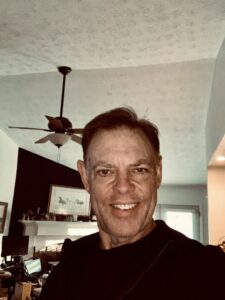
Life 3 Years After Stroke: Three years ago, Pete Rumple was in a hospital bed, weighing 337 pounds, unable to walk, unable to talk, and completely paralysed down his right side following a massive hemorrhagic stroke. He was on 17 medications and had just spent his first night as a wheelchair user. By his own admission, the first year was so dark that he didn’t want to live.
Today, Pete does CrossFit every day, has lost 150 pounds, is off 15 of his 17 medications, and is about to launch a new business at 61 years old.
This is what life 3 years after a stroke can look like and, more importantly, how Pete got there.
The First Decision: Control What You CanWithin days of his stroke, while still in the hospital, Pete made a choice. He couldn’t walk. He couldn’t use his right arm. Doctors were managing everything around him. But he could control one thing: what he ate.
“I got to change everything,” he says. “And as I lay there, this was one thing I could control with all the things I couldn’t.”
Pete reduced his intake to two or three bites of food per day. By the time he left the hospital 30 days later, he had lost 40 pounds. That single decision became the foundation of everything that followed.
For anyone newly out of the hospital and feeling overwhelmed, this is perhaps the most important message: you don’t have to fix everything at once. Find one controllable. Start there.
Books like Grain Brain by Dr David Perlmutter and Why We Get Sick by Benjamin Bikman are excellent starting points for understanding the role of nutrition in brain recovery; both are recommended in this episode.
Movement: From Water to CrossFit
Pete’s physical recovery moved in deliberate stages. With right-side proprioception severely affected, his body couldn’t properly sense where it was in space land-based exercise felt impossible at first. The solution was water.
“The water surrounds you,” Pete explains. “It’s easier to move with what we both have.”
He spent nearly a year in the pool doing aquatic therapy, then transitioned to a gym with a personal trainer for four months, then, in April 2024, ditched his cane and started CrossFit. He now attends every day, with about 30% modification.
The journey from wheelchair to CrossFit wasn’t fast, and it wasn’t linear. But it was intentional.
The Brain Science Behind Doing Hard Things
One of the most fascinating parts of Pete’s recovery is how he used neuroscience to drive his progress. After watching a Huberman Lab episode featuring David Goggins, he learned about the anterior mid-cingulate cortex (AMCC), a region of the brain that grows and strengthens specifically when you do things that are difficult and unpleasant.
“Everything I did not enjoy or created pain, I’m doing it.”
This wasn’t masochism. It was a strategy. Pete began deliberately choosing the exercises, behaviours, and tasks he least wanted to do and watched his recovery accelerate as a result. His speech improved. His movement improved. His cognitive function came back faster.
Bill adds important context here: when you visualise movement, your brain fires the same neural pathways as when you physically perform it. Pete used this daily, studying his CrossFit workout the night before, visualising each exercise, then arriving 30 minutes early to breathe and mentally rehearse before training.
This is neuroplasticity working for you, not against you. The choice is yours: choose the hard that rewards you, or endure the hard that doesn’t.
Identity: Three Words That Changed Everything
Beyond the physical, Pete’s recovery demanded a complete rebuild of who he was. An executive career was gone. Independence had been stripped away. The personality and habits that contributed to the stroke, such as overworking, overeating, and using alcohol to manage stress, needed to be replaced, not just removed.
He approached this the way he’d approached business: with a framework.
At any given time, Pete identifies three words that define who he is. Right now: resilient, consistent, and unafraid.
“I try to be honest with myself and say, where am I now?” he explains. “And it may change, but it gives me something to triangulate toward.”
This kind of identity-based self-management, knowing who you are deciding to be, not just what you are trying to do, is one of the most transferable lessons from Pete’s story.
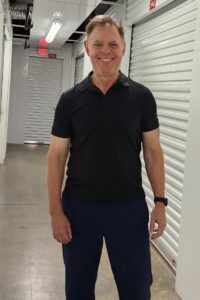
Pete’s neurologist, who once saw him quarterly, recently told him she doesn’t need to see him annually anymore. “We have not seen this kind of recovery before from what you had,” she said.
He’s about to start a fractional leadership business with a former CFO. He does CrossFit every day. He sleeps well. He volunteers. He uses AI tools to stay sharp and curious. He is, as he puts it, “on the other side of it.”
But he’s also clear-eyed about what’s ahead: returning to high-stakes work, managing the stressors that contributed to his stroke in the first place, and monitoring the potholes that come with re-entering a demanding professional world.
“I realise that is a very real risk,” he says. “I’m going to test and learn.”
The Lily Pad Principle
When asked how to frame the journey for people still in the early stages, Pete offers one of the most useful images in this entire conversation:
“It’s like lily pads across the lake. Get to a lily pad, then get to the next one. Don’t worry about boiling the ocean. Don’t worry about what it’s going to be in months or a year. Step by step. Keep pushing.”
That is life 3 years after stroke, not a finish line, but a direction. And for Pete Rumple, the direction is forward.
 Want more stories like this? Read Bill’s book recoveryafterstroke.com/book |
  Support the show: patreon.com/recoveryafterstroke
 Disclaimer Disclaimer
This blog is for informational purposes only and does not constitute medical advice. Please consult your doctor before making any changes to your health or recovery plan. |
Pete Rumple lost 150 lbs, ditched the wheelchair, and now does CrossFit at 61. Here’s what life 3 years after a stroke really looks like.
Turnto.ai Interview
Peter Rumple Interview EP 332
Turnto.ai discount code: Bill10
Highlights:
00:00 Introduction to Life 3 Years After Stroke Recovery Journey
05:31 Physical Recovery and Rehabilitation
11:05 Dietary Changes and Weight Loss
15:42 Medication Management and Health Improvements
21:29 The Role of Visualisation in Recovery
26:03 Embracing Discomfort for Growth
33:31 The Power of Hard Work and Persistence
40:53 The Journey Back to Work
50:48 Navigating Health Challenges
56:25 Resilience and Consistency in Recovery
01:04:38 Proactive Health Management
01:15:11 Defining Identity Through Resilience
Transcript:
Introduction to Life 3 Years After Stroke Recovery Journey
Pete Rumple (00:00)
And Bill, I want to take a second and plug your book back in the first ⁓ the first session I did with you, I referenced a number of things you taught me through the podcast that I did to make to start building momentum like the cooking dinner every day was the to do. That was your mission. Yeah.
so much of what I’ve learned from you, the podcast and what’s inevitably in the book was a great starting point for me. And I built my, my stuff on top of it, but it was really great to stand on your shoulders and get, and get that lift.
Bill Gasiamis (00:44)
Hi everyone, before we get into Pete’s story and you are definitely going to want to hear this one. I want to share something I’ve been using myself that I genuinely think could help a lot of you. It’s called turn2.ai and it’s an AI health sidekick that keeps you up to date with personalized updates every single week. Did you know there were over 800 new things published every week related to stroke? Research, expert discussions.
patient stories, clinical trials, events. It’s an enormous amount of information. Turn2 finds what’s most relevant to you and delivers it straight to your inbox. I use it myself and it’s genuinely my favorite tool for 2026 for staying across what’s new in stroke recovery.
It’s low cost and completely patient first. You can try it for free. And when you’re ready to subscribe, you can use my code, BILL10, at turn2.ai slash sidekick slash stroke to get a discount. I earn a small commission if you use that link at no extra cost to you. And that helps keep this podcast going. Also, if you haven’t yet, pick up a copy of my book, head to recoveryafterstroke.com/book. Real stories, real tools.
The same stuff Pete and I talk about today and a huge thank you to everyone supporting us on Patreon and in the other ways that you support the show and myself. You’re the reason this content stays free for the people who need it You can support the show at patreon.com/recoveryafterstroke. Right. Let’s get into Pete Rumple’s story. Massive hemorrhagic stroke.
Wheelchair couldn’t walk or talk 337 pounds three years later. He does CrossFit every day So you’re gonna want to hear this one. Let’s get into it
Bill Gasiamis (02:35)
Pete Rumpel, hello, welcome back.
Pete Rumple (02:38)
Hey Bill, it’s great to see you again.
Bill Gasiamis (02:41)
Great to see you too, my friend. ⁓ Last time we met was about a year ago. And this is gonna be a slightly different episode because we’re gonna talk about what things were like then and then what they’re like now, just so that we can paint a picture for people about how recovery has gone, what happened in the last 12 or so months. And in the previous episode, by the way, that was episode…
338 or something. And now we’re nearing episode 394, 395. will be. So I’ve been pretty consistent. So it means that it’s been over a year because I try and release one episode a week, et cetera. So it’d be a really good thing to do for people is to give them a bit of a guide of.
some of the setbacks, some of the challenges, some of the things that have changed, improved. And now everyone’s different, okay? So this is Pete’s version. And what we’re hoping to do is kind of inspire hope, Pete, right? We wanna give people hope that things can change and improve. And even if it’s slower for you than other people, there can be a reward for putting in a lot of effort, hard work, re-educating yourself about what it means to live healthily.
and all that kind of thing.
And give us just a little bit of an insight because there’ll be a link to the original video where you can find out Pete’s complete story, but give us a little bit of an insight into the stroke, the day that it happened, what it was like.
Pete Rumple (04:24)
Okay, you bet Bill it was about 38 months ago. The stroke, was, it was a massive hemorrhagic stroke.
⁓ eight months in a wheelchair had to learn to talk again, walk again, all that. And, ⁓ so we had, ⁓ had the call about a little over a year and a half through it. And then, ⁓ now I’m further through it and, it’s gone amazing. I’m so lucky. So whatever we want to dig into that’ll be great.
Bill Gasiamis (05:04)
So your deficits were your right arm wasn’t working properly. Initially you weren’t able to walk. You were wheelchair bound for nearly six months. ⁓ So what are the physical deficits like now? What has changed? What has improved? And how did that go? what were the things that you did that helped you improve in that way?
Physical Recovery and Rehabilitation
Pete Rumple (05:31)
Yeah. So Bill, I, um, it was my right side that I lost, which I forget what the term is, but, uh, it was my whole right side. So, um, when I, what, what I did that was important is first of all, totally overhauled my diet. And I, um, I had lost about 150 pounds.
Um, I then, when I started about a year into it, I started, um, doing aquatics, the water aerobics to start dealing with their proprioception and the, um, and just movement. couldn’t, I couldn’t do that in, the ether. I couldn’t do it in the air. had to do it with the water.
Bill Gasiamis (06:27)
Okay, why is that? Because that’s interesting, because I have a similar problem with proprioception. My left side kind of doesn’t know where it is. There’s not enough information telling it where it is. And sometimes it overcompensates and I get off balance, etc. It feels strange. In the water, I also calmly, I felt calmly different, like I felt ⁓ more supported, even though the water wasn’t really supporting me. How was it for you?
Pete Rumple (06:56)
You’re absolutely right, Bill, because the water surrounds you, right? So it’s easy to move in the water with what we both have. So I spent almost a year in the water. then I started to, then what I did is I moved to a gym with someone helping me work out for about four months.
And then in April, so almost a year ago, in April, I got rid of my cane and I went to CrossFit. And so now I do CrossFit every day. And that was really ugly at first, Bill, and I had to do a lot of modification. But now I modify probably 30%. But
Bill Gasiamis (07:42)
Uh-huh.
Pete Rumple (07:54)
row bike. can’t run yet. I’m still walking, but I’m getting ready to go to the beach and practice running for about a month.
Bill Gasiamis (08:05)
Okay, where in the head was the hemorrhagic stroke? Where did it happen? Do you know?
Pete Rumple (08:14)
The where, ⁓ I forget.
Bill Gasiamis (08:18)
That’s all right. It’s not important to remember. So also then, ⁓ when you had the hemorrhagic stroke, how was it rectified or resolved? Did they operate? What did they do?
Pete Rumple (08:30)
They didn’t have to operate.
Bill Gasiamis (08:32)
Uh-huh.
Pete Rumple (08:33)
They just, I got in there, they did things to make sure the bleeding stopped, ⁓ but it was no operation.
Bill Gasiamis (08:45)
what caused the bleed? Was it ⁓ high blood pressure as a result of your weight?
Pete Rumple (08:50)
It was a number of things, was high blood pressure, it was a lot of stress. They have a scale bill called the Holmes Raw Scale, Holmes with an L and Raw, R-A-H-E, where you can, it has like 42 major stress events. If you score under 150, you’re fine, 150, 300s.
pretty bad and then over 300 is devastating like it’s predicts a major stroke or heart attack within a year. And I was 360 on that scale. I’d gone through the divorce, I had the kids, I had a job change, you name it, I had it. ⁓ Weight was not good, drank too much. So that was my wake up call.
if you will, which was severe. And it’s been, it’s great now.
Bill Gasiamis (09:53)
Yeah, so your arm was completely flaccid, I think, when we spoke last. So where is it now?
Pete Rumple (10:03)
I can do everything with it. This is the, so I can lift and I’m lifting more weight, not where I was, but about probably 50%. I’m doing pull-ups with the arm and my legs are, I’ve worked them a lot. I’m very strong there. So it’s getting there.
Bill Gasiamis (10:25)
Okay, cool. When we spoke, you mentioned that in hospital alone, you’d lost 40 pounds. That kind of makes sense. A lot of people say that things change in hospital food relation. When you’re unwell, ⁓ how you consume food completely changes, as well as how hospitals ⁓ treat people with regards to the food, how it’s terrible, how often you get to eat.
and how accessible it is. So, but earlier, a little earlier, you said that you lost 150 pounds all up.
Dietary Changes and Weight Loss
Pete Rumple (11:05)
Yeah, Bill. So when I was in the hospital, which was obvious, I was there 30 days from the stroke. And that was where I had to make a choice. And it was like, if am I going to try and get better or not. And so what I did is I ate two to three bites of food a day. That was it because I was in a wheelchair, Bill, I couldn’t move.
So coming out 40 pounds lighter was ⁓ a lot of work and a lot of fasting, if you will.
Bill Gasiamis (11:42)
Why did you decide that that was what you needed to do? How did you conclude that? I know I’m gonna be in hospital. I’ve had a hemorrhagic stroke. There’s nothing else I can do. What I’m gonna do is fast and stop eating food. How does that?
Pete Rumple (12:01)
was a first step, Bill. Absolutely. was like, I got to change everything. And so as I lay here, this is one thing I can control with all the things I can’t.
Bill Gasiamis (12:14)
In hospital though, most people in hospital don’t have that realization. I mean, that would have been days out from a hemorrhagic stroke. They’re telling you all these things. Like how did you get to that conclusion? Were you cognizant of needing to do that earlier before you got sick and then you thought, well, now I have to do it or was it an aha moment of some other kind?
Pete Rumple (12:40)
No, you’re absolutely right. And it was something I knew was getting out of control, Bill. And I couldn’t, I couldn’t resolve it. It was just, it was really tough. And I’m like, this is it. I mean, this is the ultimate wake up call. The other one, Bill, was I had, when I came into the hospital, I was on 17 meds. I now have two.
and I’m at 20 milligrams and I’m probably off those in the next four to five months. So it’s been a long programmatic diet, nutrition, health, and it’s been three years. I mean, it’s not insignificant for sure.
Bill Gasiamis (13:27)
⁓ What was the 17 medications treating or or or managing?
Pete Rumple (13:37)
I think Bill, it’s almost like, like, what do you do with this guy? You got to throw everything at him to keep on going. I don’t think it would have been 17 for very long. It was probably stop gap measures. Some were pain, but even the pain bill second day. I said, I want no more pain meds, take them away. And it was brutal, right? Cause you know, the way you feel and the, my scapula, my legs, was, it was
awful, but I was like, I found my way here, I got to find my way out and let me get off as much as I can and start the pilgrimage back.
Bill Gasiamis (14:20)
Before the stroke, would you have been somebody who would have taken a device to change your diet?
Pete Rumple (14:28)
I would have taken every hack I could have, Bill, before the stroke.
Bill Gasiamis (14:34)
Anything to avoid doing the hard work? that what you mean? Yes.
Pete Rumple (14:38)
Yes, sir. And look, I was always a hard worker. And I would work out and do stuff. But this is a whole other level. This became life or death. I mean, because you know, the stats bill, like, when I looked at the stats that about 75 % of people are gone in year one, there’s 25%, especially hemorrhagic, 25 % at the time.
25 % a month later, 25 % at the end of the year, another 20 at the end of year two. I’m like, I’m gonna go through all this and then I still have so little chance. So I just went for it and I went really hardcore.
Bill Gasiamis (15:25)
Did you eat, drink too much to manage emotional ⁓ stress, challenges? What do you think was behind it? Or was it just bad habits? Or did you think you were bulletproof? What was the reason behind it?
Medication Management and Health Improvements
Pete Rumple (15:42)
Everything you just said, Bill, everything you just said. Yeah. I mean, it’s everything, right? You start justifying bad behavior. You have a reason for why things happen. And I just like, even when I try to lose weight, though, I might lose a couple pounds, but then I eat again and what I was eating, how I was eating. So in that first year, I went super deep on nutrition.
and how your body works. And I went from, at the stroke I was 337 pounds. And then when I did my podcast with you, I was 180.
Bill Gasiamis (16:25)
Yeah, well, ⁓ one of the books that I’ll mention to people, you might have read different ones, and that’s cool. But the one that always comes to mind that I always recommend is Grain Brain by Dr. David Pelmutter. So if you’re in the very early stages of recovery and you want to make some changes like Pete did, read or listen to the book Grain Brain by Dr. David Pelmutter, and then ⁓ read a book called ⁓ Why We Get Sick.
⁓ I’m going to quickly do a search on ⁓ online because I keep forgetting the person’s name. ⁓
And what it’s going to do is going to why we get sick by Benjamin Bickman. And what it’s going to do is going to give people an insight into the. ⁓ I one of the things is the first book is the food that you can avoid and stop eating and the reasons why and how they benefit the brain and then ⁓ why we get sick is an insight into, in fact, exactly that why we get sick.
so that you have an understanding of what might have got you into that real bad state. And then also before that, ⁓ the food component of it, because those two things, if you know why you got somewhere and then you know what the trigger was, what the thing was that made you get there, so the food, for example, then you’ve got a great foundation for taking the next step forward ⁓ and reversing it.
Pete Rumple (18:02)
Absolutely.
Bill Gasiamis (18:04)
and improving your health and improving your diet, losing weight and decreasing your risks of heart attack, stroke, cancer, all that kind of stuff. ⁓ So I love that you got curious. That’s what I did. I was in hospital reading and watching YouTube videos about how I’m going to recover, how I’m going to overcome things, all sorts of stuff like that. And it was…
Pete Rumple (18:19)
I remember.
Bill Gasiamis (18:31)
in a situation where control is given over to medics, doctors, surgeons, all that kind of stuff, you feel like you’re a little bit of a, you’re just floating in the wind and you’re not really stable and you don’t have an anchor point, right? So when you, if you want to feel like you’re a little more anchored, what you could do is you could take control of the controllables and
Nutrition is one of those controllables and it doesn’t cost you any extra. You don’t have to spend money.
Pete Rumple (19:04)
You’re absolutely right, Bill. It’s a huge point. By the way, there’s a great app, and I know there are many, but there’s a great app called Yuka, Y-U-K-A. You can scan any barcode in the store and it will tell you the score and what’s wrong with it and the amount of food I was eating that was, especially in the U.S., Bill, heavily processed, additives, dyes. It’s like toxic.
And so you can scan it and know what’s really in it. And it tells you what’s good, what’s bad. And it was a huge help.
Bill Gasiamis (19:44)
Yeah. So we’re going to have some of these links in the show notes for anyone who wants to find them. I’ll put a link to the books. I’ll put a link to Pete’s previous episode. We’ll put a link to that Yuka app. Pete, that’s your homework. You have to send me that link when we’re chatting. ⁓ When you say you’ve lost 150 pounds, like that is 50 kilograms. That is almost
two-thirds of my weight. Well, it’s actually, yeah, it’s about two-thirds of my weight. That means that if I lost 50 pounds, I would just be a bag of bones.
Pete Rumple (20:30)
Well, and Bill, I was a bigger guy to begin with. have a big frame and I played a lot of US football, American football. So I had a lot of weight to lose, Bill, and it’s gone now. And I’m back up to about 205 and it’s all muscle life, about a 32 inch waist now.
really, really fit and I go for it. And by the way, by the way, I want to make one point to all listeners that took a long time, Bill, like between being the wheelchair for eight months and then getting the pool. It took a long time. I used to go and sit and watch people work out to just reacquaint myself.
Bill Gasiamis (21:03)
How old are you?
The Role of Visualisation in Recovery
Pete Rumple (21:29)
what it looked like and inspire myself. It has been a long road, but my goodness, is absolutely I’m on the other side of it now. Cause as I had said in the first podcast, the first 18 months, I did not want to live, especially year one, ⁓ immense amount of pain. had been a successful executive that was gone. Like it was really
really rough. And so now it’s beautiful. And I want people to know that because it it’s so worth it. Delay gratification, you learn a lot about it. And it’s ⁓ Yeah.
Bill Gasiamis (22:14)
I love that delayed gratification, but also you went into a gym watching other people train when you couldn’t train, just so you can be around it and familiarize yourself with it again. That’s really interesting. That’s probably one thing I’ve never done is go to a gymnasium and watch other people train. It’s a bit creepy Pete.
Pete Rumple (22:32)
Yeah, it is. It’s weird. And people would look at me like, what’s he doing? And by and by the way, Bill, I did a lot of work on how to breathe, which was really helpful, how to how to manifest and to really sit and get mentally so I go even today, Bill, I go in a half hour before my workout to work on breathing and visualizing my exercises, because I get the
the list of what my workout is before I get there the night before. So I study and I prepare and then go.
Bill Gasiamis (23:10)
What I love about visualizing is that if you visualize the brain actually fires off the exact same neuron and pathways that it does if you actually physically do that thing. And there’s been studies in the past that have showed that you can take an average guy like me and you can make them watch a video of somebody doing archery, for example, and you can ⁓ take them through a number of
repetitions of this person, this champion doing archery. And just with that information and the visualization techniques later, you can take somebody who has basically never shot ⁓ an arrow through a bow and you can get them to a certain level of competence far more rapidly than you would have if you just got that person out of a crowd and sent to him.
Have you ever shot an arrow? If they said no and they took the shot, they probably wouldn’t be able to do it as well as the person who was trained by just watching what the other person, the champion was doing. And when I was in hospital wanting to walk again, I’m sitting in my bed between sessions because I had a wheelchair as well. And I was visualizing myself doing the perfect walk, what the perfect walk would look like.
And then I would take myself later to ⁓ therapy where I would be walking and I would be trying to replicate what I was seeing in my head so that we could get a similar result. And of course at the beginning, your leg is now doing it physically and it needs to catch up to the brain. The brain has ⁓ the pathway, but the leg needs to catch up.
So then what the leg does is it goes, this feels a bit weird or this is a bit strange or this is not how I expected it. But it has a reference point for where to get to and how to do the perfect step, right? And then you’re closer to the perfect step than you were if you were just relying on therapists to ⁓ train you through that.
Pete Rumple (25:22)
You’re absolutely right, Bill. And the brain is amazing. Look, it can work for you or against you depending on what you’re thinking and how you’re doing things. And it was really amazing, Bill, because as I built my capability through CrossFit, it was amazing how my brain would start to take over. Like I wasn’t sure, but my brain was already, I got it, and so grew.
It started carrying me and just getting it done. It’s amazing.
Bill Gasiamis (25:58)
Yeah, yeah.
Embracing Discomfort for Growth
But how did you know to do that? That’s the thing that I’m interested in understanding because I didn’t know the guy before stroke didn’t know about doing like magic like this. know, how do you, I don’t know, like, can you explain how you found yourself in that situation? Cause I can’t, people go to me like, well, how did you know to do that? Or how did you do that? And I’m like, I don’t know what happened, but something clicked.
that made me stumble onto, discover, find all the necessary tools that I needed to get me to the next stage. I’ve never been able to do that before and I can do that now.
Pete Rumple (26:46)
Yep, me too, Bill, me too. And you know what? I think it’s how desperate we are for answers. And especially you can read all these blogs about what doesn’t work and what’s a waste of time, but you find the nuggets and you go for it. Here’s a great one, Bill. And I’ll send this in the link. Andrew Huberman, he runs a podcast called Huberman Lab.
He had David Goggins on and he purposely waited for Goggins to share with him the research around the AMCC, which is the anterior mid-cruciate cortex, which is a part of the brain. And when you do things that are hard and you don’t enjoy it, that part of your brain grows and gets stronger.
So I sat there, Bill, and I’m like, well, damn, if I can start to make my brain stronger, I’m going to do it. So I did all the stuff I hate to do. And I started doing it. And I started even faster, talking better, walking better, and really doing everything I did not like to do. And he even brings up the point when he describes it. He brings up that if you like running every day,
It doesn’t work. But if you hate running and you have to go run, it works and it makes sure and make, they’ve learned so much that was, that was about three to four years ago. They found it, but this is a massive find in the brain. And I started using it, Bill. And what I started to do was everything I did not enjoy or created pain. I’m like, I’m doing it.
And it took me from averting it to leaning into it. And it was amazing. it’s, you’d think it’s BS, it’s not. And Huberman, you know, he works at Stanford. He knows his stuff. It was really, really impactful.
Bill Gasiamis (29:03)
Yeah, it’s about being comfortable being uncomfortable, isn’t it? Like it’s realizing that you’re probably not killing yourself by paying in a little bit of pain exercising. also, yeah.
Pete Rumple (29:16)
And
Bill, I will just say, I did a very good job for the first time in my life of listening to my body. So I go hard, I push, but when I wasn’t feeling it or didn’t feel right, I take the day, relax, and then come back stronger next.
Bill Gasiamis (29:38)
I want to pause there for a second because what Pete just described is exactly the kind of thing I wrote about in my book. The idea that the obstacle is the path, the doing the hard stuff in recovery. If you haven’t grabbed the copy yet, it’s called the unexpected way that a stroke became the best thing that happened. You can find it at recoveryafterstroke.com/book. The link is in the show notes and in the YouTube description. So let’s get packed.
to Pete.
Bill Gasiamis (30:08)
Yeah, yeah, agreed. And it’s important to listen to your body after a stroke, because you don’t want to make things worse, especially when you’re still healing and still recovering and you’re still fragile, you know, there’s a lot of things that you need to take into consideration. However, being uncomfortable and being comfortable with that is really a good skill to master. ⁓ It is, ⁓ it reminds me of the saying that we hear that’s often attributed to
the old great Roman Emperor Marcus Aurelius, which is the obstacle is the way, you know, when you get to something that’s really hard, you go for it, because that’s what you’re to be. That’s the purpose of the obstacle. It’s to overcome it, to find the way around it, under it, over it, through it, whatever it is. And Goggins is a scary guy. He’s a scary guy, because he runs without, without cartilage in his knees or something. I don’t know what he’s missing.
but he shouldn’t be able to run, he shouldn’t be running and somehow he still runs. I think his version of running is a little toxic. I think he’s just a slight too far, ⁓ but nonetheless, it’s still proof of ⁓ what you’re capable of and how much people can push and go beyond their comfort zone. And if you’ve never pushed beyond your comfort zone, there’s no better time to do it. You really have to do it now because you want to activate the right neuroplasticity.
You don’t want to activate negative neuroplasticity, which rewires your brain to be more comfortable, less willing to do hard things. ⁓ And therefore, you get the results of that. You get the decrease in your recovery or the ⁓ overcoming of your deficits. So I appreciate that whole ⁓ mentality of finding what’s hard and
you’re probably in the right place. That’s probably what you need to do.
Pete Rumple (32:07)
Absolutely right, Bill. And I agree with everything you said. And look, I love Goggins, but it’s not to be like a warrior like him. The point is, like with Huberman, it was cool because Goggins thinks that way so much. He wanted to launch the foundational research with Goggins there with him. He purposely waited. So it was pretty cool.
Bill Gasiamis (32:35)
Yeah. And that that’s the thing, right? It’s like you get rewarded for doing hard things. ⁓ Stroke is hard. And if you ⁓ take the easy route, the comfortable route, the hard part of your stroke remains hard. Like it doesn’t get better. If you choose the other hard, the recovery
Pete Rumple (32:59)
right.
Bill Gasiamis (33:04)
benefits that you get from choosing hard of exercise, the hard of changing your diet, the hard of changing your mindset, et cetera. Like then that version of hard gets you a reward that is beneficial. The other hard just gets you more suffering. And that’s the hard you wanna avoid. Suffering without purpose. Well, suffering for a purpose gets you a payoff.
The Power of Hard Work and Persistence
Pete Rumple (33:31)
That’s right. That’s exactly right, Bill. And look, with the, when you put it all together between the diet, though, increasingly working out, going after the deficits, all that, day by day, painful, hard, depressing, but you start looking three months, six months, a year later, you’re like, you start building your will and your ability.
to do things you did not think you could do, and then it starts feeding on itself, and it becomes so powerful.
Bill Gasiamis (34:09)
Yeah, that’s my experience too. ⁓ Somebody put it in my head that I should start a podcast 10 years ago. It’s been 14 years since my first stroke this month, February, 14 years. It’s just gone like that. And then about three years in, a friend of mine said, should start a podcast type of thing. So I did. And it has been more than 10 years that I’ve been doing this podcast. ⁓
And I never thought that I’d be doing a podcast, let alone for 10 years. We’re talking about at the beginning, not a lot of episodes because I was too unwell to put a lot of episodes out. it’s ramped up now in the last four or five years, doing an episode a week, most weeks. And then the other thing I never ended up, I never thought I’d end up doing is writing a book here. Here’s the plug for the book.
Pete Rumple (35:01)
love it. I love it.
Bill Gasiamis (35:03)
The title is mental, like it’s the unexpected way that a stroke became the best thing that happened. ⁓ But the book is exactly the things that you’ve said. And I thought initially when I discovered those things about my book that I needed to put in my book, I thought that I was rediscovering these for the first time. Like at the very beginning, diets, ⁓ mindset, ⁓ exercise, sleep. ⁓
⁓ meditation, hanging around other people who are positive, all that kind of stuff, doing stuff for other people, ⁓ like volunteering, that kind of thing. I thought I was discovering these things ⁓ for the first time ever, but turns out these are things that humans have always done. That’s what they default to. They default to all of these things when it’s necessary, and that’s where they get lost from. They kind of move away from there because they get diverted from there, from say,
marketing or advertising or what somebody else is doing or through a lack of ⁓ focus from being distracted from work, from relationship issues, whatever the situation is. I didn’t write anything different in my book than has been written in the hundreds and thousands of books on this topic that have come before it. I just reorganized that and set it in my own words. But the reality is, is this is what
people do when they’re trying to recover. They default back to the bare basics and they’re things that you can implement without ⁓ spending any extra money buying a course or anything like that. Of course, you might need to read it in a book for the first time to remind you or you might need to hear it on a YouTube video, but the reality is, is that nothing new in this book.
Pete Rumple (36:51)
And Bill, I want to take a second and plug your book because I have not read it yet. But back in the first ⁓ the first session I did with you, I referenced a number of things you taught me through the podcast that I did to make to start building momentum like the cooking dinner every day was the to do. That was your mission. Yeah.
so much of what I’ve learned from you, the podcast and what’s inevitably in the book was a great starting point for me. And I built my, my stuff on top of it, but it was really great to stand on your shoulders and get, and get that lift.
Bill Gasiamis (37:38)
Yeah, isn’t it weird? Like it was just one thing, but it was the most important one thing. My whole world revolved around that. If I could put dinner on the table for the family in any capacity, it didn’t have to be like a five star meal or three courses or anything like that. It just had to be dinner. If I could do that, then that was kind of how I rehabilitated myself. I needed to be healthy enough, good enough, fit enough, have enough energy to just put a meal on the table for everyone when they came home from.
work. was such a it’s such a it was it was important for many reasons. But it was also what I didn’t realize the underlying benefits that it was creating, which were the ones that ⁓ I noticed later after
Pete Rumple (38:25)
Yep. And you were re-engaging and you were pushing yourself. And I remember you go to the store to buy the stuff you needed sometimes. like all that stuff, Bill, when I look at the beginning, I couldn’t watch a TV for over a year. I couldn’t listen and did not listen to music for two years. It was, and now I’m like back in the fold, but it’s the
push, the push, the push and just, you know, listening to the body, but going for it all the time.
Bill Gasiamis (39:03)
Yeah, exposure, like exposure, exposure, exposure, small, then larger, then more and more. I remember going to the stores to the local mall here, and we call it a shopping center, and parking the car, and then not being able to remember where I parked the car, walking around the entire car park, and talking to my brother, and going to him, he rang me just out of
blue and I said to him, he goes, what are you doing? I said, I’m walking around the car park. He what are you doing that for? That’s because I don’t know where my car is. I’ve been looking for it for half an hour and I’ve got no idea where it is. I parked it and I just got no idea where. I don’t know which car park. I don’t know where I came in from. I don’t know what level it was on. And I was just walking around the car park talking to my brother, just telling him, I came and got a few things, but now I can’t get back to my car.
Pete Rumple (39:55)
Yeah, and there’s definitely you know bill once I got out of the darkness There’s definitely some really funny stories That that happened especially like the way The way I would walk people would see me I might be in a restaurant and i’m going to the bathroom and they think i’m drunk Yeah, and they’re like making fun of him like hey i’m not drunk, but ⁓ I get
you know, I’m all right, I got it. And they’d be like horrified and I’d just start laughing. It was funny, but you gotta have some fun with it too, you know?
Bill Gasiamis (40:34)
Absolutely, you have to, you gotta laugh. you don’t laugh, well, it’s gonna be difficult time. You, ⁓ I remember when we spoke last time, you mentioned about trying to get back to work. ⁓ How did that go? Was it successful? Did you have some challenges? What was going back to work like?
The Journey Back to Work Life 3 Years After Stroke
Pete Rumple (40:53)
So Bill, I’m gonna start back in June. I’ve done some projects, work projects, but I have not officially started working, but I’m going to. I’m starting a business with a close friend of mine, my former CFO, and we’re gonna start a new business.
Bill Gasiamis (41:18)
Tell me about the new business. What is it about? Can you share anything about it?
Pete Rumple (41:22)
Yeah, it’s called fractional leadership bill will probably go to companies that are ⁓ getting funded, trying to grow. They got a good idea. They can’t afford the people they need. So you basically it’s less consulting. It’s more you’re operating it for them and you work with multiple customers and it’s called fractional leadership is becoming a
really pretty popular model. And, ⁓ and also for companies that have that have their revenue is stalled or shrinking, get them turned around. That was my background. My background was ⁓ running chief revenue officer. So everything that drives revenue in a company and I was a CEO twice.
Bill Gasiamis (42:06)
Uh-huh. Soon.
Did you have a specific industry that you worked in?
Pete Rumple (42:23)
Yet a lot of times I call it TMT for telecom media and tech so tech companies and media and That kind of stuff Rosetta Stone was his language learning company. I was I ran all our institutional business education government and and ⁓ Corporate
Bill Gasiamis (42:49)
Wow, what a challenge. mean, technology is changing so rapidly. ⁓ I
Pete Rumple (42:55)
love
it, Bill. And look, I’m sorry, I just had to make this point and not forget it. That was another thing I’ve done, Bill is I’ve gone heavy into AI. And I did it, not just because it’s the buzzword. But I’m like, Hey, if I’m going through this process, if I’m retraining my brain, why not try to get good at stuff that I either didn’t do or need to know. And it’s been so rewarding, Bill.
Bill Gasiamis (43:24)
out.
Pete Rumple (43:25)
It’s just crazy. Like AI, use chat chat, GBT, and it’s like my, my best friend. now work with chat daily and it’s amazing how the tech technology works. Not only can it be really helpful for figuring things out and having a partner, but it also remembers things about you in how it builds the profile.
So it’ll basically say, Pete, don’t forget this, this, and this. And it’s awesome. It’s really killer.
Bill Gasiamis (44:02)
So here comes another plug, Pete. Okay, so this is not a sponsor, but it’s something that I truly believe in, okay? Because the person who contacted me, A, is an Australian, B, is a mother, ⁓ C, is a mother of two children with cerebral palsy. And she was looking for solutions to all the challenges that they faced as a family, especially to help her children, right?
parent would do. So then ⁓ she used to do research like you and me jump on the computer, do some research, find out about all the things that ⁓ she needed to know with regards to what was most current in cerebral palsy right now. And she’s the struggle because ⁓ imagine like the time that it takes when you have a stroke brain to research, read, comprehend, determine whether
Pete Rumple (45:01)
We know. Yeah. Yeah. Yeah.
Bill Gasiamis (45:04)
whether or not that is applicable. Okay, that’s not applicable. Put that to the side, do another search. And then also going to doctors and researchers and all these other people and saying to them, what about this? What about that? And then them not being aware of anything that was new because they’re too swamped. They’ve got a massive workload. They don’t have time to be up to date with all the research, right? And this is a hundred percent a full on plug.
I’m not apologizing for that. However, what this lady did, Jess from turn2.ai, I have a link to her interview as well, because I interviewed her, is she created an ⁓ AI that goes and does the research, the searching for you, and then sends you an email every week with everything new in your particular topic, for example, stroke. And then it tells you, I found
seven, nine, 10 things for you this week that are new on stroke. It could be a podcast. It could be a research document. could be ⁓ whatever it is. It could be a book. It could be anything. It just finds it and sends you that information. And as your recovery continues, right, ⁓ what happens is ⁓ you might say, okay, now is there any information about food related to stroke recovery and healing the brain?
And then it adds that to the search list. And then it comes back at the end of the next week with all the new information from food and brain. And then also whatever it was that you previously prompted it to find you. And it just keeps finding information and you build it and you build it and you build it. And then next week you get interested in meditation and you type, what can you tell me about meditation and healing the brain? And then it’s going to bring you all that information to your inbox. I spent
hours and hours and days and days trying to find information about what I needed to know about stroke recovery. And when I found that little piece of paper, I had to go through the rabbit hole. I had to go down the rabbit hole and try and find ⁓ where ⁓ where it kind of where the exit point was where it led to so that I can discover whether I need to implement this, do this. So this just saves
so much time and the guys are selling it for two bucks a week. Like you can get a month free and two, and then after that it’s two bucks a week just to find and do all the searching for you and bring you specific and relevant stuff. And we’re talking about scientifically relevant and specific like PubMed articles, like scientifically proven stuff, not what Bill ⁓ concocted up in his bedroom.
you know, in suburban Melbourne, like proper things. So I love that you said that you’ve turned to AI. I’ve been using chat as well. Chat helps me with so many things, but what’s important is to learn how to interact with it. And that’s another, that’s another thing, another skill to discover. And it’s important that we jump on the bandwagon. AI is not going away.
You need to learn about it, how to interact with it, and how to use it to benefit you and decrease the amount of time it takes to do something and get to recovery.
Pete Rumple (48:37)
You’re absolutely, absolutely right, Bill. I mean, it is, and even if you just use it for basic stuff to begin with, and you start learning how to create the right prompts to get the kind of answers you’re looking for, it’s a great skill. And the biggest thing is not being afraid and leaning into it.
Bill Gasiamis (49:00)
Yeah, not bad. Well, there’s nothing to be afraid of. They can get them all for free. At the beginning, you can get a free subscription. It doesn’t cost anything. And it’s just as useful. Perfect for that early training kind of phase in your chat, in your chat, JBT kind of discovery. There’s also Claude, there’s also the Elon Musk one. There’s hundreds of them now. Yeah, there’s heaps of them now, right? So I really encourage people to do that because
If you ask it one question like, you know, what is one of the most ⁓ best books that I can read for, we’ll call it nutrition for nutrition and stroke recovery. That’s just going to decrease the amount of time it takes to find those books and bring that to you. Jump on Amazon, find it, get it sent to your house. ⁓ So I think it’s a great time for people.
and it’s never been a better time to recover from a stroke. I mean, it’s a shit ⁓ group to become a part of at the beginning and it’s difficult and it’s painful. But if somebody has a stroke today compared to a stroke 30 years ago.
Pete Rumple (50:17)
⁓ my goodness.
Bill Gasiamis (50:19)
Like it’s a completely different experience. ⁓ I think we’re kind of lucky to be living in the time that we’re living. ⁓ Even though I know that people hear about AI and what it could potentially do in some other situations. ⁓ Let’s use it for good. Like let’s break the work.
Pete Rumple (50:21)
That’s all we’ll
That’s
right. That’s exactly right, Bill. It can be used for evil, but it can be used for good. So use it. That’s right.
Navigating Health Challenges
Bill Gasiamis (50:48)
Yeah, just like any technology, right? Like you hear all these things, but any technology can be used for good or evil. So let’s just use it for good. Let’s just make the most of it. So before your stroke, you were going through a divorce or had you already been divorced?
Pete Rumple (51:08)
I was already divorced. Yeah, it had been it had been a couple of years earlier. I had a bad car accident a bunch of but you know the kids live with me. It was just a stress sandwich and I did not go out the right way.
Bill Gasiamis (51:27)
Yeah. You didn’t go out at the right way because what do you think was behind that? Like, it’s hard to make really good decisions in very stressful times anyway. You have to have an opportunity or the insight to pause, step out of that situation for a little bit, reflect and then try and make decisions. how did you get into that stage where you found yourself not being ⁓
not going about things appropriately, for example, perhaps.
Pete Rumple (52:02)
For me, Bill, it was like I didn’t have a choice. I was now in a wheelchair. I was in pain and I had nothing I could do but think. And at first that was very negative. It was, I didn’t handle it well. I didn’t accept it. And once I went through that process and I got like, okay, I’m going to get holistic about this.
And by the way, I don’t want to, I don’t want to just fix the physical and then I get done and everything else is a wreck. So went after all of it and just started carving up my day, spiritual, cognitive, physical, mental, every day, a block of each practicing writing, all that stuff. So I just started doing it and rebuilt my life.
probably like I should have in the first place, but stuff happens. I had to, you sometimes, you know, we, you and I laughed about this before. Sometimes we’re a little thick. takes a little longer. So it took me a while, but I’m there now.
Bill Gasiamis (53:18)
Yeah. And reflecting on that version of yourself from the past, does that does that person ever come up again, every so often, because we’re talking about all these positive things, all these amazing changes. And I don’t want to paint a picture that it’s only ever fantastic you and I like what we go through after our initial stroke has been all just roses. Is there moments of
that things rearing their ugly head and you reverting back, how do you catch yourself when you’re there?
Pete Rumple (53:57)
Yeah, I mean bill that’s why what’s really good about this is my first podcast with you because we went really deep in the in the darkness of that now bill is beautiful man. It is beautiful. I am almost I almost don’t talk to people about it because
My life is so much better because I had a stroke. It’s crazy. It sounds nuts, but it’s so true. Everything’s sweeter. I just, it’s hard to describe. It’s a blessing.
Bill Gasiamis (54:38)
Yeah, that’s crazy. It is probably crazy.
Pete Rumple (54:42)
It is?
Bill Gasiamis (54:45)
I find myself, ⁓ I find myself obviously having bad days. My bad days are related to stress, ⁓ you know, work, if they’re related to ⁓ interactions with people that don’t go the way that I preferred. They’re related to ⁓ what the stroke still does to me after 14 years. ⁓ It still causes neurological imbalances. still causes
tightness on my left side, know, that tightness causes dysfunction on my right side, you know, the body goes out of whack. And if I catch it, if I have a bad night’s sleep, things get thrown out and it’s hard to, ⁓ it’s hard to always navigate it and be effective at catching it and then doing something about it, you know, cause you’re human, you get distracted, et cetera.
Pete Rumple (55:38)
Well, and Bill, you’re bringing up great points because as I transition back to work, I’ll have some potential potholes that I don’t have right now. So I’m very, I’m very conscious of what I’m going to go back into. Now. I love, I love work. It’s my sport and I love it. But, ⁓ and today I have now.
bad moments, not bad days. Maybe those occurred, but I’m going to try to stave that off. But that’s just how it is now. as of as of now, that’s that’s the update, if you will. Yeah.
Resilience and Consistency in Recovery
Bill Gasiamis (56:25)
Yeah. Okay. I like that you said that about work, like there’s gonna be some potholes with if you’re doing the type of work that you’re doing. ⁓ That’s pretty high level and high stress and intense for ⁓ at some stages, it could be right, you’re talking at organizations that are going through a hard time that are looking to you to solve their problems, so to speak, or to support them solve their own problems. So ⁓
You know, the ramping that up is gonna need a little bit of thought so that you don’t go too far into that type of work without realizing how far in you’ve gotten.
Pete Rumple (57:10)
Absolutely right, Bill. You’re absolutely right. And look, I’m going to try to be as bulletproof as I can. The good news is I’ve been doing this work my whole career. So it’s been 40 years. So I don’t think I have to micromanage or get to like, I think I can find the right balance if I can’t.
I’ll go to a lesser job and do something else. But so I realize, especially because I can get pretty intense. So ⁓ I realized that is a risk, a very real risk. I’m not shying away from it. I’m not saying, don’t worry. yes, there is stuff to worry about, but I’m gonna, I’m gonna test and learn.
Test and learn is what I always do. Test it and learn, can I do it, not do it, do I have to do different, do I have to do something else?
Bill Gasiamis (58:14)
Yeah, brilliant. How old are you now?
Pete Rumple (58:17)
61.
Bill Gasiamis (58:18)
Okay, so at 61, most people are thinking about retiring. What are you thinking starting a new business at 61?
Pete Rumple (58:25)
Well, mean, Bill, look, let’s be honest, I think the last three years off. So I have some ⁓ room left in the battery. But I mean, part of the reason for this type of job, Bill, is because if we do this, we run it. And we’ll decide how we take care of clients, how we work and all that.
And if I have to take on less, take on less. If I can take on more, take on more. And I’m gonna, like everything else, I’m gonna figure it out one step at a time, Bill. And I, you know, I don’t have the answers, but I’m gonna find them.
Bill Gasiamis (59:11)
And retirement’s not really in the frame for you. Like it’s not something that you’re thinking about, like to ⁓ officially retire, know, step away from the day to day and just, you know, go and sail off into the sunset type of thing.
Pete Rumple (59:24)
Yeah, I think to your point, Bill, like if I can make this work, I’ll probably work through my 60s. If I can’t, then I’ll have to probably hang it up earlier or do something lighter. And if that’s the way to be healthy, so be it. I’ll do that.
Bill Gasiamis (59:43)
What else does work bring you though? Because it doesn’t just bring work income. Like it brings more than that. Like for you, I feel like it’s more than just I’m making a wage or bringing in some money or whatever. What else does it bring?
Pete Rumple (1:00:02)
Yeah, it’s it’s competitive, Bill. It’s it’s my sport. You know, so hitting the numbers in a month and a quarter and a year. That is the scoreboard for what I do. And if you if you do it well, you can do really well and be very happy and influence a lot of people’s lives in a positive way. And if you don’t, it can be really awful. So
Fortunately, I’ve been on the right side of that for a long time and I want to get back to it and no ego stuff I just I want to I want to
I want to have an impact and I want to enjoy my sport.
Bill Gasiamis (1:00:48)
Fair enough. Even in your unhealthiest and heaviest before the stroke, were you this energetic? Did you have this same amount of energy?
Pete Rumple (1:01:00)
I’ve always been energetic, Bill, but I couldn’t operate like I do now. Like my sleep is wonderful. I go hard at the gym. I do projects. I volunteer. Like I’ve been readying myself for coming back in. And look, if I can, great. If I can’t, I’ll adapt.
Bill Gasiamis (1:01:27)
Yeah. I know when I went back to work, uh, well, I had to, I had to pause my business. have a painting and maintenance. Yeah. I had to pause it. I had to go back into an office, very basic admin role, like low level, but it was so hard being at work, sitting in front of a computer for eight hours a day. We started, I started that job in 2016 and finished in 2019. By the time I got to 2019.
Pete Rumple (1:01:36)
I remember.
Bill Gasiamis (1:01:57)
I was way more capable of going in focusing on the task at hand and doing the work that needed to be done and then being able to be okay to do the drive home because at some point at the beginning I wasn’t really able or up to the task. But I kind of built ⁓ the muscle again and then got to that stage where by 2019 it was fine. So some people might find going back to work like
You know, retraining that muscle of being at work and working and focusing and all that kind of stuff. They might find that it’s gonna take a little bit of time to get there and you might have to step back. You might have to decrease the days, decrease the hours and then go again and then try and find where the threshold is, see if you can exceed it and then see how far you can push it and reflect a year, 18 months, two years.
Pete Rumple (1:02:38)
That’s right.
Bill Gasiamis (1:02:56)
down the track back to notice how far you’ve come.
Pete Rumple (1:03:00)
Yeah, right on Bill. I mean, I’m gonna have been out of it for 42 months, probably when I go back. So I hear you loud and clear, and it would have been really tough to do it.
before now.
Bill Gasiamis (1:03:20)
Yeah. Yeah. And you did have a you had a goal to get back to work a lot earlier.
Pete Rumple (1:03:29)
Yes, that’s right. And ⁓ that’s another thing, Bill, like I’ll set an intention to do something. I’ll go for it. I’m not ready. I’m not gonna, I’m not gonna do it wrong. I’m not gonna hurt myself. So I set a goal. I try to manifest it, but if I have to push it, I push it.
Bill Gasiamis (1:03:51)
Yeah. Just before we spoke and started this episode, you’re you apologize for wearing a hat, which is was unnecessary ⁓ because you have a scar on your head because there was a skin cancer found. And before it became a thing, the you got you had it removed. That’s right. So now when
So I wanna understand like your mindset now compared to before when you come across ⁓ an issue like that, a health, potentially health issue for people. How do you navigate that now compared to how you might have done things before? ⁓
Proactive Health Management
Pete Rumple (1:04:38)
Beautiful question. Yeah, I used to avoid all that stuff. I avoided the doctor. I don’t want to do this. I want to there’s always a reason to do something else. Now I lean in, I pay attention, I learn I go in, I may agree or not agree with the doctor on certain things. But especially now because I can think again, took me a couple years. But yeah, I lean in.
I want to I want to get in there. I want to know what’s wrong. What’s right. What have you just had my annual exam two days ago ago. It went great. Labs came back great. I I my neurologist that I used to have to ⁓ visit quarterly said Pete I don’t even need to see you annually now. Just if you need me call me. Other than that you’re good to go.
And she said, we have not seen this kind of recovery before from what you had.
Bill Gasiamis (1:05:43)
Yeah, I have a similar experience when I was in hospital. They booked me in for two months. I was out in a month ⁓ in rehab and I feel like they should have asked me what I was doing because
It’s really important for people to know the difference between being passive and waiting for somebody to rehabilitate you or being the person who’s driving your own rehabilitation. Like there’s a massive difference and
Pete Rumple (1:06:13)
Huge difference, Bill. You’re right. Huge difference. mean, last last call, I talked to you from my sister’s house in December, just a couple months, few months after it, I made the decision to move out on my own, which I did, which really stunk, Bill. That was hard. Like, I there were some nights I couldn’t eat. I was like, I can’t I’m either gonna make the
the bed or the kitchen, which am I doing? Bed. And I just do it. And but it was important. It was important to start knowing where I could push and not being too reliant.
Bill Gasiamis (1:06:59)
Yeah, yeah, the less reliant you can be the better, but still also good to be able to rely on people when you need a little bit of support.
Pete Rumple (1:07:05)
Right
on. Absolutely. don’t, you know, it was, there’s not a right or wrong. It’s like, what do you think? What’s your gut?
Bill Gasiamis (1:07:14)
Yeah. Now let’s do a little bit of a community service announcement about this skin cancer. A, how did you notice it? ⁓ What were the steps that you took after you noticed it? How long did you take? Why did they remove it? And so on. Give us a little bit of information. There’ll be people listening here who ⁓ may have noticed a little bump or a lesion or something on their face, their head, their arm, whatever. Give us a little bit of an understanding of how that came to be.
Pete Rumple (1:07:43)
absolutely the one thing I’ve done Bill through my life as I’ve stayed disciplined on the dermatologist and I don’t know why I think it’s how I was raised everything else I skipped but the dermatologist I stayed on top of and to your point if I notice something and it seems pervasive like it’s not going away
I have it looked at and they’ll cut a piece away and see if it’s ⁓ emerging as a basal cell or a potential skin cancer. And that’s what I had with this. was on my head and it was not going away. They took a little piece of it and they’re like, yep, that’s a basal cell. So definitely do not let that grow. At least get it looked at and get
an opinion on what it is then decide from there.
Bill Gasiamis (1:08:45)
What’s a basal cell? Is that something that’s benign?
Pete Rumple (1:08:49)
It’s like pre-cancerous it it can I’m not sure exactly but it’s like my fourth one but because I was in the sun a lot bill and ⁓ growing up and I have red hair and I have a fair complexion so my mother had done a great job with the sunscreen I don’t think God is as good a job as she did when I was younger but
Yeah, it was very important because that can get lethal fast.
Bill Gasiamis (1:09:23)
And do you think because of your skin tone or the lack of melanin and your ⁓ red hair, your heritage basically, right, that you made a point of being married?
Pete Rumple (1:09:37)
Yep, I’m more prone to it. Absolutely. Yes.
Bill Gasiamis (1:09:41)
Yep. ⁓ I wear a hat all the time, especially if I’m out and about. And my favorite hats are like, you know, round brim cowboy style or outback style type of hats.
Pete Rumple (1:09:54)
Greg
Norman hats, Greg Norman hats.
Bill Gasiamis (1:09:57)
Yeah, not so, not so Greg, but yes, I’m like, think, think handsome, good looking ⁓ stockman herding cattle on the back of a horse. Think that kind of hat. That’s what I wear. ⁓
Pete Rumple (1:10:14)
Gotcha. I love it.
Bill Gasiamis (1:10:17)
Yeah, but, if it’s if I’m out and about in a all day type of scenario event, wherever, and there’s a lot of sun, I’ll wear one of those, otherwise, I just wear a cap. And it makes a huge difference, especially when you have short hair, or you have thinning hair or bald hair. It just protects the skin more. And it makes a difference. But the good thing about technology now is it’s so advanced as you can
spot these things early and you can get them treated and yeah, and you can be okay. And if you are prone, it’s good to be take preventative steps. I like that you previously ignored things and you didn’t go to the hospital and you didn’t think of it as an important thing. Whereas now you tackle it, you’d rather know, you’d rather do something about it, you take preventative action than wait for it to escalate and turn into something
more sinister, which surprises me that humans would do that with their health and well-being. While they wouldn’t do that at work as a CEO, you wouldn’t avoid an issue, you would tackle it head on and you would make sure that you, that that issue didn’t escalate into something unnecessary.
Pete Rumple (1:11:40)
right and Bill that’s part of the problem right because you start saying well I do this at work all the time but you don’t do it for you and it’s got to be consistent in every part of your life.
Bill Gasiamis (1:11:56)
Yeah. Consistency, that’s great thing. And it needs to go through all aspects of your life, all avenues of your life. For example, if you’re going to ⁓ look after your health and wellbeing at home, or when you go out with somebody who has a different idea about nutrition, ⁓ the hardest part that I find is being around other people who drink, for example.
Pete Rumple (1:12:24)
Right.
I remember you talking about that. Yes.
Bill Gasiamis (1:12:27)
and those conversations that you have to have with people, you have to build the skill of saying, I don’t do that, I don’t smoke, I don’t drink. I’m not saying you shouldn’t when I’m with you, or you don’t, or better if you didn’t, but you do you and I’ll do me. Like I’ll just be consistent with how I behave at home. I’m gonna behave like that when I’m with a group of people who prefer to smoke or drink or not eat the way that I am. You know, that’s the…
key message there. If you can just be if you’re your what’s the word I’m looking for if you can have ⁓ it be part of your identity that I don’t behave a certain way or I do behave a certain way or then it’s easier to be able to implement it across all facets of your life and not ⁓
be influenced in a negative way. Because I find personally, if I get influenced in a negative way for the smallest thing and I take the bait, for example, it could lead to a behavior that I don’t want to be doing that I start redoing and I start redoing it for a longer period of time than I would have preferred. Like I wouldn’t smoke, but if I picked up a cigarette and had one, I used to enjoy them so much that I feel like
I might find myself in a situation where I’ve bought a packet of cigarettes at the end of the first week and now I’m into that crazy habit and trying to work out how I got there again. And it was because I remember trying to give up a lot of times. was because I made, always it was because I made excuses when I was with other people.
Pete Rumple (1:14:18)
That’s what I said earlier. Yeah, that’s what I was doing, Bill. And you know, what I do now is I, at any given time, I think deeply about what are the three words I use to describe myself now? And my now is resilient, consistent, and unafraid. Those are my three words. And I constantly kind of
triangulate and tune on that and say, okay, what, where am I now? And I look at what, are my three words? And those are the three that define me now, because the consistency, the bouncing back and the resilience and the unafraid is like, to your point, if everyone’s doing one thing, I’m going to do my thing. And I’m okay with that.
Defining Identity Through Resilience
Bill Gasiamis (1:15:11)
Yeah, I love that. That you have three words to define yourself now that you’ve given yourself a title.
Pete Rumple (1:15:18)
Yes, and it may change, but it has changed over time. But I just I really try to be honest with myself and say, where am I now?
Bill Gasiamis (1:15:30)
Yeah. And I like it as well. That fact that it’s changed, it’s flexible, like it’s not necessarily to be rigid and concrete in that it’s like a mindset, like it can shift and alter. And you can work towards something. And you can perhaps master being resilient, perhaps master it, I don’t know, you could probably get real better at it. Maybe mastery is not always possible. But then you could allocate those resources to a new
Bye!
Pete Rumple (1:16:00)
And to your point, Bill, you can get competent and then maybe build to mastery if it’s important enough.
Bill Gasiamis (1:16:06)
Yeah. Yeah, I love it. You know, what’s really good about this ⁓ interview is that people are going to be able to go back to the original interview. Have a listen. Yeah.
Pete Rumple (1:16:18)
Yeah, I was thinking about that. You’re right. Yes.
Bill Gasiamis (1:16:21)
just so that they can see the difference so that, like I said at the beginning of the interview, we could offer people hope and every journey is different and every stroke recovery is different and every stroke injury is different. But ⁓ every person has the possibility and the opportunity to improve their situation. And usually that won’t come from
the medical team. The medical team will improve the medical side of it and they’ll make you able to go home. But then the other work that needs to be done is up to you. And if you have some examples of people who have done that before, which is what I hope I am, and what I hope a lot of my guests are, Pete, you’re obviously one of those people, then what we could do is hopefully create that
trigger in people’s minds to go, Bill and Pete said that, you know what, I’m going to look into that. I’m going to read that book. I’m going to ⁓ check out that AI. I’m going to discover what I can do that doesn’t cost me any more to improve one thing in my life. You know, whether it’s just meditating on what the proper walk according to you looks like at home, in your bed.
the morning that you wake up and then the evening before you go to bed while you’re still recovering your walking. Right? Why not?
Pete Rumple (1:17:53)
Yeah, and Bill, you’re absolutely right. And the imagery I try to have people understand is almost like lily pads across the lake or the water.
Get to a lily pad, then get to the next one. Don’t worry about boiling the ocean. Don’t worry about what it’s going to be in months or year, step by step. And just keep pushing. When your body says don’t push, don’t push. But when you can, and before you know it, you’re kicking ass and you’re
getting momentum.
Bill Gasiamis (1:18:42)
I love it. What a beautiful way to end the podcast. Thank you so much for reaching out to be on the podcast again. I really appreciate you sharing your story and then giving people an insight into what it was like for you, ⁓ nearly what, three years down the track.
Pete Rumple (1:18:58)
Yep, absolutely Bill. My pleasure and thank you again for all the work you’ve done.
Bill Gasiamis (1:19:03)
What an amazing episode. Pete Rumpel 38 months out from a massive hemorrhagic stroke wheelchair to crossfit, 337 pounds down to 205, 17 medications down to two and a new business launching at 61. The things that stood out to me the most, Pete’s decision in hospital to fast and take back the one thing he could control. The AMCC research, doing the things you hate most on purpose to grow the brain.
Visualization as a daily recovery tool and the lily pad image. Don’t try to cross the whole lake at once. Just get to the next lily pad. If today’s episode connected with you, please subscribe, leave a review and a comment and share it with someone who needs to hear it. That’s genuinely the best way to help this show reach more stroke survivors. Before I go, heartfelt thank you to my Patreon community. You are the reason this podcast stays free and independent for every
stroke survivor who needs it. I want to give a special welcome to the supporters who have joined us so far this year. Keith, Nina and Charmaine, thank you so much for believing in this work. It means everything to me and to every one of our Patreons.
Brian, David, David, Cecilia, Sean, Kim, Jeff, Jordan, Hoyt, William, Mark, Alessandro, JK, Heather, Keith, Nina, and Charmaine, thank you.
thank you as well. I really appreciate your support. I am truly humbled that you feel it is a worthy cause to support. And if you’d like to support the show, you can go to patreon.com/recoveryafterstroke. Every contribution, no matter the size makes a real difference to the people who find this podcast when they need it most. And finally, my book.
If you’re in recovery right now and you want a roadmap built from real lived experience, not clinical theory, it’s called the unexpected way that a stroke became the best thing that happened. Everything Pete and I talked about today is in there. Grab it at recoveryafterstroke.com/book. The link is in the show notes. I’m Bill recoveryafterstroke.com/book. The link is in the show notes. I’m Bill Gasiamis. Thanks for being here. I’ll see you in the next episode.
The post Life 3 Years After Stroke: Pete Rumple’s Remarkable Road from Wheelchair to CrossFit appeared first on Recovery After Stroke.