Episode Description
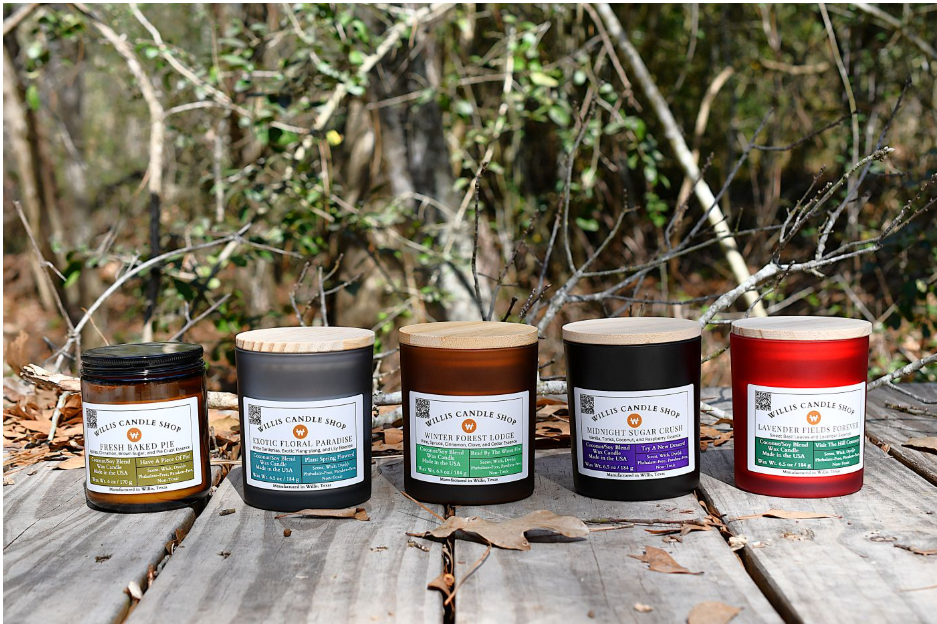
In the academic study of indoor air quality, the materials we introduce into our primary breathing zones are often overlooked. However, for Rob Woloszyn, founder of the Willis Candle Shop, this is a matter of forensic precision. Drawing on 30 years of federal service as a retired FBI Special Agent and U.S. Marine, Rob applies a "zero-fail" investigative protocol to material science. The goal is to move beyond industry marketing and provide consumers with an honest audit of what they are burning. By prioritizing radical transparency, it is possible to bridge the gap between industrial convenience and a truly non-toxic domestic sanctuary.
Deconstructing the Petroleum Variable
The global candle industry remains largely dependent on paraffin wax, a solid hydrocarbon derived from the petroleum refining process. Chemically, paraffin is the residual sludge remaining after the extraction of gasoline and jet fuel. When ignited, paraffin undergoes incomplete combustion, releasing carbonaceous soot and volatile organic compounds (VOCs) such as benzene and toluene. Recent toxicological studies continue to highlight that these particulates are chemically comparable to diesel exhaust. For a family focused on wellness, the first step in atmospheric recovery is identifying and removing these unrefined industrial byproducts from the home.
The Organic Paradox: Stability vs. Volatility
As consumers pivot toward "natural" labels, many encounter the Organic Paradox—the assumption that botanical origins equate to inherent safety. Many products utilize 100% essential oils, which are plant-derived chemical compounds that are inherently volatile and not naturally stabilized for high-heat thermochemical reactions. To achieve a functional scent throw, these oils are often overloaded, leading to unregulated VOC release and localized ozone formation. True integrity in manufacturing requires that fragrance molecules be securely bonded within a stable wax matrix rather than floating as free-radical particulates in the breathing zone.
Engineering the 79/19/2 Botanical Matrix
Overcoming the limitations of both petroleum and unstable organic waxes requires a proprietary approach to wax engineering. A calculated 79/19/2 botanical matrix—consisting of 79% American soy, 19% coconut, and 2% natural beeswax—serves as a thermodynamic solution. In this configuration, soy provides a clean-burning base, while coconut wax ensures an efficient and even scent distribution. The 2% beeswax component acts as a natural structural hardener, replacing the synthetic chemical stabilizers and phthalates common in mass-market products. For those looking to reset their environment, the wood wick candle collection utilizes this specific architecture to maintain air integrity while providing a superior sensory experience.
Radical Transparency: The Label Audit
Integrity in manufacturing is best reflected in what is *not* in the product. The philosophy of radical transparency at the Willis Candle Shop is encapsulated in a simple but powerful motto: "Our label doesn't just tell you what's in the candle, it also tells you what is not in the candle." This means a strict commitment to products that are phthalate-free, paraben-free, and lead-free. For an investigator, providing full evidentiary disclosure is a matter of professional integrity. If a material cannot pass a forensic review of its long-term health impact, it has no place in the domestic sanctuary. This standard ensures that the choice for home fragrance is built on data and material science rather than industrial buzzwords.
Conclusion: The Path to Environmental Wellness
The transition from a simple commodity to a tool for home wellness requires the application of modern analytical rigor to traditional craftsmanship. By rejecting industrial petroleum byproducts and the volatility of unrefined organic formulations, a new standard for atmospheric integrity can be achieved. Through precision engineering and a commitment to transparency, the modern home can remain a protected harbor from the chemical complexities of the outside world. This analytical path ensures that every breath taken within the sanctuary is as pure as the intention behind its creation, providing a reliable and scientifically vetted light for the journey ahead.