The Grief–Migraine Link: When Unprocessed Emotions Become Pain
Episode Description
Ever feel like your body is carrying something your mind hasn’t fully processed yet? Like your pain might be speaking the language your heart never got to?
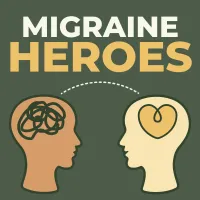
In this episode of Migraine Heroes Podcast, host Diane Ducarme explores the intimate connection between grief, emotion, and migraine pain. Drawing on both neuroscience and Eastern medicine, this conversation reveals how emotional blockages can manifest as physical symptoms — and how releasing what’s been held inside can lighten not just your mood, but your migraine load.
You’ll discover:
💔 How grief — not only from loss, but from unmet expectations, transitions, or emotional wounds — can become a hidden migraine trigger.
💡 The neuroscience behind emotional suppression and how it sensitizes your pain circuits.
🌬️ The Eastern medicine view of grief as stagnation of energy and why restoring flow can ease both heart and head.
🌱 Three gentle, practical ways to begin releasing held emotion so your body can start to recalibrate toward balance and relief.
If you’ve ever felt that your migraines carry emotional weight — this episode will help you begin to listen, release, and heal.
🎧 New episodes every Monday and Wednesday
🔗 Discover our work on migraineheroes.com
References:
- Behavioral and psychological factors in individuals with migraine without psychiatric comorbidities: A 2022 study in The Journal of Headache and Pain found that even migraine patients without diagnosed psychiatric disorders showed higher levels of anxiety sensitivity, sleep disturbances, and pain catastrophizing—highlighting how emotional and behavioral traits link to migraine progression. Read more here.
- The impact of pain-related emotions on migraine: A 2020 article in Scientific Reports revealed that emotional responses to pain—such as anxiety about pain and catastrophizing—significantly influence migraine disability and frequency, underscoring the role of emotion regulation in migraine care. Read more here.
- Grief: A Brief History of Research on How Body, Mind, and Brain Adapt: A review in PMC outlined how prolonged grief activates neural, immune, and physiological stress systems—offering a parallel to how chronic migraine may trigger maladaptive stress responses in body and brain. Read more here.
- Understanding Migraine through the Lens of Maladaptive Stress Responses: A Model Disease of Allostatic Load: A 2012 review published via ScienceDirect explored how migraine can represent a failure of the brain’s stress-adaptation system (allostatic load), linking repeated stress, physiological wear-and-tear, and migraine onset. Read the full review here.
- Study Shows That Chronic Grief Activates Pleasure Areas of the Brain – UCLA Health: A 2021 summary from UCLA Health described how unresolved grief engages brain reward and stress circuits—offering insight into how emotional trauma may alter neural pathways also implicated in chronic pain and migraine. Read more here.
- Psychological approaches for migraine management: A 2023 open-access article in PMC detailed effective psychological interventions (e.g., cognitive-behavioral therapy, biofeedback) for migraine, showing how targeting the mind-body connection and emotional factors can reduce attack frequency and improve quality of life. Read more here.
Disclaimer: This podcast is for informational purposes only and does not substitute for providing medical advice. Always consult your healthcare professional before making any health-related decisions.
For women, men, and children who suffer from migraine disease, Migraine Heroes is your go-to resource for understanding, managing, and overcoming migraine attacks.
We cover all types of migraines and related headaches, including primary and secondary migraines, chronic migraines, and cluster migraines. We dive deep into the complexities of migraine with aura and migraine without aura, as well as rarer forms like hemiplegic migraine, retinal migraine, and acephalgic migraine (silent migraine). Our discussions also extend to cervicogenic headaches, ice pick headaches, and pressure headaches, which often mimic migraine or contribute to overall migraine burden.