View Transcript
Episode Description
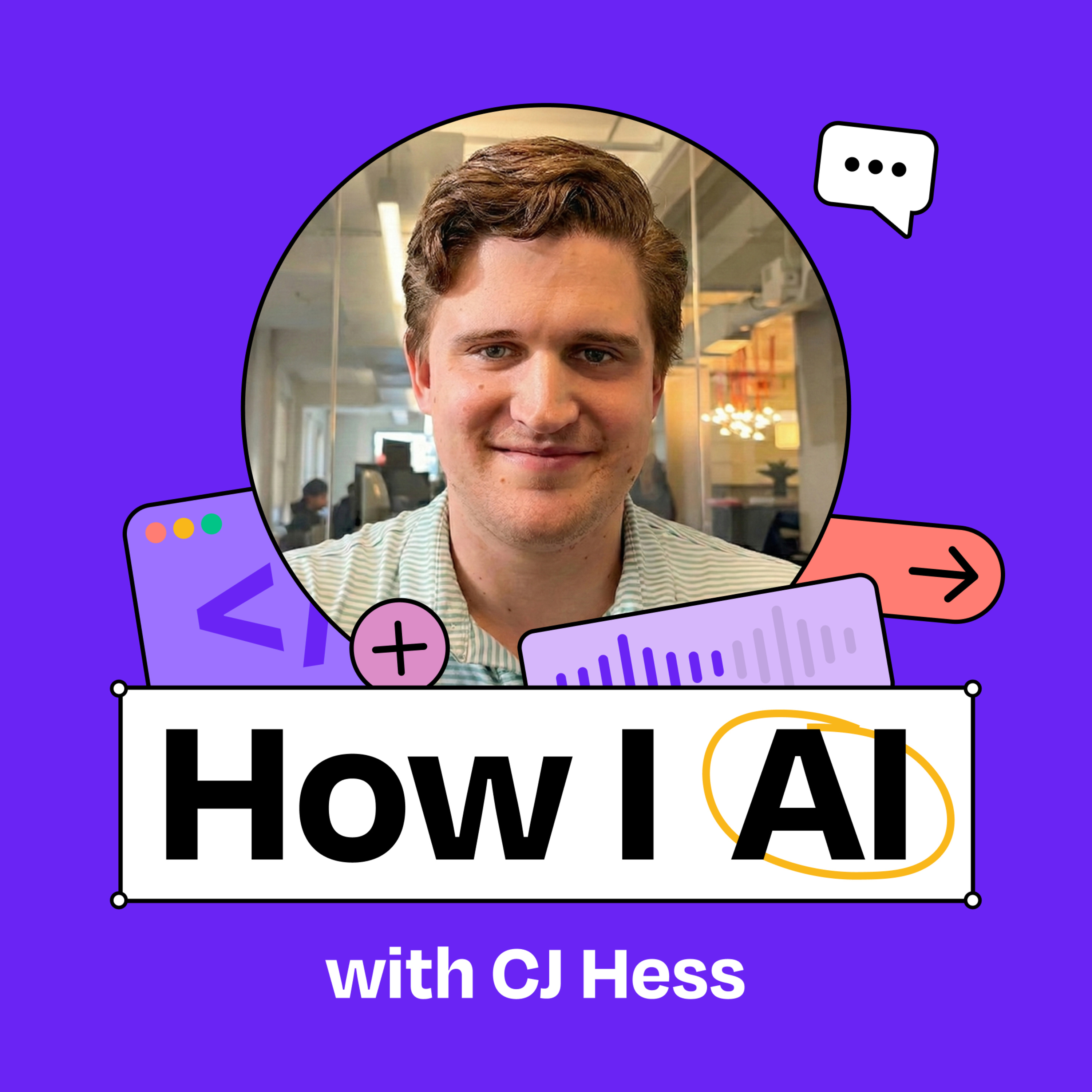
CJ Hess is a software engineer at Tenex who has built some of the most useful tools and workflows for being a “real AI engineer.” In this episode, CJ demonstrates his custom-built tool, Flowy, that transforms Claude’s ASCII diagrams into interactive visual mockups and flowcharts. He also shares his process for using model-to-model comparison to ensure that his AI-generated code is high-quality, and why he believes we’re just at the beginning of a revolution in how developers interact with AI.
What you’ll learn:
- How CJ built Flowy, a custom visual planning tool that converts JSON files into interactive mockups and flowcharts
- Why visual planning tools are more effective than ASCII diagrams for complex UI and animation workflows
- How to create and use Claude Code skills to extend your development environment
- Using model-to-model comparison (Claude + Codex) to improve code quality
- How to build your own ecosystem of tools around Claude Code
- The value of bypassing permissions in controlled environments to speed up development
—
Brought to you by:
Orkes—The enterprise platform for reliable applications and agentic workflows
Rovo—AI that knows your business
—
Detailed workflow walkthroughs from this episode:
• How I AI: CJ Hess on Building Custom Dev Tools and Model-vs-Model Code Reviews: https://www.chatprd.ai/how-i-ai/cj-hess-tenex-custom-dev-tools-and-model-vs-model-code-reviews
• Implement Model-vs-Model AI Code Reviews for Quality Control: https://www.chatprd.ai/how-i-ai/workflows/implement-model-vs-model-ai-code-reviews-for-quality-control
• Develop Features with AI Using Custom Visual Planning Tools: https://www.chatprd.ai/how-i-ai/workflows/develop-features-with-ai-using-custom-visual-planning-tools
—
In this episode, we cover:
(00:00) Introduction to CJ Hess
(02:48) Why CJ prefers Claude Code for development
(04:46) The evolution of developer environments with AI
(06:50) Planning workflows and the limitations of ASCII diagrams
(08:23) Introduction to Flowy, CJ’s custom visualization tool
(11:54) How Flowy compares to mermaid diagrams
(15:25) Demo: Using Flowy
(19:30) Examining Flowy’s skill structure
(23:27) Reviewing the generated flowcharts and diagrams
(28:34) The cognitive benefits of visual planning vs. text-based planning
(31:38) Generating UI mockups with Flowy
(33:30) Building the feature directly from flowcharts and mockups
(35:40) Quick recap
(36:51) Using model-to-model review with Codex (Carl)
(41:52) The benefits of using AI for code review
(45:13) Lightning round and final thoughts
—
Tools referenced:
• Claude Code: https://claude.ai/code
• Claude Opus 4.5: https://www.anthropic.com/news/claude-opus-4-5
• Cursor: https://cursor.sh/
• Obsidian: https://obsidian.md/
• GPT-5.2 Codex: https://openai.com/index/introducing-gpt-5-2-codex/
• Google’s Project Genie: https://labs.google/projectgenie
—
Other references:
• Mermaid diagrams: https://mermaid.js.org/
• Figma: https://www.figma.com/
• Excalidraw: https://excalidraw.com/
• TypeScript: https://www.typescriptlang.org/
—
Where to find CJ Hess:
LinkedIn: https://www.linkedin.com/in/cj-hess-connexwork/
—
Where to find Claire Vo:
ChatPRD: https://www.chatprd.ai/
Website: https://clairevo.com/
LinkedIn: https://www.linkedin.com/in/clairevo/
—
Production and marketing by https://penname.co/. For inquiries about sponsoring the podcast, email jordan@penname.co.