View Transcript
Episode Description
In August of 1973, Houston police were still pulling bodies from the dirt floor of Dean Corll’s boat shed when a frightened young man in Dallas picked up the phone and called the FBI. What he had witnessed inside a Cole Avenue apartment convinced him that the horrors unfolding 240 miles south were not isolated—and that the man he was living with might be part of something far larger.
Days later, Dallas police raided the apartment. What they uncovered would expose one of the most extensive child trafficking operations ever documented in the United States: a mail-order network that sold access to children, servicing clients in at least thirty-five states and multiple foreign countries. The volume of evidence was staggering. It filled the bed of a pickup truck.
Tens of thousands of index cards—estimates range from thirty thousand to over one hundred thousand—each meticulously cataloging the names, preferences, and payment histories of paying customers.Lieutenant Harold Hancock of the Dallas Police Department would later state publicly that the cards contained the names of prominent public figures and federal employees. Those cards were forwarded to the State Department. And then, without explanation, they were destroyed.
Tonight on Disturbing History, we pull back the curtain on a story that links two of the most infamous serial killers in American history—Dean Corll and John Wayne Gacy—to a nationwide child exploitation network that operated openly, repeatedly resurfaced after arrests, and appeared to enjoy a level of protection rarely afforded to criminals of any kind. At the center of this story is John David Norman, a man arrested dozens of times over five decades, who continued running trafficking operations from behind bars, rebuilt his networks every time they were dismantled, and whose client lists somehow vanished before investigators could ever examine the names that mattered most.
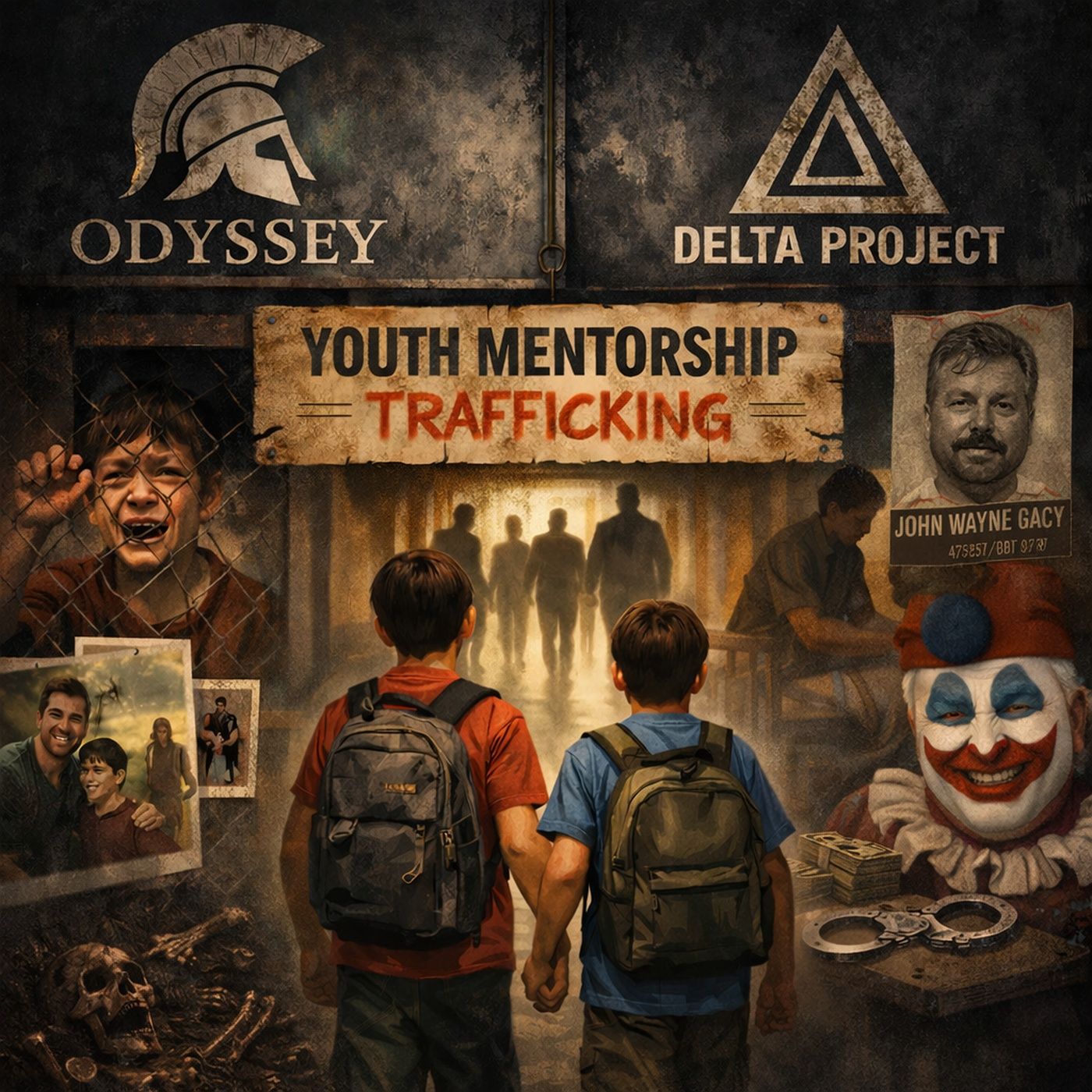
We follow Norman’s trail from the Odyssey Foundation in Dallas to the Delta Project in Chicago, where his closest associate, Phillip Paske, would later surface on the payroll of John Wayne Gacy. Prosecutors were aware of that connection. It was never introduced at trial.We examine congressional hearings that briefly exposed these networks, only for investigations to stall, evidence to disappear, and accountability to evaporate.
We explore the connected operation on North Fox Island in Michigan and its potential links to the still-unsolved Oakland County Child Killer case. Across states and decades, the same patterns emerge: shared mailing lists, overlapping personnel, recycled victims, and systemic failure at every level meant to stop it.And finally, we ask the question that lingers beneath all of it—whose names were written on those index cards, and why were they destroyed by the very institutions tasked with uncovering the truth?
A content warning before we begin: This episode contains detailed discussion of child sexual abuse, child trafficking, and serial murder. The material is deeply disturbing. Listener discretion is strongly advised.
Days later, Dallas police raided the apartment. What they uncovered would expose one of the most extensive child trafficking operations ever documented in the United States: a mail-order network that sold access to children, servicing clients in at least thirty-five states and multiple foreign countries. The volume of evidence was staggering. It filled the bed of a pickup truck.
Tens of thousands of index cards—estimates range from thirty thousand to over one hundred thousand—each meticulously cataloging the names, preferences, and payment histories of paying customers.Lieutenant Harold Hancock of the Dallas Police Department would later state publicly that the cards contained the names of prominent public figures and federal employees. Those cards were forwarded to the State Department. And then, without explanation, they were destroyed.
Tonight on Disturbing History, we pull back the curtain on a story that links two of the most infamous serial killers in American history—Dean Corll and John Wayne Gacy—to a nationwide child exploitation network that operated openly, repeatedly resurfaced after arrests, and appeared to enjoy a level of protection rarely afforded to criminals of any kind. At the center of this story is John David Norman, a man arrested dozens of times over five decades, who continued running trafficking operations from behind bars, rebuilt his networks every time they were dismantled, and whose client lists somehow vanished before investigators could ever examine the names that mattered most.
We follow Norman’s trail from the Odyssey Foundation in Dallas to the Delta Project in Chicago, where his closest associate, Phillip Paske, would later surface on the payroll of John Wayne Gacy. Prosecutors were aware of that connection. It was never introduced at trial.We examine congressional hearings that briefly exposed these networks, only for investigations to stall, evidence to disappear, and accountability to evaporate.
We explore the connected operation on North Fox Island in Michigan and its potential links to the still-unsolved Oakland County Child Killer case. Across states and decades, the same patterns emerge: shared mailing lists, overlapping personnel, recycled victims, and systemic failure at every level meant to stop it.And finally, we ask the question that lingers beneath all of it—whose names were written on those index cards, and why were they destroyed by the very institutions tasked with uncovering the truth?
A content warning before we begin: This episode contains detailed discussion of child sexual abuse, child trafficking, and serial murder. The material is deeply disturbing. Listener discretion is strongly advised.