View Transcript
Episode Description
This month, Paul and Marcus get into a tool that has made Paul cancel his Figma subscription, walk through how Paul has completely changed the way he approaches website rebuilds thanks to AI, and round things off with the latest thinking from Nielsen Norman Group on where UX is heading in 2026.
App of the Week: figr.designPaul has been road-testing AI design tools as part of a workshop he ran on AI and UI, and after going through dozens of them, one stood out: figr.design.
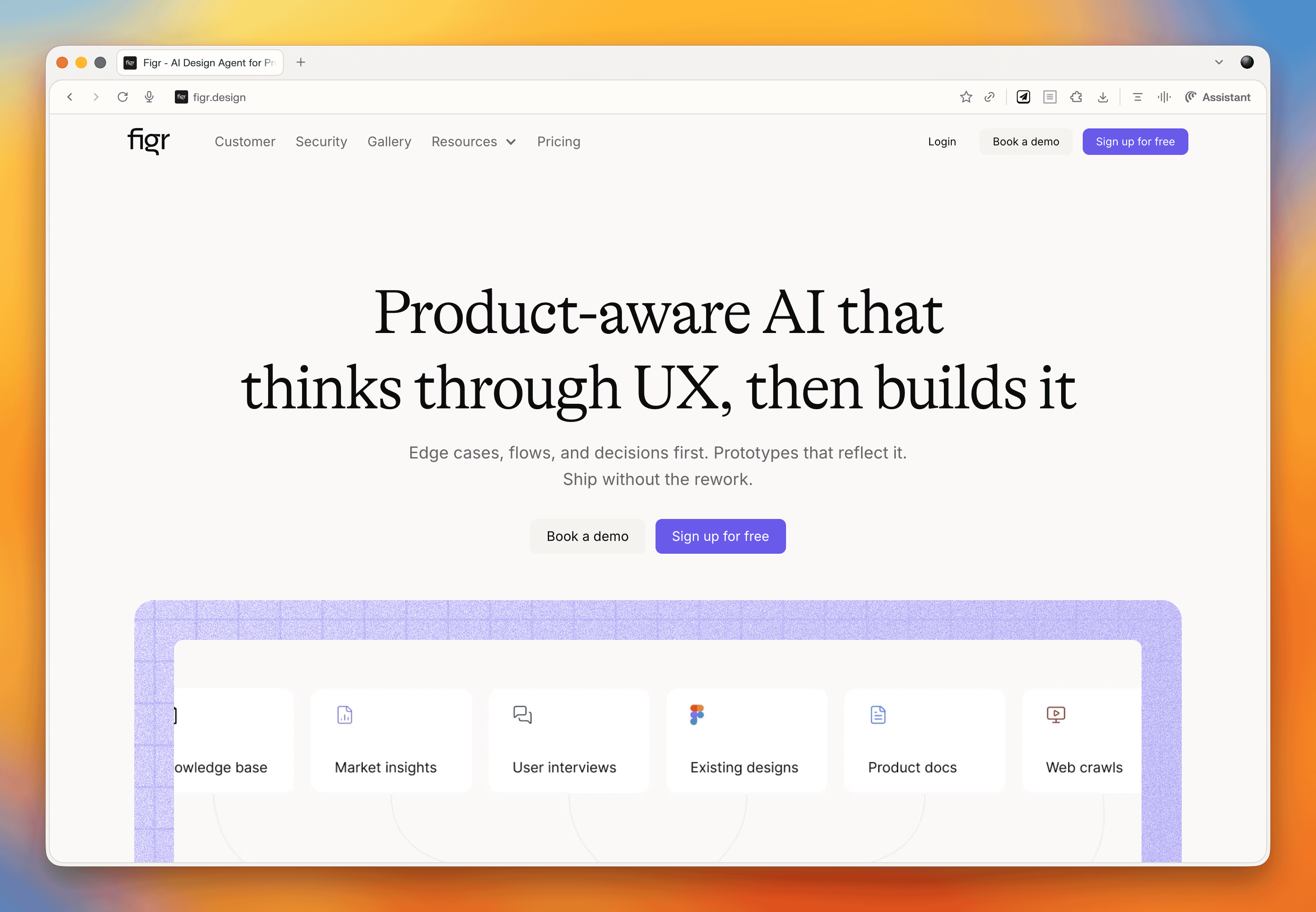
What makes it work where others fall short? A few things. It lets you feed in a significant amount of context upfront, things like style guides, design systems, and personas, which means the output is far more tailored than the generic average you often get from AI design tools. Iteration is also genuinely fast. You can queue up a whole list of changes and it processes them all in one go, rather than making you wait between each tweak.
The prototypes it produces are more realistic than what you would typically get out of Figma. Text fields you can actually type in, accordion states that open and close, button states, fully responsive layouts. Not exactly revolutionary in theory, but refreshingly functional in practice. Export to Figma is available when you need it.
The main limitation is that you cannot manually adjust elements yourself. Everything goes through the conversational interface. Paul has also been looking at a tool called Inspector, which runs locally and connects to the Claude API so you pay as you go rather than a flat monthly token allocation. It has been a bit fiddly to set up but worth keeping an eye on.
For anyone regularly using Figma for wireframing and prototyping, it is worth giving figr.design a proper look. The shift Paul describes, from hunching over Figma to leaning back and having a conversation with the tool, is a fairly good summary of where this kind of work is heading.
Rebuilding a Website in 2026Paul has fundamentally changed how he approaches website rebuilds, and the shift is largely down to AI making a genuinely hard problem, getting good content onto a website, a lot easier.
The old problem
Website rebuilds have traditionally meant migrating existing content into a new design. Which sounds fine until you remember that most of that content was written by subject matter experts who know their field but have never thought about writing for the web.
The result is pages that lecture rather than help, that bury the things users actually want to know, and that rarely arrive on time, because the content phase is almost always where projects stall.
Why things are different now
AI has changed three things meaningfully.
- First, generating content is no longer the enormous manual effort it used to be.
- Second, doing the research that informs good content, finding out what users actually ask, worry about, and need, is much simpler with tools like Perplexity.
- Third, AI-powered search engines are pushing toward a more question-oriented approach to content anyway, which makes getting this right more important than it used to be.
How Paul works now
Here is the process Paul walks through for a rebuild project.
1. Online research
Using Perplexity, Paul researches the audience. For a well-known client, he'll ask specifically about them. For a smaller or niche client, he looks at the sector. He is looking for the questions people are asking, the tasks they are trying to complete, their objections, goals, and pain points. This takes about 10 minutes.
2. Personas
The research output goes into AI, which identifies patterns and segments it into a set of personas. A couple of hours of back and forth to get these right.
3. Company overview
Paul records his kickoff meeting with the client and points AI at the transcript. Out comes a clean summary of what the company does, its products and services, and how it talks about itself. An hour for the meeting, plus 10 minutes for the summary creation.
4. Top task analysis and information architecture
If time and budget allow, Paul runs a formal top task analysis, collecting and prioritizing the questions users most want answered. For card sorting, he uses UX Metrics. If there is no time for that, AI brainstorms the top tasks from the personas and company overview. Either way, those tasks get fed into an AI-generated information architecture.
5. Building out the IA
Paul builds the IA in the CMS or in Notion, assigning the relevant tasks and questions to each page. Stakeholders can see the structure and understand what each page is there to do before a word of copy is written.
6. Getting stakeholders to contribute
Rather than asking stakeholders to write content (a recipe for delays), Paul asks them to do two simpler things for each page: bullet-point answers to the questions assigned to that page, and any other talking points they want included. Bullets only. No pressure to write.
7. Writing the content with AI
This is where it all comes together. Paul sets up an AI project with four inputs:
- A web copywriting best practice guide covering readability, structure, and scanning
- A company-specific style guide built from existing brand materials
- The audience personas
- The company overview
For each page, he drops in the questions and stakeholder bullet points, and the AI drafts the content using all of that context. Paul recommends Claude for writing tasks. The result is copy that actually reflects the company's voice and addresses what users need, rather than generic filler.
8. Review and refinement
Stakeholders review the draft and leave comments, ideally directly in Notion where AI can read the page, take in the comments, and rewrite accordingly. One more pass by stakeholders and it is ready to go.
Paul has been using this approach on half a dozen projects and reckons you can work through a full site's worth of content in about a week (depending on size) once the setup is done. For clients, it is a service worth paying for because it takes the content burden off them while producing noticeably better results than migrating whatever was already there.
One thing Paul is careful to flag: this does not mean starting from absolute scratch every time. Old articles, compliance pages, event databases, templated content that just has to be there, all of that can still come across. The point is to treat migration as the exception rather than the default.
Read of the Week: State of UX 2026The Nielsen Norman Group article Design Deeper to Differentiate confirmed, in Marcus's words, most of what Paul has been saying for the past year. Paul took this as further evidence he is always right!
A few of the key points from the article:
UX has stabilized after the 2023-24 downturn, but teams are leaner. UX practitioners are now expected to cover more ground and demonstrate business impact rather than just shipping deliverables.
AI fatigue has set in, both among designers tired of the "you're being replaced" narrative, and among users who have grown skeptical of AI features that add sparkle without actually improving anything. The article argues that trust is now the central design problem for AI-powered products, covering transparency, control, consistency, and what happens when things go wrong.
UI quality is becoming commoditized. If your value is primarily in making interfaces look good and work correctly, the ceiling on that work is dropping. Real differentiation lives in service design, content strategy, complete user flows, and the connective tissue that links everything together over time.
The hard-to-automate skills, taste, contextual understanding, critical thinking, and judgment, are where humans still add the most value. To thrive, the article suggests UX practitioners need to position themselves as strategic problem-solvers with a broad toolkit rather than deliverable-focused specialists doing what it calls "design theater."
Paul agreed with all of it. Marcus mostly agreed too, while noting that it must be genuinely difficult to be a UX specialist inside a large organization right now, particularly in teams that have cut so far back that one person is expected to cover the entire discipline. The answer, in Marcus's entirely unbiased view, is to hire Headscape!
Marcus' JokeI stole a neck brace from the hospital. I feel kind of bad, but at least I can hold my head up high.